
7 Ways to Protect a Child’s Natural Curiosity
How Parents and Educators Can Keep Wonder, Questions, and Discovery Alive

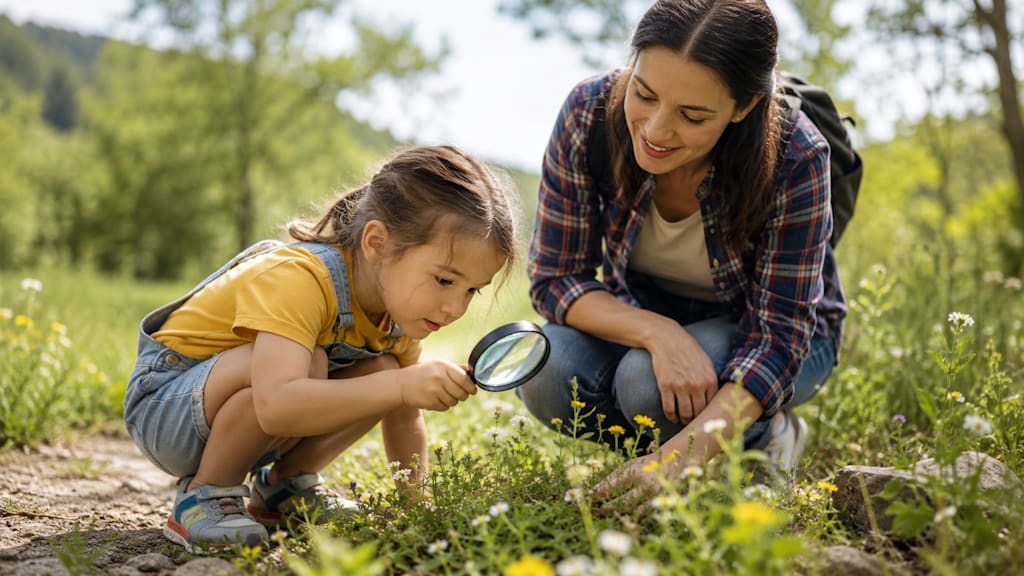
Children are born explorers. Before they can read, they investigate faces, sounds, textures, movement, and cause and effect. Their questions are not interruptions to learning; they are learning in its purest form. Curiosity helps children build language, solve problems, gain confidence, and understand the world. Yet this desire to discover can weaken when adults rush answers, overcorrect mistakes, control every activity, or value performance more than wonder. Protecting curiosity does not require expensive materials or complicated lessons. It requires patience, respect, and an environment where questions are welcomed.
1. Welcome Questions, Even When They Are Repetitive
A young child may ask “why?” dozens of times a day. Adults often become tired, especially when questions seem simple, repeated, or poorly timed. However, every question shows that the child is making connections. Instead of dismissing it, respond with interest. You do not need a perfect answer. Try saying, “That is an interesting question. What do you think?” This invites the child to reason before receiving information.
When you do not know the answer, admit it. Saying, “I’m not sure, but we can find out together,” teaches intellectual honesty and shows that uncertainty is not frightening. It also turns the adult into a learning partner rather than an all-knowing authority.
2. Give Children Time to Explore
Curiosity needs unhurried time. When every moment is scheduled, directed, or corrected, children lose opportunities to follow their interests. A child examining an ant, arranging stones, or pouring water between cups may appear to be “doing nothing,” but important learning is taking place. The child is observing patterns, testing ideas, and building concentration.
Create periods of open-ended play without a fixed outcome. Avoid interrupting too quickly or turning every discovery into a formal lesson. Sometimes the best support is simply to watch, remain nearby, and allow the child’s attention to deepen.
3. Praise Effort, Observation, and Experimentation
Children quickly notice what adults praise. If praise focuses only on correct answers, finished products, or being “smart,” children may avoid challenges. They can become more interested in approval than discovery. Curiosity grows when adults notice the process.
Instead of saying only, “Good job,” be specific: “You tried three different ways to build that tower,” or “You noticed that the larger leaf has more lines.” Such comments show that effort, observation, and experimentation matter. When an attempt fails, avoid treating it as wasted time. Ask what the child discovered and what they might try next. This teaches that learning often includes uncertainty, revision, and persistence.
4. Provide Open-Ended Materials
Many toys have one intended purpose, but open-ended materials can become almost anything. Blocks, clay, paper, cardboard boxes, fabric, natural objects, cups, and art supplies invite children to imagine, combine, test, and redesign. There is no single correct result, so the child remains in control.
Rotate materials rather than offering everything at once. A small, thoughtfully arranged selection can encourage deeper attention than a crowded room. Everyday household objects can also inspire exploration when they are safe and appropriate. The goal is not constant entertainment. It is to provide tools that allow the child to create questions and possibilities.
5. Protect the Right to Make Mistakes
Fear is one of curiosity’s strongest enemies. If children expect criticism, embarrassment, or punishment whenever they make a mistake, they may stop taking intellectual risks. They begin choosing only tasks they already know how to complete. A curious child needs emotional safety.
Adults can model a healthy response to mistakes by speaking calmly about their own. Say, “I used the wrong piece. I’ll try another one,” rather than reacting with anger. When a child spills, guesses incorrectly, or builds something that collapses, separate the mistake from the child’s worth. Help solve practical problems without shame. The message should be clear: mistakes sometimes have consequences, but they are also information. They show us what to adjust.
6. Connect Learning to Real Life
Curiosity grows when learning is connected to experiences children can see, touch, hear, and discuss. A walk outside can inspire questions about insects, clouds, shadows, plants, vehicles, or neighborhood sounds. Cooking introduces measurement, transformation, temperature, and culture. Shopping develops counting, comparison, and decision-making. Stories invite conversations about emotions, choices, and different perspectives.
Follow the child’s interest instead of forcing every experience into an adult lesson plan. If a child becomes fascinated by a worm after rain, explore that moment. Draw it, observe its movement, read a simple book about worms, or discuss why the soil is wet. Knowledge becomes memorable when it begins with genuine attention.
7. Let Children See Adults Learning
Children form beliefs about learning by watching adults. If adults act as though learning ends after school, children may see knowledge as a duty rather than a lifelong pleasure. Let them see you read, ask questions, practice a skill, repair something, look up information, or change your mind after discovering evidence.
Speak openly about your learning process. You might say, “I have never made this recipe before, so I need to read the instructions carefully,” or “I thought this bird had another name, but I learned something new today.” These moments normalize curiosity across all ages. They also teach humility: intelligent people do not know everything; they remain willing to investigate.
Protecting a child’s curiosity is not about providing constant stimulation or answering every question immediately. It is about creating a relationship in which wonder feels safe. Children need adults who listen, allow time, encourage experiments, and treat mistakes as part of growth. They need meaningful experiences, flexible materials, and examples of lifelong learning.
A child’s curiosity may begin with small things: a moving shadow, a strange sound, a broken toy, or a question at bedtime. When adults respond with attention rather than impatience, those moments become foundations for creativity, resilience, and independent thought. Education is most powerful when it does not replace curiosity, but protects it. By preserving a child’s desire to ask, explore, and understand, we help build successful learners and thoughtful human beings who remain open to the world.
About the Creator
Noor Kids Academy
Writer exploring childhood, education, fitrah, and the philosophy of learning. Practical insights for parents, teachers, and curious minds.
Enjoyed the story? Support the Creator.
Subscribe for free to receive all their stories in your feed.
Comments
There are no comments for this story
Be the first to respond and start the conversation.