
11 Principles for a Winner’s Mindset
“Advice from great achievers”

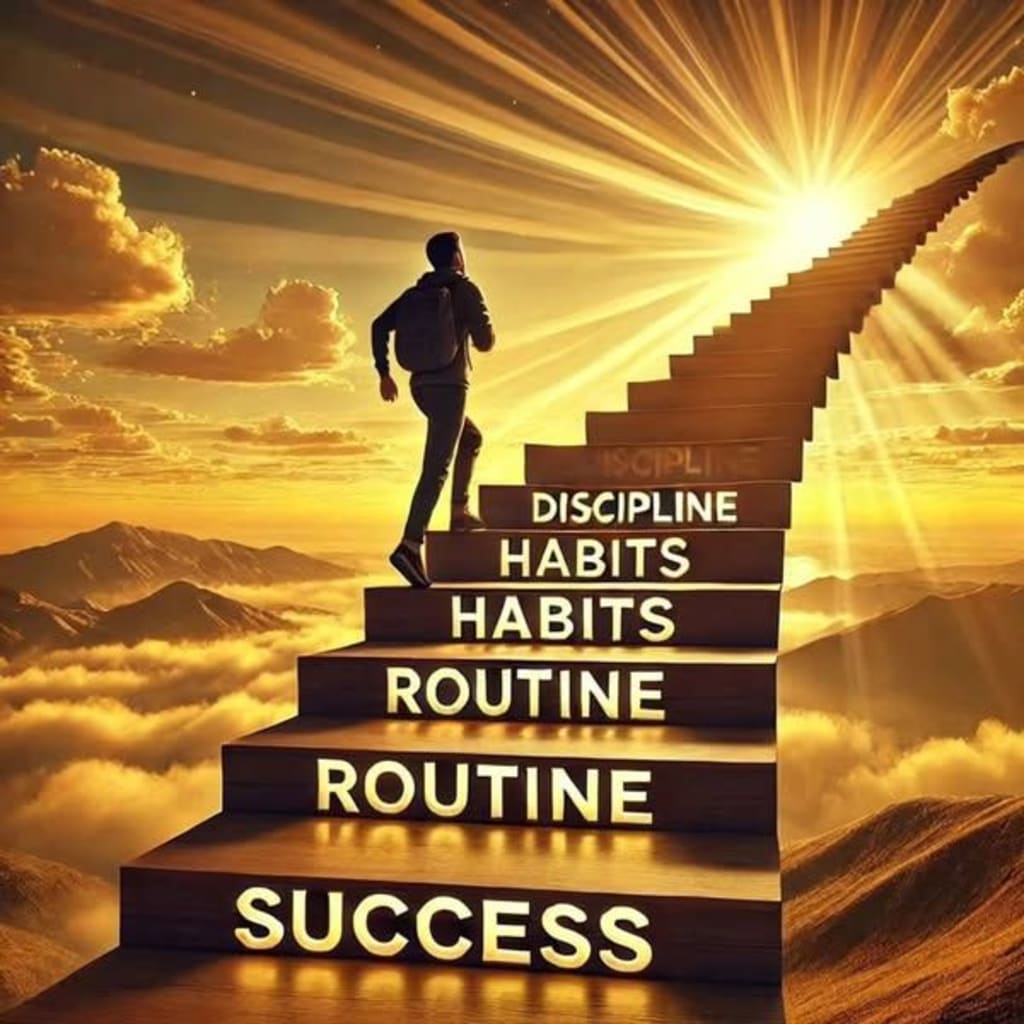
FAILURE DOESN’T JUST TEACH YOU HOW TO LOSE.
It teaches you how the world actually works.
Because once something you believed would succeed collapses in front of you, you begin noticing uncomfortable truths about effort, luck, discipline, ego, timing, pressure, and human nature that success often hides.
That’s where the real education begins — not in comfort, but in contradiction.
1. MOST PEOPLE ADMIRE SUCCESS BUT IGNORE THE PROCESS 📌
People love results.
They celebrate achievements, awards, numbers, and visibility.
But very few respect what came before it — the invisible years of repetition, rejection, uncertainty, and doubt.
The finish line gets applause.
The journey usually gets ignored.
Thomas Edison once said:
“I have not failed. I've just found 10,000 ways that won't work.”
What matters in that statement is not just persistence — it is exposure to reality. He understood that failure was not interruption; it was information.
Steve Jobs experienced one of the most public failures in tech history when he was removed from Apple, the company he created. Yet that period outside the company became part of his transformation. When he returned, he wasn’t just more skilled — he was more self-aware.
Jeff Bezos also built Amazon on a principle called “high volume failure.” He openly admitted that most experiments would fail, but a few would reshape everything. That mindset turns failure from a shock into a system.
2. FAILURE REVEALS WHAT MOTIVATES YOU 📌
When rewards disappear, something honest begins.
You discover whether you were committed to the goal or addicted to the recognition.
Michael Jordan is one of the clearest examples of this idea. He missed thousands of shots, lost countless games, and still became one of the greatest athletes in history. His success was not built on perfection, but on response to failure.
When pressure removes applause, only discipline and purpose remain.
That is where truth appears.
3. MOST PEOPLE QUIT LONG BEFORE THEY REACH THEIR LIMITS 📌
Albert Einstein was not always seen as exceptional. Early in life, he was underestimated and even labeled as average in certain environments.
But persistence changed the trajectory completely.
Walt Disney was once fired from a newspaper job for “lacking imagination.” That same imagination later shaped one of the most influential entertainment empires in the world.
Most people stop not because they reach their limit, but because discomfort convinces them they have.
Failure often says: “this is difficult.”
But people interpret it as: “this is impossible.”
4. DISCIPLINE BEATS TALENT WHEN TALENT STOPS WORKING 📌
Talent creates potential.
Discipline creates results.
Kobe Bryant built his legacy on repetition. He trained when others slept, practiced when others rested, and refined skills even when he had already reached elite status.
Cristiano Ronaldo is another example — his consistency is not driven by motivation, but structure. He doesn’t rely on feeling ready. He builds systems that force readiness.
Discipline removes emotion from performance.
And emotion is unpredictable.
5. SUCCESS AND FAILURE ARE BOTH TEMPORARY 📌
Winston Churchill once said:
“Success is not final, failure is not fatal: it is the courage to continue that counts.”
This is one of the most overlooked truths in life.
Napoleon Bonaparte rose to extraordinary power and later experienced complete downfall. His life is a reminder that even extreme success is unstable.
What this means is simple: neither success nor failure defines identity permanently.
They are phases, not definitions.
6. COMPARISON DISTORTS REALITY 📌
You only see someone else’s outcome.
You live your own process.
That difference creates misunderstanding.
Nelson Mandela spent 27 years in prison before becoming president of South Africa. During that time, he was forgotten by many, yet he was still building internal strength and conviction.
If measured against others during that period, his life would have looked like failure.
But time revealed the truth.
Comparison is dangerous because it ignores timing, context, and hidden struggle.
7. EGO OFTEN PREVENTS GROWTH 📌
Ego protects identity but blocks evolution.
Mahatma Gandhi demonstrated the opposite approach — humility combined with persistence. His influence came not from force, but from endurance and clarity of purpose.
When people refuse correction, they preserve pride but sacrifice progress.
When they accept correction, they sacrifice pride but gain growth.
That trade defines long-term success.
8. LUCK IS REAL — AND IGNORING IT CREATES FALSE STORIES 📌
Hard work is important.
But it is not the only factor.
Timing, environment, access, and randomness also play roles.
Bill Gates had early access to computers at a time when very few people in the world did. That opportunity mattered as much as his effort.
Recognizing luck does not reduce achievement — it makes understanding more accurate.
And accuracy leads to better decisions.
9. FAILURE EXPOSES YOUR REAL SUPPORT SYSTEM 📌
Success attracts attention.
Failure reveals truth.
When things are going well, people appear supportive, positive, and present.
When things collapse, the environment changes.
Some people stay.
Many disappear.
This is not necessarily cruelty — it is human nature. Pressure changes behavior.
Even relationships become clearer under stress because intentions are no longer hidden behind comfort.
10. EVERY FAILURE IS DATA, NOT IDENTITY 📌
Failure is not a definition of who you are.
It is information about what happened.
Thomas Edison treated mistakes as data points. Each wrong attempt eliminated one incorrect direction.
Albert Einstein approached scientific failure the same way — failed experiments were still progress because they refined understanding.
Michael Jordan used missed shots as correction, not condemnation.
The difference between growth and stagnation is interpretation.
One sees failure as identity.
The other sees it as instruction.
11. FAILURE FORCES REBUILDING 📌
After collapse, distractions fade.
What remains is structure — habits, thinking patterns, discipline, emotional control, and resilience.
This is where rebuilding begins.
Many people discover that their strongest version does not emerge during success, but after loss. Because loss removes illusions and forces honesty.
You stop pretending.
You start building.
FINAL TRUTH 📌
Failure strips illusion.
It removes shortcuts from thinking.
It teaches patience, discipline, humility, and awareness.
It reveals that:
Talent is not enough
Motivation is unstable
Ego slows progress
Luck exists
Discipline compounds over time
Persistence is rare
And maybe the hardest truth:
You can do everything right… and still lose.
But that is not the end of meaning.
It is the beginning of understanding how to continue with more clarity, strength, and awareness than before.
About the Creator
MR HONEST
If you enjoy my writings, subscribe so I can create more and you can access exclusive content. Thanks to all of you for supporting me
Enjoyed the story? Support the Creator.
Subscribe for free to receive all their stories in your feed.
Comments
There are no comments for this story
Be the first to respond and start the conversation.