
Will Europe hear a landmark Russian climate change case?
Russian environmental activists are challenging their government over climate policy, but a European court has already rejected the case—leaving campaigners considering their next legal move
A major climate change lawsuit brought by Russian environmental activists has reached a difficult turning point after the European Court of Human Rights (ECHR) rejected the case, raising questions about whether Europe will ultimately hear the arguments behind what campaigners describe as a landmark climate case.
The lawsuit argues that Russia has failed to take adequate action against climate change and that its policies expose people to serious risks. The applicants have attempted to use human-rights law to challenge government climate policy, following similar legal efforts around Europe that have pushed governments to strengthen their response to global warming.
The case is significant because climate litigation is increasingly moving beyond environmental regulations and into the field of fundamental human rights.
What Is the Russian Climate Case?
The case was brought by Russian environmental organisations and individual applicants who argue that the Russian government has not done enough to address climate change.
The applicants first pursued their claims through Russia's domestic courts. After the Russian Supreme Court rejected their challenge, they took their arguments to the European Court of Human Rights. The European case alleges violations of rights protected under the European Convention on Human Rights, including protections connected to life and private and family life.
The legal strategy reflects a growing trend in international climate litigation.
Rather than treating climate change only as an environmental or political issue, campaigners increasingly argue that inadequate climate policies can directly threaten basic human rights.
Why the European Court Matters
The European Court of Human Rights is based in Strasbourg and deals with alleged violations of the European Convention on Human Rights.
Its climate-related decisions have attracted international attention because they can establish legal principles that influence how governments approach environmental risks.
In 2024, the court delivered a landmark ruling involving Swiss senior women. It found that Switzerland had failed to adequately protect people from serious climate-related risks. That judgment demonstrated that climate inaction can, under certain circumstances, raise questions under human-rights law.
For Russian campaigners, that legal development provided an important reference point.
However, the Russian case presents a very different political and legal environment.
The Case Has Already Been Declared Inadmissible
Despite the significance of the arguments, an ECHR judge ruled in June that the Russian climate case was inadmissible.
That means the court did not proceed to examine the applicants' claims on their full merits. The rejection represents a major obstacle for campaigners who hoped the court would examine whether Russia's climate policies violate human rights.
The applicants have not necessarily accepted that as the end of the road.
Campaigners are considering whether further legal steps are possible, keeping alive the possibility that the case could return to the European judicial system.
Why Climate Change Is a Human-Rights Issue
Climate change can affect far more than temperatures.
Rising temperatures can contribute to heatwaves, wildfires, droughts and flooding. Melting permafrost can damage buildings and infrastructure, while changes in weather patterns can affect agriculture, water supplies and public health.
Russia is particularly relevant to climate discussions because of its enormous territory and extensive Arctic and sub-Arctic regions.
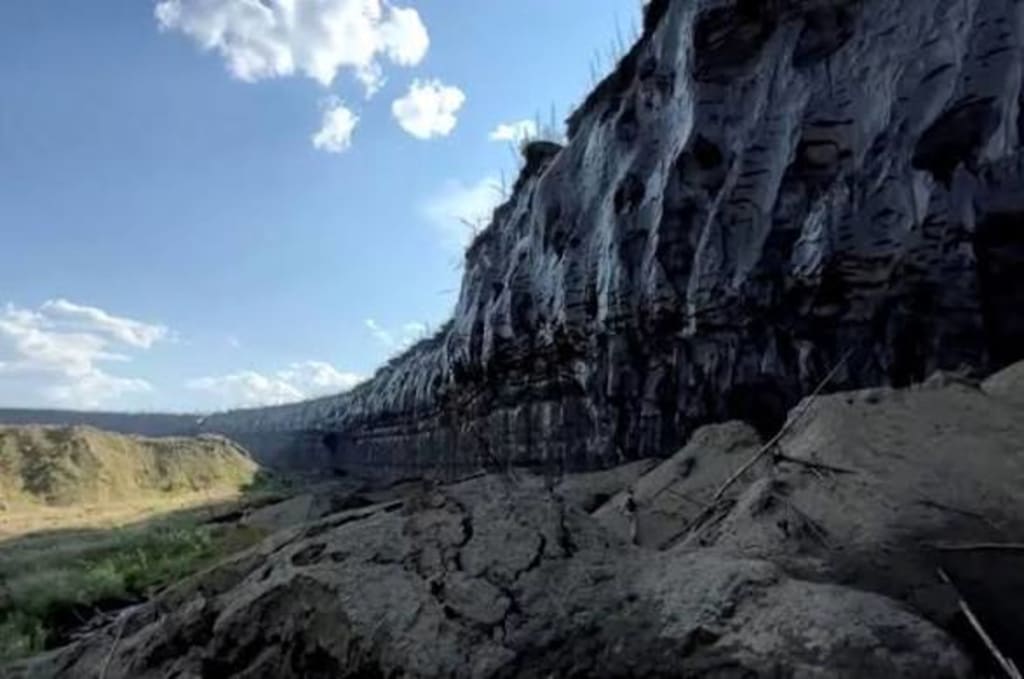
Thawing permafrost is already a visible symbol of environmental change. The melting ground can destabilise roads, buildings and pipelines and release additional greenhouse gases as frozen organic material decomposes.
For campaigners, these consequences strengthen the argument that climate policy is directly connected to people's fundamental rights.
Russia's Climate Responsibilities Under Scrutiny
The lawsuit also raises questions about the responsibilities of major greenhouse-gas-emitting countries.
Russia has significant fossil-fuel resources and remains an important participant in global energy markets. Its climate policies therefore have consequences extending beyond its borders.
Climate campaigners argue that major emitting countries have a responsibility to reduce emissions and prepare their populations for unavoidable climate impacts.
The legal question is more complicated: courts must determine whether existing human-rights law gives individuals the ability to challenge government climate policy and, if so, what level of protection governments are required to provide.
A Changing European Legal Landscape
The Russian case arrives at a time when European courts are increasingly being asked to examine climate-related claims.
The 2024 Swiss climate ruling was especially important because it established a connection between climate protection and human rights at the European human-rights level. European institutions have since continued examining questions involving climate change, rights, standing and government obligations.
This means the legal landscape is evolving.
However, not every climate case will succeed.
Applicants must meet procedural requirements, demonstrate that they fall within the court's jurisdiction and establish that their complaints are legally admissible.
The Complicated Question of Jurisdiction
One of the biggest issues surrounding the Russian case is jurisdiction.
Russia ceased to be a party to the European Convention on Human Rights in 2022, following its expulsion from the Council of Europe after the full-scale invasion of Ukraine.
The timing and legal consequences of Russia's departure are therefore crucial to cases involving conduct that occurred before or around the end of Russia's participation in the Convention system.
This makes the Russian climate lawsuit particularly complex compared with climate cases brought against governments that remain fully subject to the European human-rights framework.
Why Campaigners Say the Case Still Matters
Even if the European court does not ultimately hear the case on its merits, the litigation could still influence the wider climate debate.
Legal challenges can force governments to explain their climate policies, draw attention to gaps in environmental protection and encourage courts to clarify how existing human-rights rules apply to climate change.
They can also inspire similar cases in other countries.
The increasing number of climate lawsuits around the world shows that campaigners are exploring every available legal mechanism to pressure governments to act.
Young People and Indigenous Communities
The Russian climate case also highlights concerns affecting groups that may be especially vulnerable to environmental changes.
Young people face the prospect of living through decades of climate impacts. Indigenous communities in Russia's Arctic and northern regions can face additional pressures because changes in temperatures, ice and ecosystems can affect traditional livelihoods and local infrastructure.
The applicants have argued that climate policies can have unequal effects on different groups, including young people and Indigenous populations.
That dimension could make the case relevant to broader international discussions about climate justice.
What Happens Next?
The immediate question is whether the applicants can challenge the inadmissibility decision or pursue another legal avenue.
The European Court's decision means that, for now, the court will not examine the Russian government's climate policy claims in the way campaigners had hoped.
But the applicants' continuing efforts indicate that the dispute is not necessarily over.
Their case could remain part of a much larger international debate about whether governments can be held legally responsible when climate policies are considered insufficient to protect people from environmental harm.
Conclusion
The Russian climate change case presents an important question for Europe: how far can human-rights law be used to hold governments accountable for climate policy?
Although the European Court of Human Rights has rejected the case as inadmissible, campaigners are not giving up. Their legal challenge follows a growing wave of climate litigation across Europe and around the world.
The significance of the case extends beyond Russia.
As climate change produces increasingly visible consequences—from extreme heat and wildfires to melting permafrost and damage to infrastructure—courts are being asked to consider whether governments have a legal duty to protect people from those risks.
The Russian case may not yet have delivered the landmark judgment its applicants wanted. But the questions it raises are unlikely to disappear.
Europe's climate courts and human-rights institutions will continue facing pressure to define where environmental responsibility ends and legal responsibility begins.
About the Creator
Enjoyed the story? Support the Creator.
Subscribe for free to receive all their stories in your feed.
Comments
There are no comments for this story
Be the first to respond and start the conversation.