
Why Sun Flares Deserve Our Concern
The Impact and Importance of Solar Flares

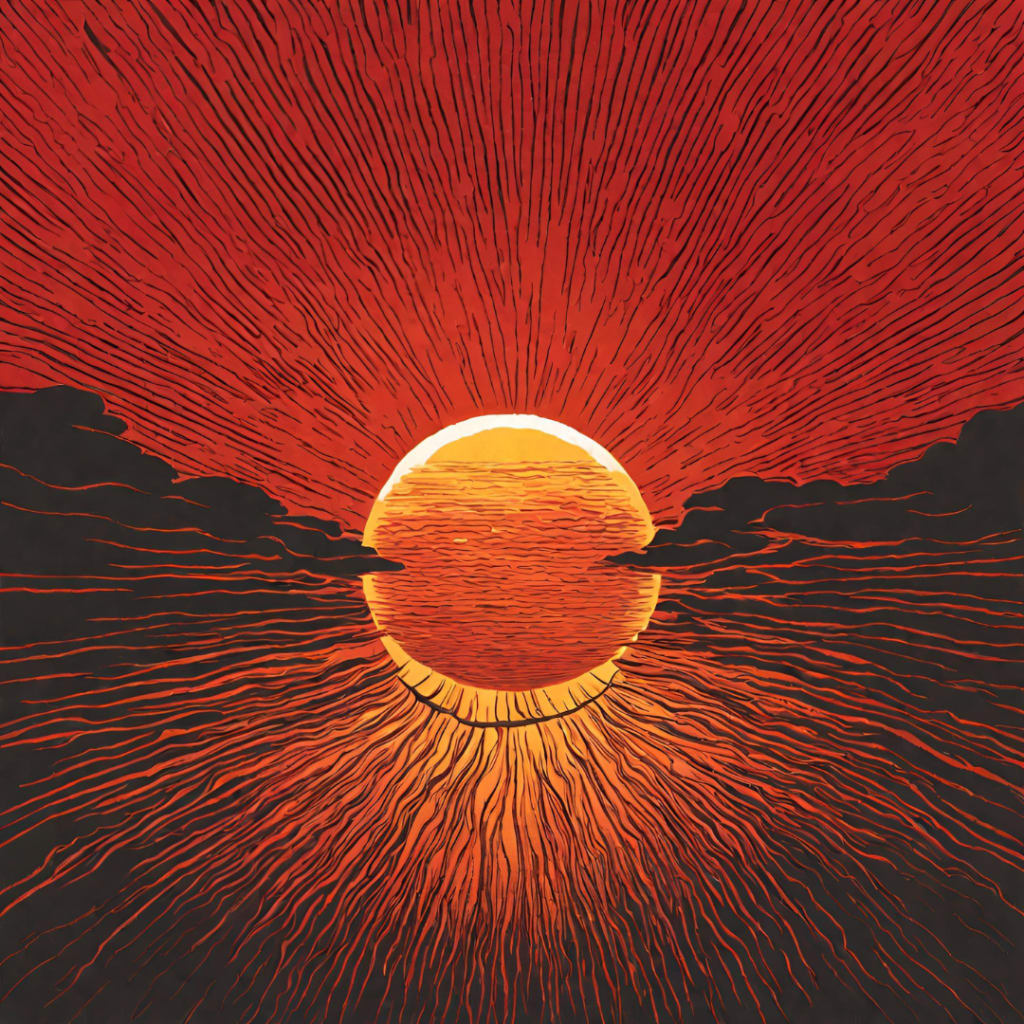
A Sun of Many Moods: Understanding the Solar Cycles
You may have heard whispers about the Sun getting a bit "angry" lately, leaving you wondering what's going on up there and whether you should be concerned. To put it simply, yes, you should be. You see, the Sun isn't just a dazzling ball of light in the sky; it has its rhythms and cycles of activity, and these patterns can profoundly influence our planet.
Sunspots - The Enigmatic Dark Spots
The Sun has a unique way of expressing itself. It goes through high and low activity phases, each lasting roughly 11 years. These cycles combine to create a grand 22-year cycle of ups and downs. During the high-activity stages, the Sun emits high-energy radiation, including the potentially harmful ultraviolet light. This is where sunspots come into play.
Sunspots are like the Sun's freckles. They appear darker than the surrounding surface, indicating when the Sun is in one of its active phases. Scientists use a "butterfly diagram" to keep track of these sunspots over 11 years. It's like capturing the Sun's emotional state in a snapshot.
Unusual Quietness - The Recent Solar Calm
Here's where things get intriguing. Recently, the Sun has been surprisingly well-behaved, calmer than it has been in over a century. This tranquility is different from the norm, which makes it even more enjoyable. Instead of following the usual pattern of active-calm-active, we've found ourselves in an active-calm-calm phase. This shift in behavior is what has experts and scientists giving us a heads-up about what's coming our way.
We're in the middle of Solar Cycle 25 – the 25th 11-year solar cycle since records began in 1755. Initially, this cycle was expected to mimic the previous one, which was relatively peaceful. However, things are taking a different turn. The Sun has already exceeded the number of sunspots that NASA had anticipated, suggesting that this cycle won't be as calm as initially predicted.
Solar Explosions and Cosmic Fireworks
Now, you might wonder what this solar activity means for us Earth-dwellers. Here's where things get exciting, or rather, intense. Back in February 2022, a significant event occurred – a solar explosion obliterated 40 out of 49 SpaceX communication satellites. No, it's not some interstellar feud; it resulted from high-speed electromagnetic plasma gas from the Sun, also known as "solar wind," creating chaos in our atmosphere and sending those satellites hurtling back to Earth.
Another cosmic phenomenon to watch out for is solar flares. These are like powerful electromagnetic fireworks on the Sun, often connected to those sunspots. When the Sun's super-hot plasma gas starts swirling and twirling, it also tangles up the magnetic field lines in sunspots. When these magnetic lines snap, they produce a spectacular explosion that sends X-rays and gamma radiation hurtling through space at the speed of light. These solar flares are categorized by strength, with X-class as the most potent. They can cause radio blackouts on Earth, disrupt satellites, affect astronauts in orbit, and even mess with passengers on high-altitude airplanes.
When the Sun Hurls "Cosmic Bombs" - Coronal Mass Ejections
Now, let's dive into Coronal Mass Ejections (CMEs). These are much larger than solar flares and potentially more hazardous. They originate in the Sun's corona, a scorching-hot layer surrounding the Sun's surface, even hotter than the surface itself. The mystery here is that scientists still need to understand why the coronavirus is so much more desirable.
Weathering the Solar Storms
When CMEs are headed our way, they bring a storm of ionized and electrified gases. You might wonder why we're concerned when Earth boasts a magnetic field and a protective atmosphere. While our magnetic field does an excellent job of deflecting most harmful stuff, it can't entirely shield us from CMEs.
These positively charged atomic nuclei create a "proton storm." While our atmosphere prevents harmful X-rays from solar flares, it's ineffective against proton storms. Our last line of defense is Earth's magnetosphere. When Earth faces a CME, we can anticipate awe-inspiring auroras around the magnetic poles. There's a chance these auroras extend to lower latitudes.
The Sun's Whisper - The Parker Solar Probe
As we enter this phase of heightened solar activity, it's crucial to monitor the Sun's behavior closely. A key player in this endeavor is the Parker Solar Probe, a spacecraft about 3.8 million miles from the Sun's surface, roughly a tenth of the distance to Mercury. The probe experiences a scorching 2,400 degrees Fahrenheit, but advanced technology maintains a comfortable room temperature inside. A 4.5-inch thick carbon composite heat shield safeguards the probe's instruments as they measure the intensity of the solar wind, providing valuable insights into solar behavior.
The Challenge of Predicting Solar Activity
With the Sun's behavior deviating from our expectations, scientists are faced with the intricate task of predicting its future activity accurately. The last few cycles have defied expectations, with an extended sunspot absence. However, recent developments indicate intense magnetism from the Sun's interior, reaching the surface. This unpredictability poses potential risks, particularly as the National Center for Atmospheric Research predicts that Solar Cycle 25 could be one of the most robust on record.
Preparing for Solar Uncertainty
Preparing for the uncertainties it brings is essential as the Sun transitions into a more active phase. Our increasing reliance on satellite technology, communication systems, and space exploration makes comprehending the Sun's impact on our daily lives critical. Solar flares and CMEs are powerful phenomena that can impact technology and space exploration, emphasizing the need for vigilant solar monitoring and developing measures to mitigate potential risks.
The Next Frontier - Advanced Space Suits
The significance of advanced space suits becomes apparent in the face of heightened solar activity and upcoming lunar exploration missions. These suits, worn by astronauts, serve as their primary protection against the harsh environment of space. They shield against extreme temperatures and provide life support systems, including air, water, and temperature regulation.
A Vision of Lunar Exploration
The exploration of the Moon is a significant milestone in space exploration. Returning to the Moon serves as a critical step in advancing technology and understanding the possibilities for future missions to Mars and beyond.
Overcoming Challenges in Lunar Exploration
Lunar exploration comes with its fair share of challenges. The Moon's harsh and unforgiving environment requires reliable transportation and sustainable habitat solutions. To tackle these challenges, scientists and engineers are working on innovations such as biocontamination control in space suits, advanced lunar vehicles, and the potential utilization of lunar ice for rocket fuel. Overcoming these obstacles is essential for the success and sustainability of lunar missions.
A Lunar Oasis - The Vision of Lunar Living
For many scientists and space agencies, the dream of a lunar space station has been a long-held vision. Establishing a lunar base could provide a platform for deeper space exploration, opportunities for scientific research, and even open doors for lunar tourism. The Moon's proximity to Earth makes it an ideal testing ground for technology and habitat development that could be used for future missions to Mars and other distant destinations.
Charting the Future of Space Exploration
In conclusion, our Sun's behavior and impact on our planet deserve our attention. As we venture into the mysteries of space and prepare for lunar living and exploration, staying up-to-date with the Sun's activity is essential. Innovations in technology and lunar exploration will play a pivotal role in shaping the future of space exploration and our understanding of the cosmos.
About the Creator
Gabriel Corbin
Not much to say, just a person writing articles
Loves German shepherds.
Enjoyed the story? Support the Creator.
Subscribe for free to receive all their stories in your feed.
Comments
There are no comments for this story
Be the first to respond and start the conversation.