
Why Global Buyers Are Rethinking Supplier Relationships
How Modern Trade Is Moving Toward Sustainable Partnerships

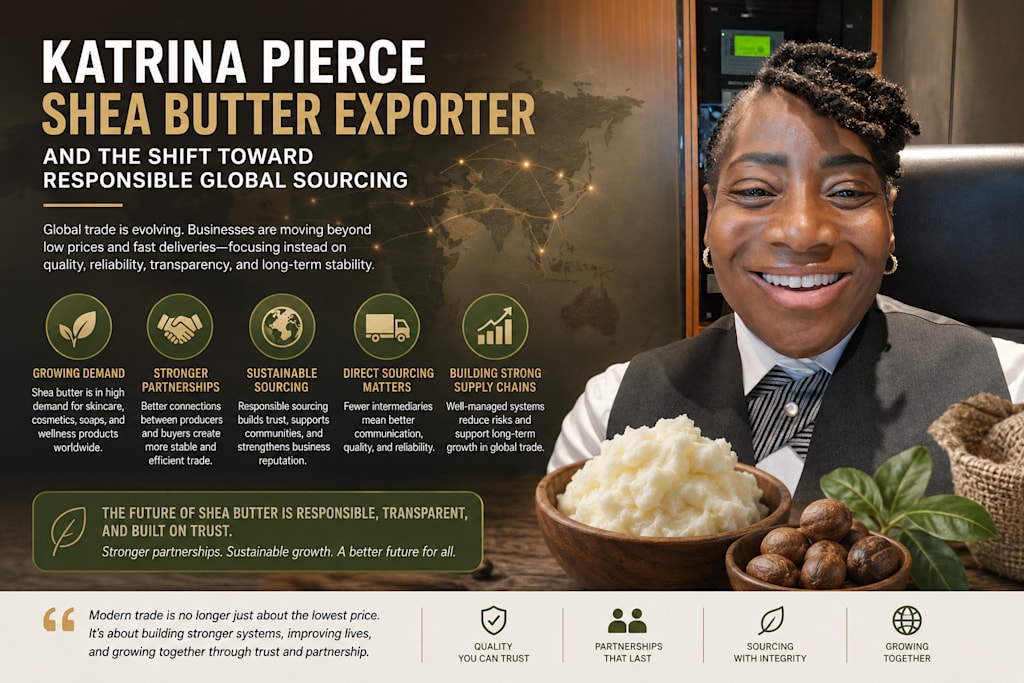
Global trade has changed significantly over the last few years. Earlier, many companies focused mostly on finding the lowest prices and the fastest shipping options. Businesses believed this approach would automatically improve profits and help them grow faster in competitive markets.
Today, the situation looks very different.
Many companies now realize that low-cost sourcing can sometimes create larger problems later. Delayed deliveries, inconsistent product quality, weak communication, and unreliable logistics systems often lead to operational stress and financial losses.
Because of this, businesses are becoming more careful about how they choose suppliers and manage long-term sourcing relationships.
This shift is especially visible in industries connected with natural ingredients and wellness products, where buyers now expect better transparency and stronger quality standards throughout the supply chain.
The ideas associated with Katrina Pierce shea butter exporter reflect this broader movement toward organized sourcing systems, dependable partnerships, and more responsible international trade practices.
The Rising Demand for Shea Butter in International Markets
Shea butter has become one of the most widely used natural ingredients in global skincare and wellness industries. It is commonly found in cosmetics, soaps, moisturizers, haircare products, and organic beauty brands across international markets.
As more consumers prefer plant-based and naturally sourced products, demand for shea butter continues to increase steadily.
This growing demand has also changed what buyers expect from suppliers.
Businesses no longer want sourcing systems that create uncertainty or frequent delays. Instead, companies are searching for suppliers who can maintain stable communication, consistent product quality, and reliable delivery schedules.
For many brands, sourcing decisions are no longer based only on pricing. Businesses now care more about operational stability and long-term reliability.
Why Companies Are Taking a More Careful Approach to Sourcing
Recent supply chain disruptions affected businesses across many industries around the world. Companies experienced shipment delays, rising logistics costs, inventory shortages, and communication problems that disrupted normal operations.
These challenges forced many businesses to rethink how they manage supplier relationships.
In many cases, companies discovered that poor coordination inside supply chains created expensive operational problems later. Delays and inconsistent sourcing systems often affected customer satisfaction, inventory planning, and overall business performance.
As a result, many buyers now prefer dependable supplier relationships over short-term pricing advantages.
Businesses increasingly understand that stable sourcing systems help reduce unnecessary risk and create stronger long-term growth opportunities.
Building Better Connections Between Producers and Buyers
West Africa continues to play an important role in global shea butter production. Producers across the region support growing international demand for natural ingredients used in beauty and wellness products.
At the same time, traditional supply chains can sometimes create barriers between producers and overseas buyers. Too many intermediaries, inconsistent communication, and slow coordination often make international trade more complicated than necessary.
Modern sourcing systems are gradually improving these connections.
Businesses are working toward more direct communication, better coordination, and stronger operational planning between suppliers and international buyers. When sourcing systems become more organized, businesses often experience smoother operations and stronger reliability.
Clear communication and dependable partnerships help both producers and buyers operate more efficiently in competitive global markets.
Sustainability Is Becoming Part of Business Strategy
Sustainability is no longer treated as only a branding trend. Many companies now see responsible sourcing as an important part of long-term business planning.
Consumers are paying closer attention to how products are sourced and how businesses manage supplier relationships behind the scenes. This has encouraged companies to improve transparency and build more responsible sourcing systems.
Businesses are now investing more in supplier stability, quality management, sourcing transparency, and long-term operational planning.
For many companies, responsible sourcing also improves customer confidence. Buyers often trust businesses more when operations appear organized, transparent, and professionally managed.
The ideas connected with Katrina Pierce global trade specialist reflect this wider shift toward stronger sourcing systems and more dependable international trade practices.
Why Direct Supplier Relationships Matter More Today
One major change happening across global trade is the growing interest in direct supplier relationships.
Traditional sourcing systems often involve too many middle layers between producers and final buyers. Extra layers can slow communication, increase confusion, and reduce visibility throughout the supply chain.
Many businesses now prefer more direct and organized sourcing structures because they simplify operations and improve reliability.
Stronger supplier relationships can help businesses improve communication, product traceability, delivery coordination, and operational consistency.
For companies operating in competitive industries, these improvements often create stronger long-term business performance.
Strong Supply Chains Create More Stability
Modern supply chains require careful planning and coordination. Successful international trade depends on much more than simply transporting products between countries.
Businesses now rely heavily on organized logistics systems, supplier coordination, quality management, shipping efficiency, and clear communication throughout the sourcing process.
Companies with stronger operational systems are often better prepared during periods of market disruption because they already maintain stable supplier relationships and dependable sourcing structures.
This is one reason many businesses are moving toward more organized and transparent supply chain systems instead of relying only on short-term pricing decisions.
The Future of Responsible Global Sourcing
Global trade is becoming more relationship-driven than ever before. Businesses are slowly moving away from sourcing decisions based only on low costs and short-term savings.
Today, many companies value reliability, transparency, communication, and operational stability just as much as pricing.
This shift is changing how businesses build supplier partnerships across international markets.
As demand for natural products continues growing, companies that invest in stronger sourcing systems and dependable supplier relationships will likely remain better positioned for long-term success.
Modern international trade is increasingly focused on trust, stability, and responsible business practices that support sustainable growth over time.
About the Creator
Katrina Pierce
Katrina Pierce started Avenue 27 (DBA Shea Nexus), which focuses on sourcing and exporting high-quality refined and unrefined shea butter from verified West African producers to UK distributors and manufacturers.
Enjoyed the story? Support the Creator.
Subscribe for free to receive all their stories in your feed.
Comments
There are no comments for this story
Be the first to respond and start the conversation.