
Why Bees Die After Stinging?
The kamikaze defense mechanism of the honeybee is more complicated than it seems.
As the sun shone bright in the sky, a group of children gathered around the beehive in the meadow. Curious to see what was inside, they poked at the hive with a stick until the angry bees began to swarm around them.
One child, Sally, was particularly unlucky and received multiple stings. She ran home screaming to her mother, who quickly applied ointment to the stings and called for the local beekeeper.
The beekeeper arrived and inspected the hive, confirming that it was a colony of Africanized honey bees, known for their aggressive nature. He advised the family to stay away from the hive and warned them that the bees may attack again if disturbed.
But Sally's father, a hot-headed man, took offense at being told what to do on his own property. He decided to take matters into his own hands and proceeded to destroy the hive with a can of insect spray.
The bees, sensing the threat, launched a fierce counterattack, stinging both Sally's father and the beekeeper.
It's quite an unpleasant experience, as the sting burns for hours and leaves a painful swelling that lasts for days. However, the honeybee doesn't fare much better, as it dies shortly after stinging you. One may wonder why an animal would have a self-defense mechanism that harms itself even more than its attacker. The kamikaze defense mechanism of the honeybee is more complicated than it seems. Let's put on some gloves and dive deep into bee stings.
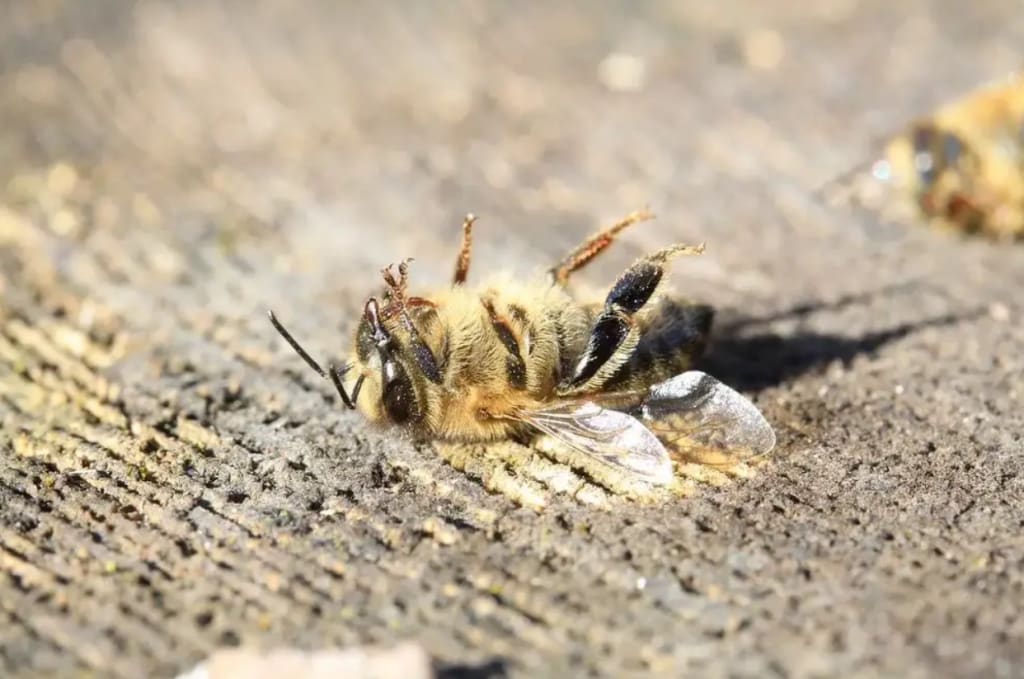
Bees usually sting humans only when they feel threatened, such as when their hive is in danger. They will only attack if they are provoked or feel their home is threatened. In the case of honeybees, when they sting, they cannot pull away from the skin due to their barbed lancets, which makes inserting and pulling out the stinger a one-way event. After the sting, the bee dies as its digestive system and other vital organs are torn out from its backside.
When a honeybee stings other insects, they can remove their stingers just fine since the barbed lancets that make honeybee stingers so effective are designed to dig into the mammalian fibrous skin. Bee venom contains melittin, which causes redness and swelling and can spread through the water-filled human body. It's crucial to remove the stinger as quickly as possible after a sting since it can continue to pump venom until it's extracted fully.
It's not just honey bees that sting; other bees and wasps also have stingers. However, unlike honeybees, their stingers aren't barbed and can repeatedly sting without harming themselves. Wasps and hornets have a venom composition, which doesn't land on the acidic side of the ph scale like bee venom.
Elephants are actually afraid of bees and the sound of buzzing bees is enough to keep them away. Conservationists encourage farmers to use beehives to keep elephants off their land.
Bee stings are not just about the immediate pain and swelling; they have a whole world of complexity beyond what we feel on the surface. The intricate composition of a bee's venom, for example, consists of various enzymes, peptides, and toxins that elicit varied responses in the human body. While some people believe in the potential healing properties of bee stings, such as their ability to provide relief for certain ailments, it's important to note that there is currently no scientific evidence to support these claims.
Nonetheless, the mere fact that a single sting involves such a complex mixture of substances and reactions is truly fascinating. It makes you wonder about the mysteries surrounding the behavior and physiology of bees. So, have you ever experienced the unexpected encounter with a bee's stinger?
About the Creator
Enjoyed the story? Support the Creator.
Subscribe for free to receive all their stories in your feed.
Comments
There are no comments for this story
Be the first to respond and start the conversation.