
What is the reason behind the lack of interest in residing in the central region of the United States?
This may be the reason
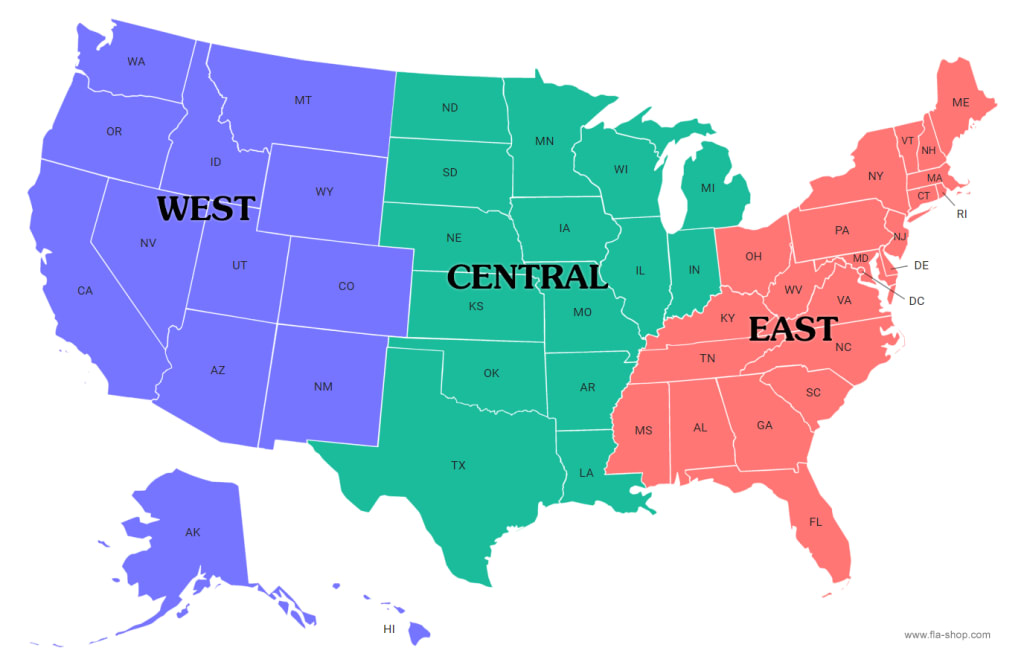
According to the United Nations, India claimed the title of the most populous country in the world in 2023. Would you venture a guess as to where the United States of America ranks in that list? It sits at number three. While America is the fourth largest country in terms of landmass, covering about 6% of Earth's total land, there's ample space for its population of 335 million people.
However, this population is not evenly distributed. If we draw a line from North Dakota in the north to Texas in the south, splitting the country in half, remarkable disparities emerge. Approximately 80% of the U.S. population resides east of this imaginary line, leaving the remaining 20% to the west. This uneven distribution becomes evident when examining major metropolitan areas such as Los Angeles, San Diego, and San Francisco. A nighttime satellite map of the U.S. reveals the bright glow on the right, emphasizing the concentration of population on the coasts.
The historical expansion of the U.S. from the original 13 colonies on the east coast to westward expansion, including the Louisiana Purchase, has contributed to this demographic pattern. The Midwest, situated in the middle, aligned with the Mississippi Watershed, boasts fertile soil ideal for agriculture. However, despite its vast size—twice that of California—it remains largely underpopulated, with only 1% of the total U.S. population residing there.
This under-population is attributed to historical factors, geographical features, and climate conditions. The belt stretching from the Canadian border to Mexico through the Great Plains comprises 12% of the contiguous United States but holds only 1% of the population, approximately 3 million people. Comparing it to Nigeria, which has a similar land area but a population of 206 million, highlights the unrealized potential of the American Midwest.
The historical westward expansion does not fully explain this under-population. Geography plays a crucial role, as the Great Plains, with its flat terrain, is bordered by the Rocky Mountains. This mountain range, around 76 million years old, influences the region's climate through the rain shadow effect. West of the Rockies receives ample precipitation, while the Great Plains experience a drier climate, discouraging large settlements.
The climate in the Great Plains, characterized by extreme temperature fluctuations, from hot summers to extremely cold winters, further hinders population growth. The region's aridity and weather patterns make it less suitable for agriculture and less attractive for settlers. In contrast, California's ability to support a population of nearly 40 million people despite a similarly dry climate is attributed to extensive irrigation systems and access to water sources.
The pattern of population distribution based on climate is not unique to the U.S. Australia, with its predominantly arid or semi-arid interior, sees 70% of its population concentrated in coastal areas. Similarly, in Europe, major cities like Paris draw a significant population, while vast inland areas remain less densely populated.
Ultimately, the concentration of population in the U.S. along the coasts reflects a global trend where large cities, offering economic opportunities, become centers of population growth, leaving vast inland areas with lower population density. This phenomenon underscores the significance of historical, geographical, and climatic factors in shaping settlement patterns and population distribution
About the Creator
Enjoyed the story? Support the Creator.
Subscribe for free to receive all their stories in your feed.
Comments
There are no comments for this story
Be the first to respond and start the conversation.