
What If All The World's Supervolcanoes Erupted At Once?
The Ultimate Catastrophe: Unleashing the Fury of All Supervolcanoes Simultaneously
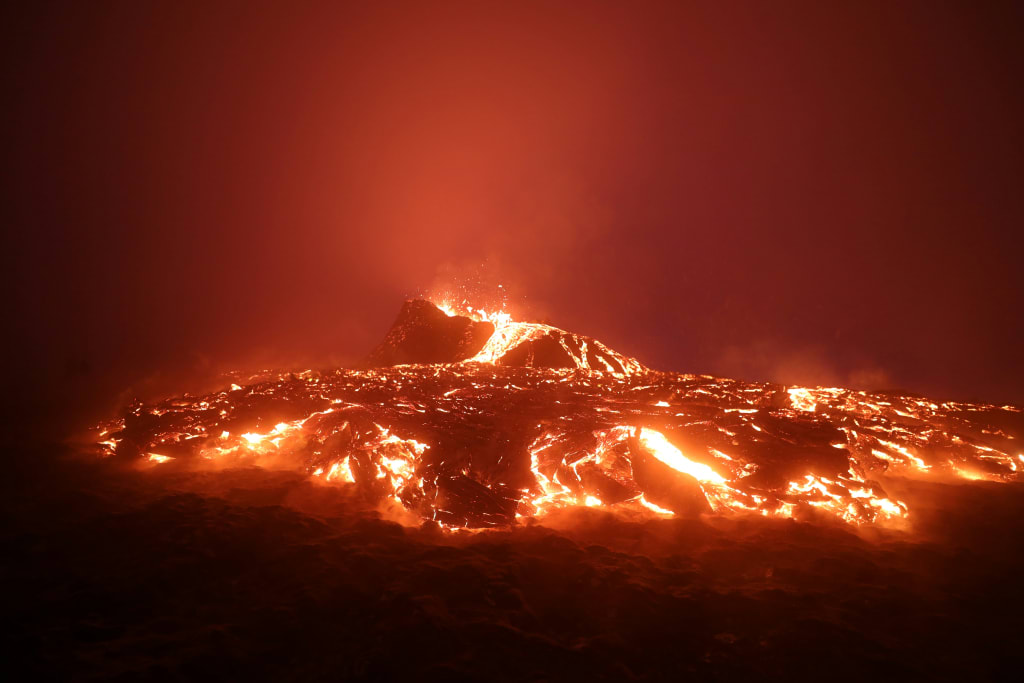
In 1815, Mount Tambora erupted in Indonesia and caused the deaths of an estimated 92,000 people. It was the largest eruption ever recorded. Surprisingly, Tambora was only about one-seventh the size of the smallest supervolcano.
There are around twelve supervolcanoes globally. The last eruption occurred 26,500 years ago in New Zealand, covering the island in ash. It is highly improbable for multiple supervolcanoes to erupt simultaneously. However, for the sake of curiosity, what would happen if all the world's supervolcanoes erupted at once?
If all the supervolcanoes erupted, you would struggle to find a safe place to escape to. Each continent has at least one supervolcano, like Yellowstone in the US, Ngorongoro in Tanzania, and Toba in Indonesia. So, no matter where you are, you're in trouble.
At least there would be a warning. Weeks or months beforehand, the ground would tremble with earthquakes. Then, on E-Day, the earth-shattering sound would unmistakably signal that something was terribly wrong. When Krakatoa erupted in 1883, it wasn't even close to the size of a supervolcano, yet it unleashed a roar so loud that the sound traveled nearly 4,800 kilometers across the Indian Ocean, shattering windows and deafening people along the way. A supereruption, even the smallest one, would far surpass Krakatoa's eruption in magnitude. The resulting damage would be unimaginably catastrophic.
And let's assume that you were fortunate enough to escape this initial destructive wave.
It would then be necessary to locate a fallout shelter.
because these supereruptions shoot rock thousands of meters high, billions of tonnes of ash, and volcanic glass into the sky.
This ash cloud doesn't only travel up; it also stretches outward, crashing across the terrain at jet-fighter speeds—not something you want to breathe in or be in the path of.
It would destroy any power grids in its path, poison water sources, and collapse buildings.
Assuming you were fortunate enough to escape this initial wave of devastation.
Then, because these supereruptions shoot billions of tonnes of ash, volcanic glass, and rock thousands of meters into the air, it would be necessary to locate a fallout shelter.
This ash cloud is not something you want to breathe in or be around since it spreads outward and crashes across the terrain at jet-fighter speeds. It would destroy any power grids in its path, poison water sources, and collapse buildings.
Additionally, the fallout would reach hundreds of kilometers, meaning that any cities close to a supervolcano would be destroyed right once.
As are any aircraft that try to transport people out of harm's way.
Remember too that ash spreads.
Ash from Toba's eruption 74,000 years ago was carried all the way to India by winds.
Volcanic debris would therefore spread over the entire planet if all of the supervolcanoes erupted at once. The calamity will have barely begun when the eruption stops. Because a large portion of that supervolcanic ash would remain in the stratosphere and block sunlight for the next six months, resulting in a 15-degree Celsius drop in world temperatures.
That is comparable to the summertime differences between Anchorage, Alaska, and Rio.
The eruption of "little" Mount Tambora was the only thing that caused the "Year Without a Summer," during which blizzards and frost afflicted a large portion of the Northern Hemisphere.
Multiply that by the roughly twelve supervolcanoes that are all ejecting dense, black dust, and you have a global volcanic winter that will last for a few years. Due to their inability to withstand low temperatures, tropical forests will eventually die, resulting in the extinction of millions of animal species that call them home.
And things are going to get worse soon. The proverb "out of the frying pan and into the fire" is well-known. That's right, those volcanoes spew poisonous gases like sulfur dioxide into the atmosphere in addition to ash. And after a few years, those gases would begin to descend as acid rain from the sky, right when the winter finally ends.
Half of all cattle perished and cropland was destroyed when the Laki volcano in Iceland erupted in 1783, spewing sulfuric acid in all directions. The ensuing famine claimed the lives of a full quarter of Iceland's population the next year. Thus, picture that everywhere.
Laki wasn't even a supervolcano, thus acid rain is likely in store over the ensuing ten years.
Bid adieu to civilization since it most likely cannot survive a worldwide famine lasting ten years. Currently, there are a few locations on Earth where, despite still experiencing cold
and starvation, as well as acid rain, would at least be spared from the explosions themselves.
Similar to volcanic islands like the Galapagos or, paradoxically, Hawaii, which is well-known for its volcanoes. The problem is that these volcanoes do not erupt violently; instead, lava flows are released gradually. So, while civilization collapses, you may at least take in a lovely vista.
About the Creator
Enjoyed the story? Support the Creator.
Subscribe for free to receive all their stories in your feed.
Comments
There are no comments for this story
Be the first to respond and start the conversation.