


Owls are nocturnal birds and are often associated with myths and legends. In the world, there are around 250 owl species that are divided into two families.
Owls that have heart-shaped faces belong to the barn-owl family, scientifically known as Tytonidae, and the others are from the typical-owl family called Strigidae.
Unfortunately, four owl species from the typical-owl family are listed as extinct by the IUCN Red List of Threatened Species, and six are looked at as being critically endangered due to climate change, fragmentation of habitat, and poaching.
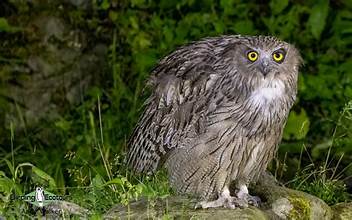
Blackiston’s fish owls live in China, Japan, and the Russian Far East. These owls are endangered due to land development, dam construction, and the loss of riverine forests.
The facial disks of these large owls are tawny brown with narrow black stripes. They have impressive yellow eyes with white eyebrows. Their bodies are a darker brown with blackish-brown stripes all over. The underparts are pale brown.
Due to their massive size and majestic appearance, the Blakiston’s fish owl is often revered in the areas in which it inhabits, and in Japanese culture, they are respected as divine beings.
These owls mainly eat fish but occasionally amphibians, crustaceans, and small mammals.
Forest owlets are found in Central India and are endemic to the forest areas. (pictured above)
These owls are tiny and stocky, with their wings and tail heavily banded. Their eyes are yellow, and they have pale facial disks. These owlets are known for their distinct vocalizations, and their song calls are mellow and short.
Forest owlets primarily consume small vertebrates, including rodents and reptiles like lizards, as well as insects. Their diet is diverse, reflecting their hunting habits and habitat availability.
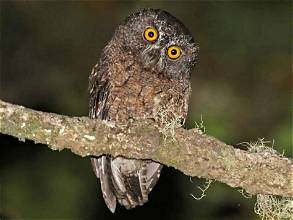
Karthala's scops owls live in the Comoro Islands, northwest of Madagascar. Their populations are threatened due to agricultural activities, livestock farming, and road and railroad construction.
These owls have two color morphs, a light and a dark. The lighter morphs are grayish brown, and the darker morphs are dark chocolate brown. They have tube-shaped eyes that are completely immobile, giving them binocular vision.
Karthala scops owls primarily feed on insects and other invertebrates, utilizing their nocturnal hunting skills to capture prey in their natural habitat.
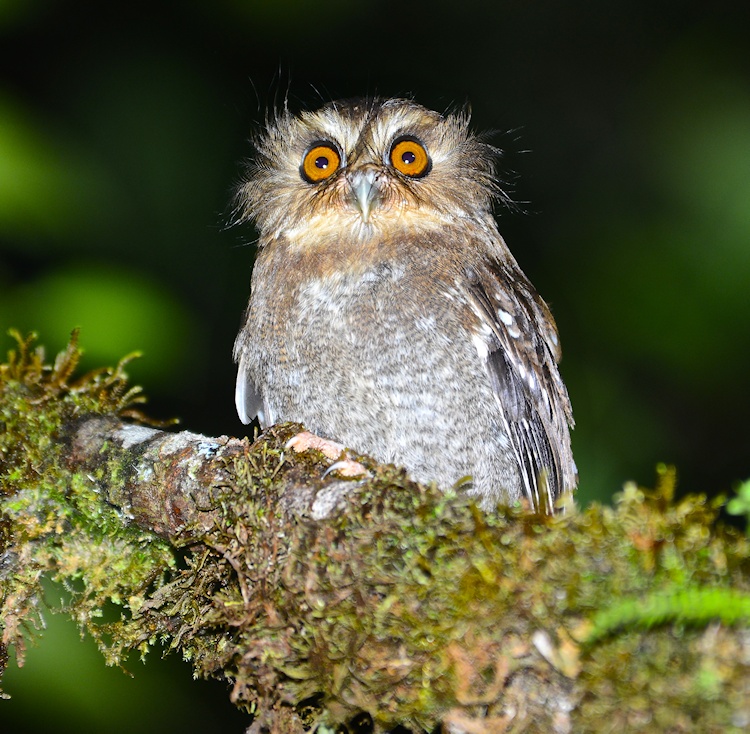
Long-whiskered owlets live in Peru. These are tiny owls that are restricted to a small area in the Andean mountains in northern Peru.
Their bodies are brown with whitish bellies and eyebrows. They have large orange-brown to amber-orange eyes with blackish-brown eyelids. Their most distinct feature is the fan-like whiskers at the sides of their facial disks.
Long-whiskered owlets primarily feed on insects and small invertebrates, but may also consume small vertebrates when available.
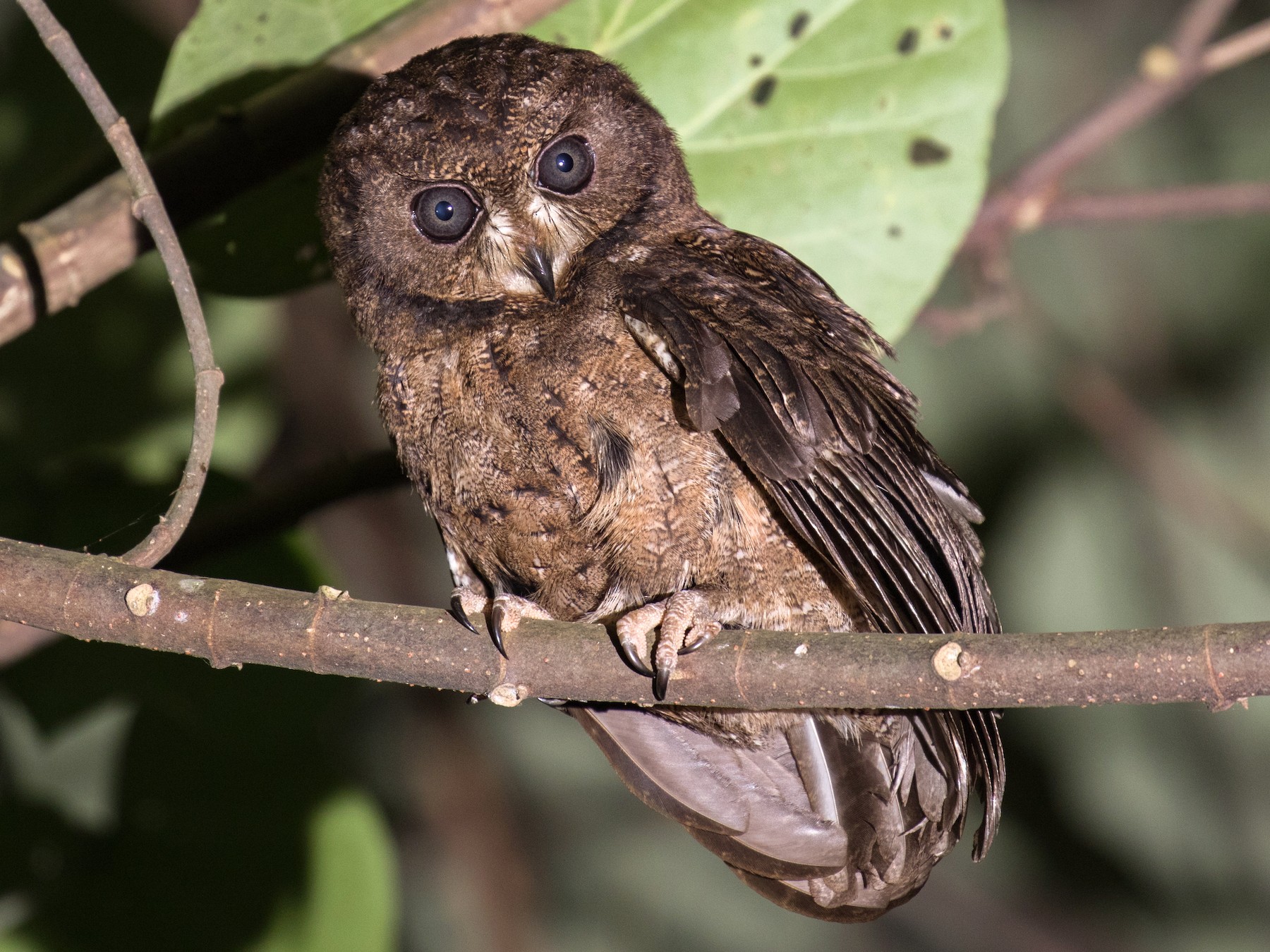
Moheli scops owls are a small owl species endemic to the Island of Moheli, a part of the Union of Comoros. They are threatened by deforestation and by black rats, which eat their eggs and infants and also compete for food.
This species has two color morphs, rufous and dark brown. The rufous is a reddish brown with weak bars and streaks, and the dark brown has darker brown plumage which is boldly marked. Their eyes are greenish-yellow. The owls have small ear tufts and black beaks.
Moheli scops owls primarily eat insects, which make up the bulk of their diet. They are nocturnal hunters, becoming active after sunset to forage for food.
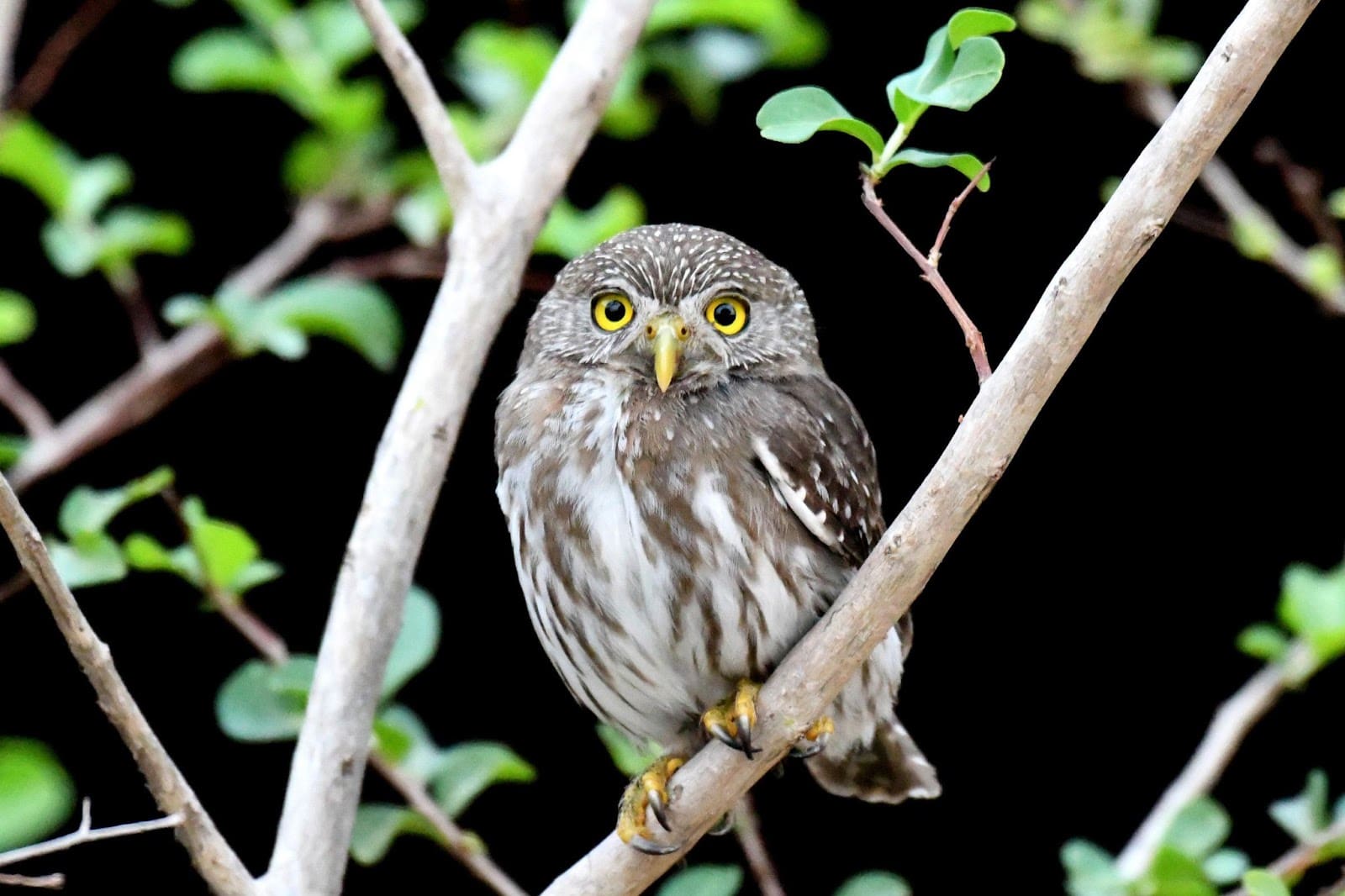
Pernambuco pygmy owls are a small owl species found in the state of Pernambuco in Brazil. They are among the rarest owl species that are classified as critically endangered and possibly extinct. They are threatened by deforestation, mainly sugar cane farming.
Their faces have brownish and whitish streaks, and the rest of the head is dark brown with white spots. Their eyes are yellow. The center of their chests are white, while the sides are yellowish brown with white spots.
Pernambuco pygmy owls primarily eat insects, with a notable observation of one consuming a large cicada. Their diet is presumed to also include small mammals and reptiles, although specific details are limited.
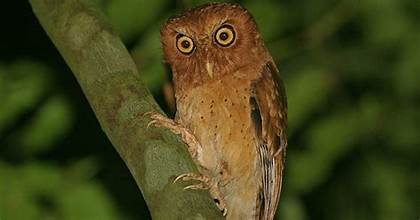
Serendib scopes owls make their homes in Sri Lanka. These are a tiny owl species in the southwest of the country. This was the first new bird species to be discovered in Sri Lanka since 1868. Twenty Sri Lankan rupee banknotes feature these owls.
They don’t have distinct facial disks and are reddish-brown with paler underparts. Their bodies feature blackish spots surrounded by paler rings, Their eyes are orange-yellow with black rims.
Serendib scops owls primarily feed on insects and small invertebrates, including beetles, crickets, and moths, which they catch in flight or pluck from foliage.
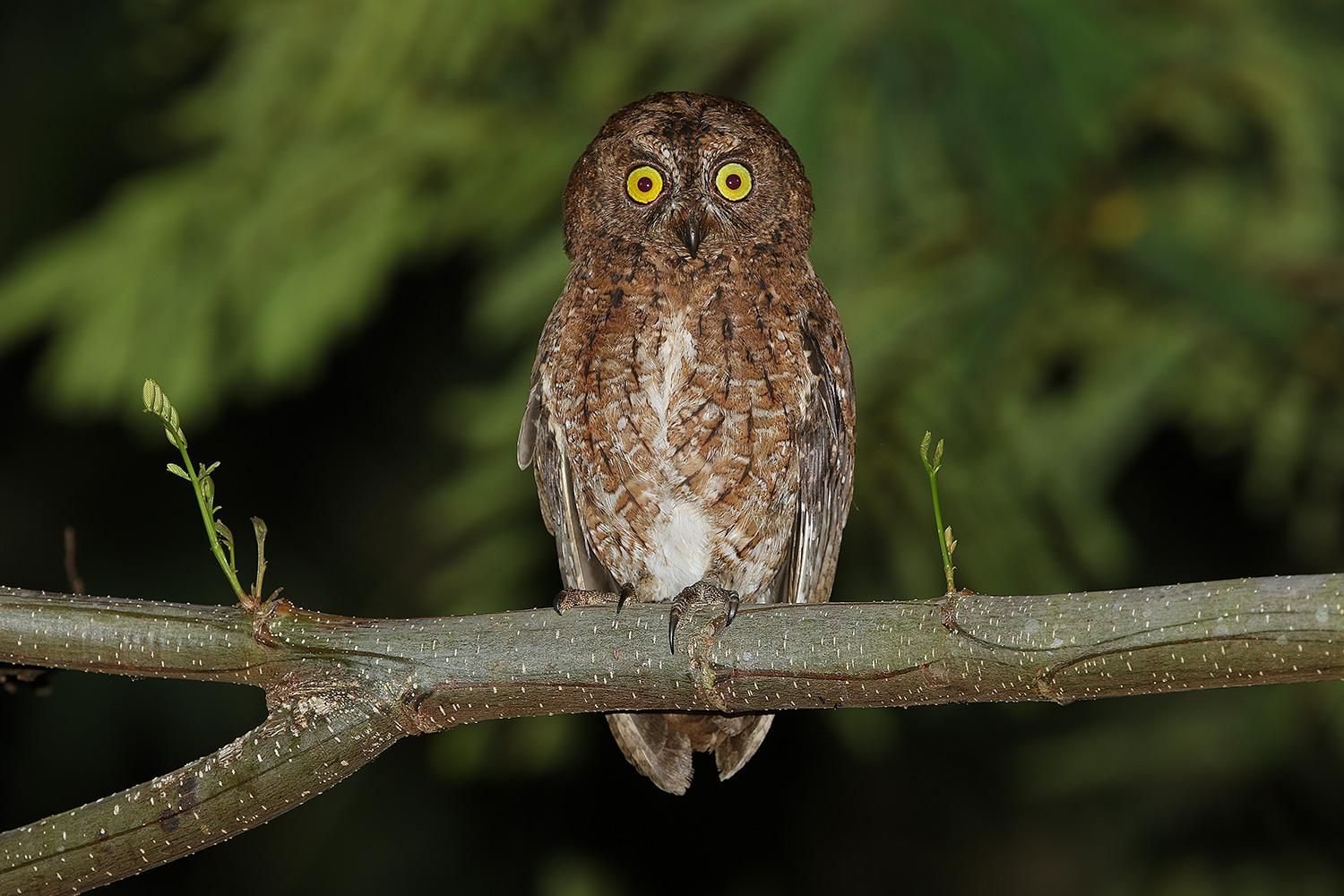
Sula barn owls make their homes in Indonesia. These owls are also referred to as Taliabu masked owls and are native to Sula Island, Maluku. They are threatened due to logging and wood harvesting.
Their faces are pale reddish-brown, with the coloring becoming darker toward their eyes. The underparts are brown with white speckles, and the tails are brown with three darker stripes.
Sula barn owls primarily feed on small mammals, particularly rodents like mice and voles, but may also consume birds, bats, and insects depending on availability and habitat conditions. Their hunting techniques include silent flight and acute hearing, allowing them to locate prey effectively.
About the Creator
Rasma Raisters
My passions are writing and creating poetry. I write for several sites online and have four themed blogs on Wordpress. Please follow me on Twitter.
Enjoyed the story? Support the Creator.
Subscribe for free to receive all their stories in your feed. You could also become a paid subscriber, letting them know you appreciate their work.
Comments
There are no comments for this story
Be the first to respond and start the conversation.