


Aye Ayes
Known as the twilight monster in Madagascar, the aye-aye makes its appearance and is something startling with its rodent-like fangs, bat-like ears, and amazing skeletal middle finger, which is twice as long as its other digits. According to local legend, seeing this creature one portends death. Aye ayes rap on trees with their skeletal finger and listen for insects in hiding places and then use that digit to bite a hole and extract the bugs.
Bald Uakaris
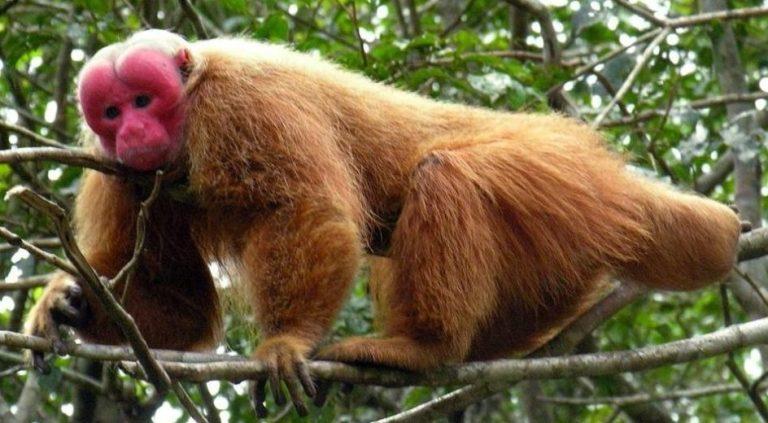
With their vivid red faces that contrast with their short white fur, bald Uakaris give the impression they are always shamefaced. For these monkeys the healthier they are, the brighter their faces. They have evolved an amazing adaptation to surviving in the Amazon Basin’s flooded jungles. Bald uakaris primarily have a frugivorous diet, consuming a variety of fruits, seeds, and flowers, along with occasional leaves and small animals.
Geladas
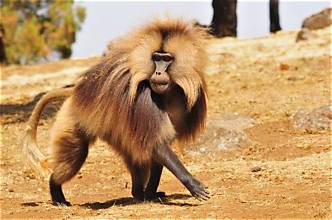
In the Ethiopian highlands, the gelada baboons attract attention with what appears to be raw, bleeding hearts on their chests. They have characteristic red patches, which are actually hairless pieces of skin that females exploit to entice potential mates. Geladas have the most sophisticated vocal repertory of any mammal, aside from humans. They spend up to 70% of the day sitting and grazing, making them the only primates who consume grass exclusively. These baboons are linguistic research subjects because of their lip-smacking, mimicking human speech patterns.
Golden Snub-nosed Monkeys
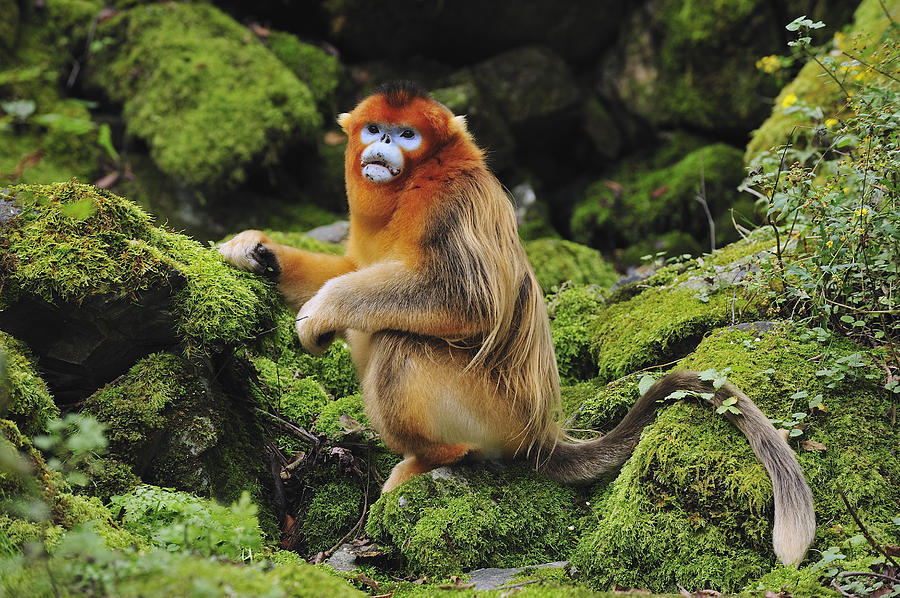
These monkeys are snub-nosed and appear to be sporting fashionable fur coats living in the icy mountain forests. Golden snub-nosed monkeys have azure faces and thick golden fur that stands out against the backdrop of the snow-covered Chinese mountains. In their hostile environment, their raised, flat noses protect them from frostbite. These monkeys congregate to stay warm during harsh winters when temperatures can drop as low as -30 degrees C. They use squeaks and snorts to communicate with one another despite their exquisite appearance.
Mandrills
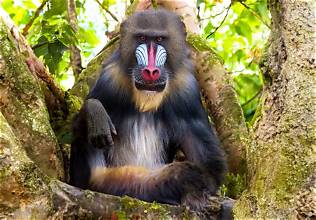
Mandrills appear to have faces painted by carnival face painters. They are the most colorful mammals on Earth, with rainbow-colored hindquarters, golden beards, and bright red and blue faces. These are enormous primates and are the relatives of central African baboons who live in forests. As their social standing increases, their amazing coloring becomes more intense; dominant males have the most vivid colors. They dine on fruits, insects, and occasionally tiny vertebrates.
Proboscis Monkeys
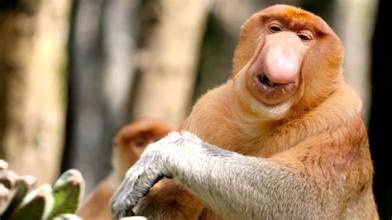
Consider a monkey whose nose is so large that it drapes beneath its lips. Massive, meaty noses hang prominently from the faces of male proboscis monkeys. They are more appealing to women monkeys if they have a larger nose. These orange-furred, pot-bellied primates are unique to the mangrove jungles of Borneo and have webbed feet for swimming. Their noses swell and become bright red when they’re upset. Proboscis monkeys primarily consume leaves, unripe fruits, seeds, and flowers, adapting their diet based on seasonal availability. They are specialized herbivores with a unique digestive system that allows them to process tough plant materials effectively.
Pygmy Marmosets
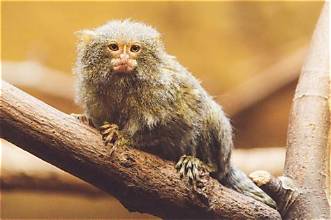
These are the tiniest monkeys on Earth; they are small enough to fit into the palm of a hand. These tiny monkeys can travel amazing lengths through the treetops of the Amazon rainforest. They use their tiny claw-like claws and gouge tree barks to get sap as part of their specialized diet. They communicate with high-pitched cries, can turn their heads 180 degrees, and can jump more than fifteen feet between tree branches.
Sifakas
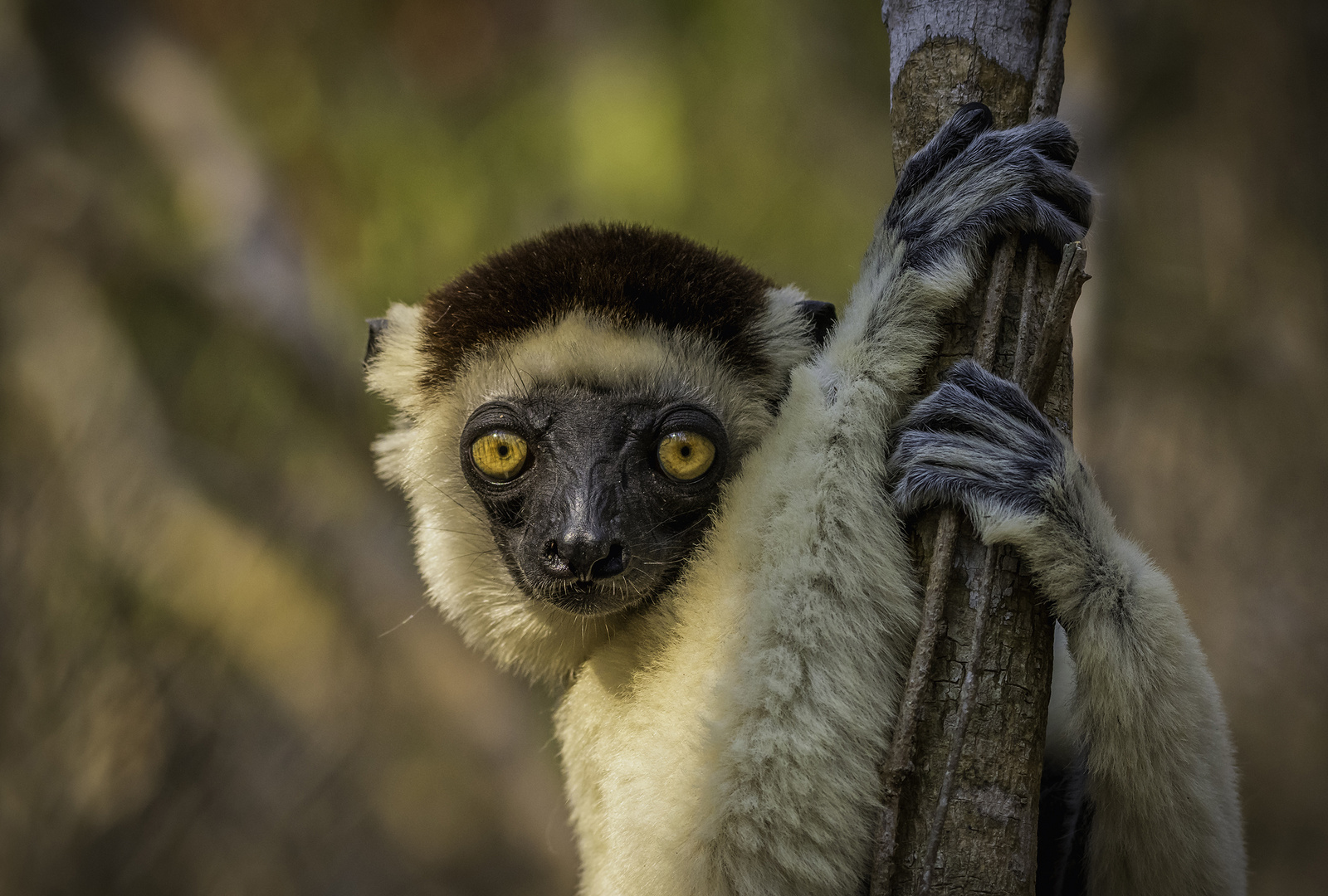
You’ll think a sifaka is trying out for a dancing company when you see one walk around the floor. These lemurs resemble elegant ballet dancers as they leap sideways on two legs while raising their arms high. Their legs are unsuitable for walking on all fours since they are perfectly designed for living in trees. They execute their well-known sideways dance when compelled to cross open space. Their home is in the woodlands of Madagascar. Sifakas primarily have a folivorous diet, mainly consuming leaves, fruits, and seeds, with occasional flowers and bark. Their dietary habits can vary based on species and seasonal availability of food sources.
Slow Loris
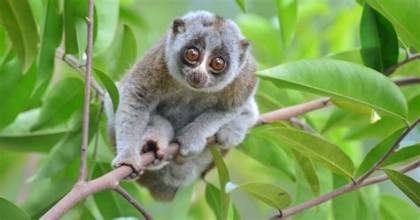
Don’t be fooled by those large, naive eyes; the slow loris is the only poisonous primate on Earth. When these primates feel threatened, they lift their arms over their heads, lick unique glands close to their elbows, and then combine the secretion with salive to produce a poisonous bite. These nocturnal creatures resemble live stuffed animals as they move slowly through the jungles of Southeast Asia. Despite the fact that they can induce anaphylactic shock with a bite, they are still targeted for the illicit pet trade.
Tarsiers
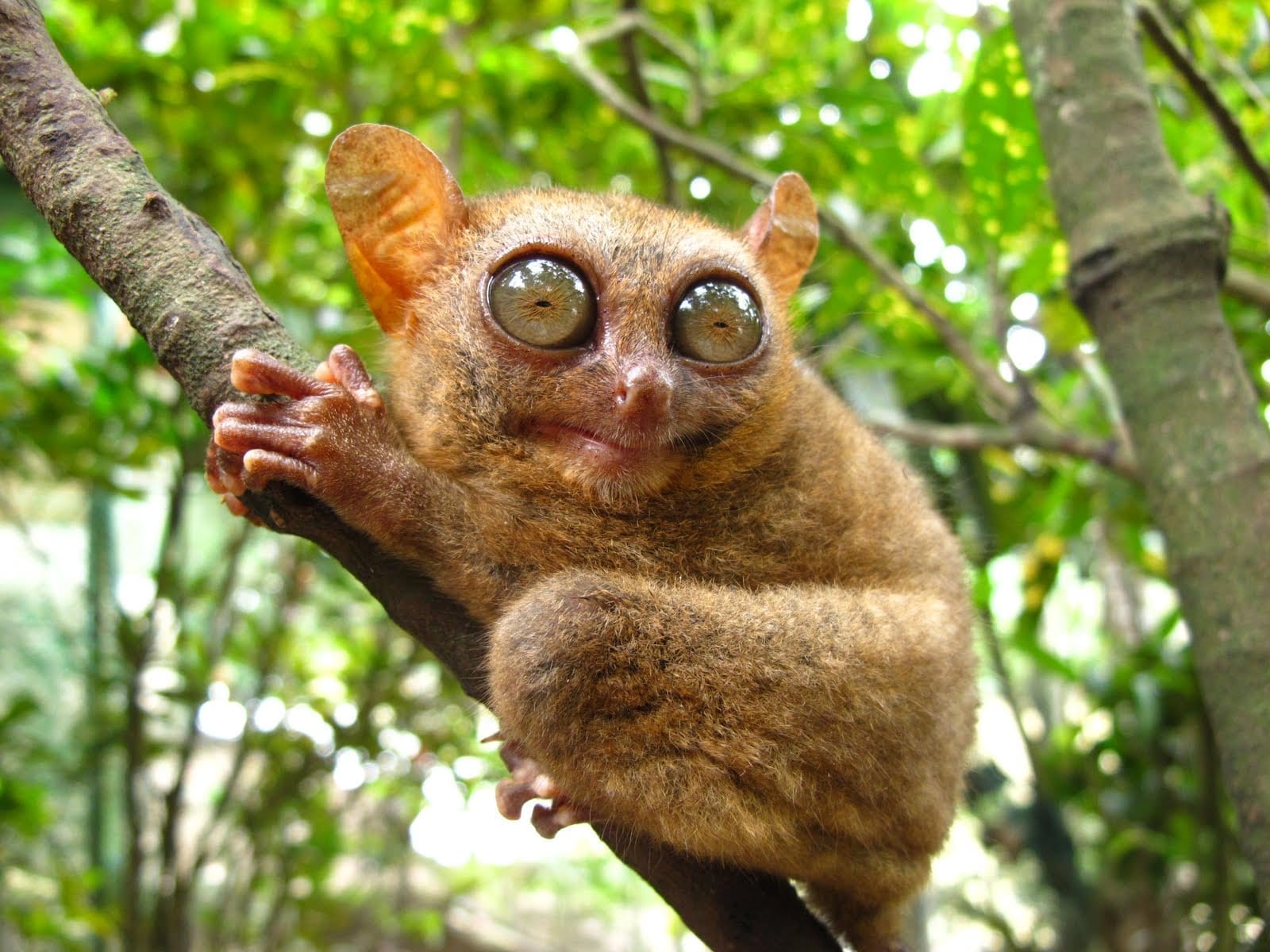
Tarsiers are incredible creatures with eyes that are larger than their brains. They are small, nocturnal animals that can twist their heads almost 180 degrees owl-style. However, they cannot move their enormous eyes. Tarsiers are great jumpers, being able to jump more than 40 times their body lengths due to their spring-loaded legs and suction-cup fingertips. They are the only monkeys that are carnivorous and dine on insects, lizards, and birds. Their claim to fame is that they influenced the design of the Gremlins in the well-known film in the 1980s.
About the Creator
Rasma Raisters
My passions are writing and creating poetry. I write for several sites online and have four themed blogs on Wordpress. Please follow me on Twitter.
Enjoyed the story? Support the Creator.
Subscribe for free to receive all their stories in your feed. You could also become a paid subscriber, letting them know you appreciate their work.
Comments
There are no comments for this story
Be the first to respond and start the conversation.