
Waste Wood Recycling Industry: Pyrolysis as a Circular Economy Solution for Efficient Utilization of Forest Residues
Turning Forest Waste into Valuable Resources—How Pyrolysis Is Revolutionizing the Circular Economy
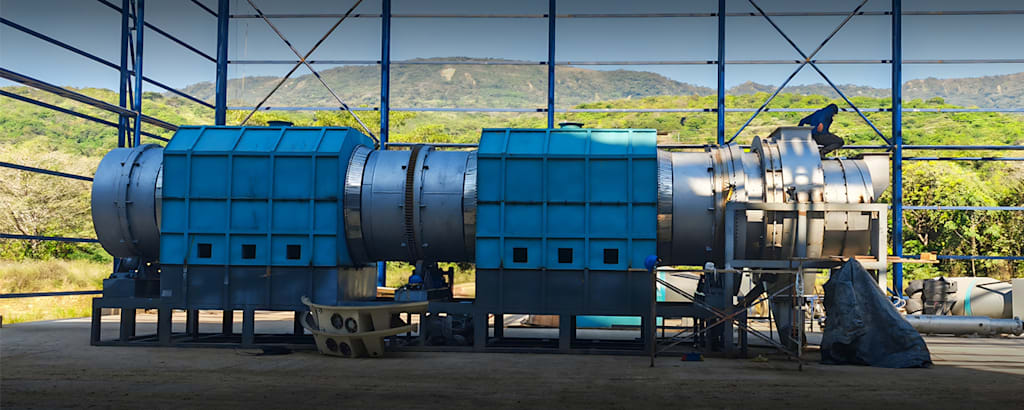
Every year, billions of tons of forest residues and waste wood are generated worldwide—from sawmill scraps and furniture manufacturing offcuts to construction debris and garden trimmings. For decades, much of this waste ended up in landfills, was burned openly (releasing harmful pollutants), or was discarded as useless debris. But today, a game-changing technology is transforming this "forest burden" into a "green treasure": pyrolysis. As a core thermochemical conversion process, pyrolysis not only solves the problem of waste wood disposal but also unlocks a new path for circular economy in the forestry and recycling industries. Let’s dive into how pyrolysis works, its unique advantages, and its role in building a more sustainable future.
What Is Pyrolysis, and How Does It Work for Waste Wood?
Pyrolysis is a thermal decomposition process that breaks down organic materials—like waste wood—in the absence of oxygen (or in an oxygen-limited environment) at high temperatures (typically 300–800°C). Unlike combustion, which burns materials to produce heat and harmful emissions, pyrolysis gently decomposes the complex organic compounds in wood (cellulose, hemicellulose, and lignin) into three high-value products: biochar, bio-oil, and syngas. This process is not just a "waste treatment" method; it’s a resource recovery system that maximizes the value of every piece of waste wood.
The pyrolysis process for waste wood in charcoal machine can be divided into three key stages. First, the waste wood is preprocessed: sorted to remove impurities (like metal or plastic), dried to reduce moisture content (to below 15%, as excess moisture wastes energy), and crushed into small particles to increase surface area for more efficient decomposition. Next, the processed wood is fed into a pyrolysis reactor, where it is heated in an oxygen-free environment. As the temperature rises, hemicellulose (the most temperature-sensitive component) decomposes first (200–300°C), followed by cellulose (240–350°C) and lignin (250–500°C). Finally, the decomposition products are separated: solid biochar remains, liquid bio-oil is condensed and collected, and syngas (a mixture of hydrogen, methane, and carbon monoxide) is captured for reuse. The entire process is self-sustaining in many cases—syngas can be burned to provide the heat needed for pyrolysis, reducing the need for external fuel sources.
Pyrolysis Products and Their Applications
One of the biggest advantages of pyrolysis is that it produces three valuable products, each with a wide range of applications—turning waste into a revenue stream for businesses and a resource for multiple industries. Let’s break down each product:
1. Biochar: The Carbon-Rich Soil Superstar
Biochar is a porous, carbon-rich solid material left after pyrolysis. It has a high surface area and excellent adsorption properties, making it an ideal soil amendment. When added to soil, biochar improves water retention, enhances nutrient availability, and promotes beneficial microbial activity—boosting crop yields and reducing the need for chemical fertilizers. Additionally, biochar sequesters carbon for decades to centuries, helping to reduce greenhouse gas emissions and combat climate change. It can also be used as a filter medium for water purification or as a raw material for carbon-based fertilizers.
2. Syngas: The Self-Sustaining Energy Source
Syngas is a mixture of combustible gases produced during pyrolysis. Its main components—hydrogen, methane, and carbon monoxide—make it an excellent fuel. In most pyrolysis plants, syngas is burned to generate the heat required for the pyrolysis process, creating a self-sustaining cycle that reduces energy costs. Any excess syngas can be used to generate electricity or heat for nearby facilities, further maximizing energy efficiency. When purified, syngas can also be used to produce synthetic natural gas or chemical feedstocks.
Pyrolysis in the Circular Economy: Closing the Loop for Forest Residues
The circular economy aims to eliminate waste and keep resources in use for as long as possible—and pyrolysis is a perfect fit for this vision in the waste wood recycling industry. Here’s how it closes the loop:
Forest residues and waste wood (the "input") are collected from sawmills, construction sites, and urban areas. Through pyrolysis, they are converted into biochar, bio-oil, and syngas (the "outputs"). These outputs are then reused in other industries: biochar goes back to agriculture to improve soil and sequester carbon; bio-oil is refined into fuels or chemicals; syngas provides energy for the pyrolysis process or nearby facilities. Even the ash from biochar can be used as a soil amendment or construction material. There is no "waste" in this system—every component is repurposed, creating a sustainable cycle that benefits the environment, the economy, and society.
For example, a sawmill generating tons of wood scraps can use a small pyrolysis unit to convert those scraps into biochar, which is then sold to local farmers. The syngas from the process powers the sawmill’s machinery, reducing its reliance on grid electricity. This not only reduces waste disposal costs but also creates a new revenue stream—turning a liability into an asset.
Final Thoughts: Pyrolysis—The Key to a Sustainable Waste Wood Future
Waste wood is not a burden—it’s a valuable resource waiting to be unlocked. Pyrolysis technology is changing the game for the waste wood recycling industry, turning forest residues into high-value products while promoting a circular economy. By replacing traditional, harmful disposal methods with a closed-loop system, pyrolysis helps reduce pollution, sequester carbon, and create economic opportunities for businesses and communities.
As we continue to prioritize sustainability and fight climate change, pyrolysis will play an increasingly important role in the forestry and recycling sectors. It’s not just a technology—it’s a step toward a future where no waste is wasted, and every resource is used to its full potential. Whether you’re a forestry professional, a recycling business owner, or simply someone passionate about sustainability, pyrolysis is a solution worth watching.
About the Creator
Enjoyed the story? Support the Creator.
Subscribe for free to receive all their stories in your feed.
Comments
There are no comments for this story
Be the first to respond and start the conversation.