
Unveiling the Enigma: Exploring the Top 5 Cryptic Underwater Sounds in Recorded History
The ocean
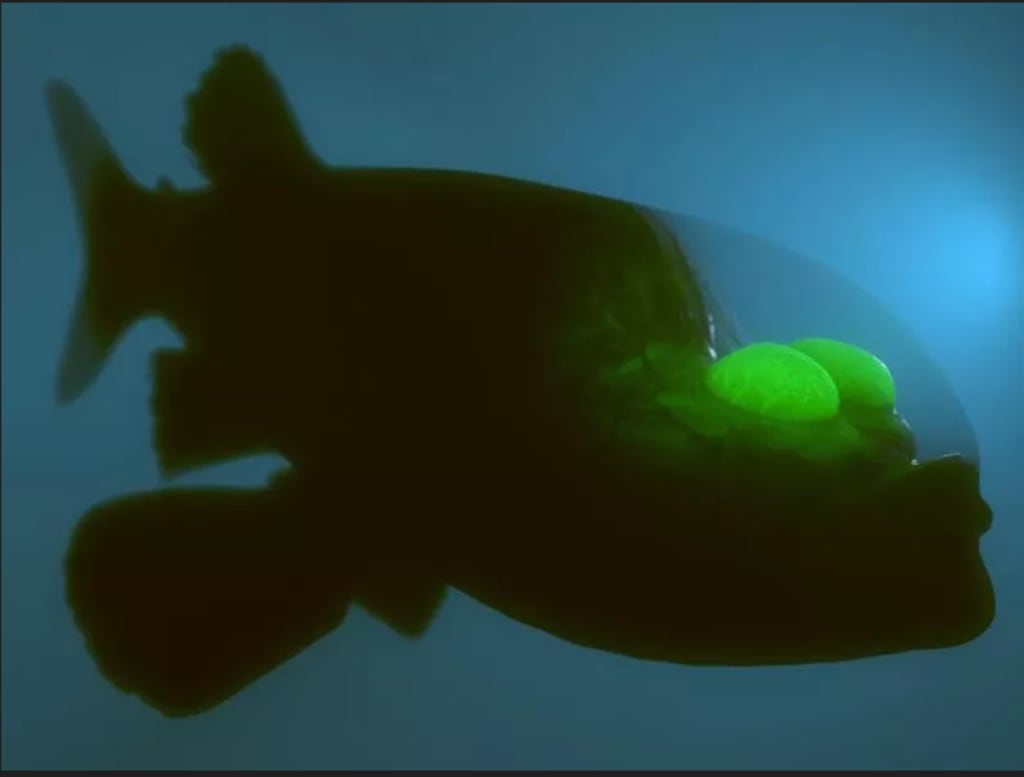
The ocean is a huge and largely unexplored place on our planet. Given the vastness of the ocean, it's not surprising that some pretty large animals still remain undiscovered. Some experts believe that given the vastness of the ocean, it would not be a surprise if some pretty scary animals remain undiscovered. Now, over the years, there have been many strange sounds caught by underwater devices that to this day have no real explanation. I recommend you wear headphones so you can better hear these sounds and let's get started with 5 of the most mysterious underwater sounds ever recorded in the ocean.
Let's begin with perhaps the most widely recognized underwater sound ever captured—the bloop. Many of you may already be familiar with it, but you might not have experienced the raw, real-time recording. Initially detected in 1997 by hydrophones scattered across the Pacific, this enigmatic sound resonated loudly. Remarkably, the underwater microphones that captured it were situated approximately 3000 miles away, yet they successfully registered its presence.
While numerous versions available online have been accelerated by 16 times to enhance the clarity of the bloop, I personally find the original, unaltered version more haunting and mysterious. Shortly after this recording, the National Oceanic and Atmospheric Administration (NOAA) identified the sound's origin. It was pinpointed around 650 miles off the South American coast in a secluded area of the Pacific Ocean. This revelation sparked excitement among enthusiasts of speculative fiction, as this region aligns with where H.P. Lovecraft's mythical Cthulhu creature, introduced in 1928, was believed to dwell.
Despite the NOAA attributing the sound to an ice quake, there is no concrete evidence supporting this explanation. So, what caused the bloop? Some propose it could be a blue whale, but historical records show no instances of blue whale sounds being audible from a distance of 3000 miles. Others strongly advocate for the possibility of a whale hybrid or some colossal, unidentified sea creature. Nevertheless, with the sound's precise origin still elusive, the bloop remains an unsolved mystery.
Another mysterious underwater sound, dubbed "upsweep," earned its name due to its distinctive narrow band, up-sweeping sound. This puzzling auditory phenomenon was first detected in August 1991, when the Pacific Marine Environmental Laboratory initiated its underwater audio surveillance.
What sets this recurring sound apart is its seasonality—during spring and autumn, it intensifies, only to subside in volume during the rest of the year. Adding to the intrigue is the gradual decrease in noise level since its initial discovery, though it still faintly resonates through the sea. The real-time version, which is notably lengthy, has been accelerated 16 times for a more accessible listen. Believed to emanate from submarine volcanoes, there's speculation that the sound may result from trapped bubbles in a cave or overhang, contributing to its peculiar nature. Originating from the unexplored depths of the Pacific Ocean, the cause of this recurrent seasonal sound remains a mystery.
Moving on to another unidentified sound, recorded on March 5, 1997, by the Equatorial Pacific Ocean Autonomous Hydrophone Array, dubbed "the train" due to its similarity to the wheels of a train on tracks. Limited information is available on this enigmatic sound, but several theories suggest it could be an iceberg dragging along the sea floor, generating shock waves that produce the sound. However, some assert it might be a massive sea creature dwelling in the ocean's icy depths. With the ocean's deepest recesses yet to be unveiled and new sea creatures discovered annually, the possibility remains open. Is it an iceberg scraping the ocean floor, or is it a creature beyond our imagination?
Since March 1999, an annual underwater sound known as "Julia" has been recorded by the National Oceanic and Atmospheric Administration off the coast of South America. This eerie sound has sparked considerable speculation, with many believing it to be the vocalization of a colossal underwater sea creature, resembling a deep, haunting howl. The debate revolves around whether Julia's origin lies in underwater volcanic activity, a large iceberg striking the ocean floor, or a creature yet unknown. Despite theories and alleged photographic evidence, Julia's true cause continues to elude confirmation.
Moving on to a recording from May 19, 1995, captured by underwater recorders in the equatorial Pacific Ocean near the Antarctic Peninsula. This unsettling sound, resembling something from a horror movie, features a descending frequency detected by sensors nearly 3,100 miles away. When released to the public, the sound was sped up 16 times to highlight the frequency change. Some propose that the sound's spectrum closely resembles ice friction vibrations, suggesting it may result from ice sheets breaking off thousands of miles away, plunging to the ocean floor and causing vibrations through the sea. Despite this theory, the National Oceanic and Atmospheric Administration classifies this slowed-down mysterious sound as one of their unexplained phenomena, adding another layer of mystery to these underwater enigmas.
In summary, these five underwater sounds, both real and mysterious, invite speculation about their origins and continue to captivate the imagination. What do you think is behind these intriguing aquatic phenomena?
About the Creator
Enjoyed the story? Support the Creator.
Subscribe for free to receive all their stories in your feed.
Comments
There are no comments for this story
Be the first to respond and start the conversation.