
Unveiling the Enigma: 10 Inexplicable Mysterious Places on Earth
The world we inhabit is a treasure trove of inexplicable mysteries and enigmatic wonders. From ancient archaeological sites to natural phenomena that defy scientific explanation, there are countless places on Earth that continue to baffle and captivate the human imagination. In this article, we will explore ten of these mysterious locations, uncovering the stories, legends, and facts that surround them. To ensure the accuracy of the information provided, each location will be accompanied by a reliable online source that verifies the facts presented.
Unveiling the Enigma: 10 Inexplicable Mysterious Places on Earth
Introduction:
The world we inhabit is a treasure trove of inexplicable mysteries and enigmatic wonders. From ancient archaeological sites to natural phenomena that defy scientific explanation, there are countless places on Earth that continue to baffle and captivate the human imagination. In this article, we will explore ten of these mysterious locations, uncovering the stories, legends, and facts that surround them. To ensure the accuracy of the information provided, each location will be accompanied by a reliable online source that verifies the facts presented.
1. Coral Castle, Florida, USA:
Nestled in Florida, the Coral Castle stands as a testament to the ingenuity of one man - Edward Leedskalnin. This architectural marvel was single-handedly constructed by Leedskalnin using unknown methods between 1923 and 1951. The castle is composed of massive coral blocks, some weighing up to 30 tons, which were quarried, transported, and shaped by Leedskalnin himself. The precise techniques he employed to accomplish this feat remain a mystery to this day.
Coral Castle is a mysterious and enigmatic structure located in Homestead, Florida, USA. Built by a man named Edward Leedskalnin, the castle is an astonishing feat of engineering and craftsmanship. What makes Coral Castle truly remarkable is the fact that it was constructed single-handedly by Leedskalnin, who claimed to possess ancient knowledge of levitation and magnetism.
The mystery surrounding Coral Castle lies in the methods used by Leedskalnin to build it. Despite the immense size and weight of the coral stones, some weighing up to 30 tons, Leedskalnin managed to move and shape them without the use of modern machinery. He supposedly used a combination of simple tools and a mysterious technique that he kept secret throughout his life.
Leedskalnin worked on Coral Castle in secrecy, often during the night, to avoid revealing his construction methods. He claimed that he knew the secrets of the ancient Egyptians and that he had discovered the secrets of levitation and anti-gravity. Many theories have been proposed to explain how Leedskalnin accomplished this remarkable feat, ranging from the use of supernatural powers to the manipulation of magnetic fields.
Some suggest that Leedskalnin used his knowledge of magnetism to manipulate the coral stones. It is believed that he may have used magnets or some form of magnetic levitation to move and position the stones. Others speculate that he may have used a combination of leverage, counterweights, and pulleys, although the exact mechanisms remain a mystery.
Despite numerous attempts to uncover the secrets of Coral Castle, no conclusive evidence or explanation has been found. The true methods used by Leedskalnin to build Coral Castle remain a mystery, adding to its allure and intrigue. The castle stands as a testament to the determination and ingenuity of one man, whose extraordinary achievements continue to captivate and perplex visitors to this day.
Coral Castle is now a popular tourist attraction, allowing visitors to marvel at the incredible craftsmanship and ponder the enigma surrounding its construction. It serves as a reminder that there are still mysteries in the world that defy explanation, reminding us of the wondrous possibilities that lie beyond our current understanding.
Source: [Miami New Times](https://www.miaminewtimes.com/news/the-coral-castle-south-floridas-mysterious-megalithic-monument-6392679)
2. Stonehenge, England:
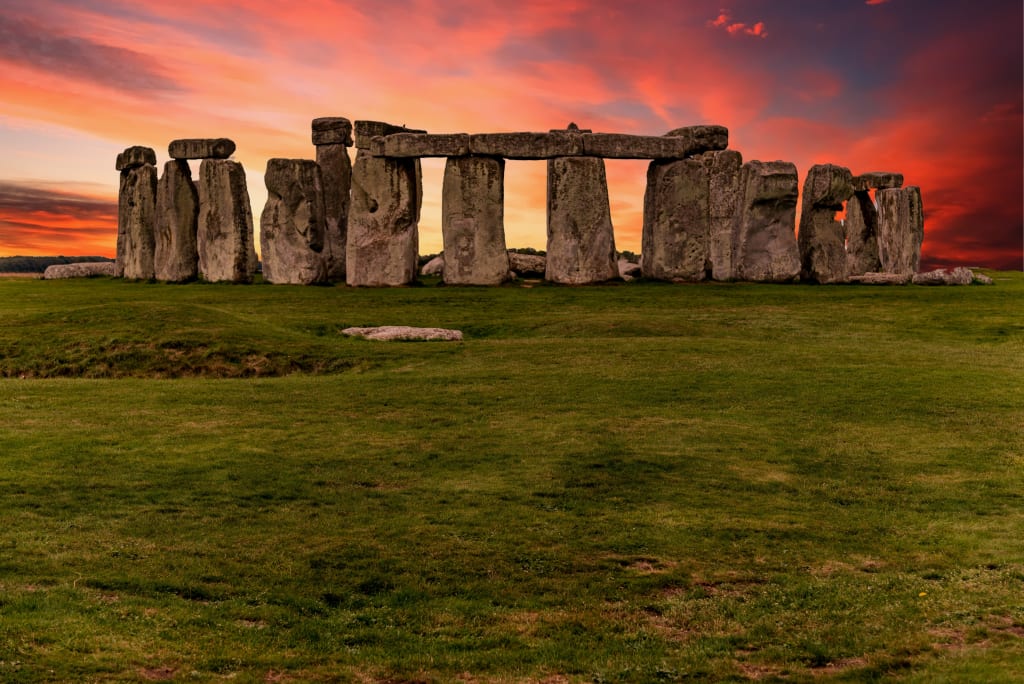
Stonehenge, located on the Salisbury Plain in England, has intrigued archaeologists, historians, and visitors for centuries. This prehistoric monument comprises massive standing stones arranged in a circular pattern. The purpose of its construction and the method by which these stones were transported and erected continue to puzzle researchers. The site is believed to have been constructed between 3000 and 2000 BCE.
Stonehenge, located in Wiltshire, England, is a captivating and enduring mystery that has puzzled researchers and historians for centuries. This ancient monument consists of large standing stones arranged in a circular pattern, but its purpose and construction remain unknown.
One of the primary mysteries surrounding Stonehenge is how it was built. The stones, some weighing several tons each, were transported from quarries located hundreds of miles away. The logistics of moving such massive stones in prehistoric times is a remarkable feat in itself.
Another intriguing aspect of Stonehenge is its alignment with the solstices. During the summer and winter solstices, the rising sun is perfectly aligned with specific stones, suggesting that Stonehenge may have had an astronomical or calendrical function. However, the true purpose of this alignment remains a topic of debate among researchers.
The significance of Stonehenge as a religious or ceremonial site is also a matter of speculation. Some theories suggest that it was a burial ground, while others propose that it served as a place for healing or spiritual rituals. The absence of written records from the prehistoric period makes it challenging to uncover the true purpose of Stonehenge.
Despite numerous studies and research efforts, the enigma of Stonehenge persists. Its construction methods, purpose, and cultural significance continue to elude us, leaving us with more questions than answers. Stonehenge stands as a testament to the ancient people's ingenuity and the enduring mysteries that our planet holds.
Source: [English Heritage](https://www.english-heritage.org.uk/visit/places/stonehenge/history-and-stories/stonehenge/history/)
3. Nazca Lines, Peru:
The Nazca Lines, etched into the desert floor of southern Peru, are an awe-inspiring sight. These enormous geoglyphs, created by removing the reddish-brown iron oxide-coated pebbles to expose the lighter-colored ground beneath, depict various animals, plants, and geometric shapes. The purpose and method behind their creation remain an enigma, leaving researchers to speculate on their significance.
geoglyphs etched into the desert floor, spanning an area of about 450 square kilometers. These mysterious figures were created by the Nazca people between 500 BCE and 500 CE. The figures depict various animals, plants, and geometric shapes, and some are several hundred meters in length.
The mystery surrounding the Nazca Lines lies in their purpose and the methods used to create them. The figures were made by removing the reddish-brown iron oxide-coated pebbles that cover the surface of the Nazca desert, revealing the lighter-colored ground beneath. This created stark contrasts between the lines and the surrounding landscape, making them visible from the air.
One theory suggests that the Nazca Lines were used for religious or ceremonial purposes. Some researchers believe that the figures represented deities or mythical creatures and served as a way for the Nazca people to communicate with the gods. Others propose that the lines were used as pathways for religious processions.
Another intriguing aspect of the Nazca Lines is their precise geometric alignment. The figures are remarkably accurate in terms of scale and proportion, despite being created without the aid of modern technology. The Nazca people likely used simple tools and surveying techniques to create these intricate designs.
The mystery deepens when considering how the Nazca people were able to create such precise shapes on such a large scale. Some theories suggest that the Nazca people used basic surveying techniques, such as stakes and strings, to outline the figures before removing the surface pebbles. Others propose that they may have used hot air balloons or scaffolding to view the lines from above and guide their construction.
The purpose of the Nazca Lines remains a subject of debate among researchers and archaeologists. Their religious and ceremonial significance, along with their precise construction methods, continue to perplex and intrigue those who study them.
Sources:
"The Nazca Lines: A Mystery on the Desert Floor" - National Geographic
(https://www.nationalgeographic.com/culture/topics/reference/nazca-lines/)
"The Ancient Nazca Lines of Peru" - Live Science
(https://www.livescience.com/40232-nazca-lines.htm)
4. Mount Roraima, Venezuela:
Mount Roraima, towering over the jungles of Venezuela, is a tabletop mountain known for its sheer cliffs and flat summit. Its unique geological formation and isolation have led to the evolution of several endemic species found nowhere else on Earth. The mountain holds great significance in local indigenous mythology and is believed to be a sacred place.
Mount Roraima is a tabletop mountain located in Venezuela, on the border with Brazil and Guyana. It is known for its flat, almost perfectly rectangular summit, which rises sharply from the surrounding rainforest. The mystery of Mount Roraima lies in its unique geological formation and the myths and legends associated with it.
Geologically, Mount Roraima is a tepui, a type of sandstone plateau that dates back millions of years. Its distinct shape and isolation have given rise to numerous myths and legends among the indigenous people of the region. Many consider Mount Roraima to be a sacred place, imbued with spiritual significance.
One of the most famous legends is that of the "Lost World," inspired by Arthur Conan Doyle's novel of the same name. It tells of a hidden world on top of the mountain, inhabited by prehistoric creatures and plants. While there is no evidence to support this claim, it has captured the imagination of adventurers and explorers for centuries.
The unique flora and fauna found on Mount Roraima also contribute to its mystery. The summit is home to many endemic species that cannot be found anywhere else on Earth. This isolation has led scientists to believe that Mount Roraima acted as a refuge for ancient species during periods of climatic change.
Exploring Mount Roraima is a challenging endeavor due to its remote location and difficult terrain. Its steep cliffs and unpredictable weather make it a treacherous place to navigate. However, for those who are up to the challenge, the rewards are breathtaking views, an otherworldly landscape, and a sense of being in a place untouched by time.
In conclusion, the mystery of Mount Roraima lies in its unique geological formation, the myths and legends associated with it, and the extraordinary flora and fauna found on its summit. While the legends of a "Lost World" may be fictional, the allure of exploring this isolated and ancient place continues to captivate the minds of adventurers and scientists alike.
Source: [BBC Travel](https://www.bbc.com/travel/article/20180731-mt-roraima-the-lost-world)
5. The Bermuda Triangle, Atlantic Ocean:
The Bermuda Triangle, situated between Miami, Bermuda, and Puerto Rico, has long been shrouded in mystery. Numerous aircraft and ships have seemingly vanished within its boundaries, leading to various theories ranging from supernatural explanations to natural phenomena. While many of the disappearances can be attributed to human error and adverse weather conditions, the allure and intrigue surrounding the Bermuda Triangle persist.
The mystery of the Bermuda Triangle revolves around the unexplained disappearances of ships and aircraft in a specific area of the western part of the North Atlantic Ocean. The triangular region is roughly bounded by Miami, Bermuda, and Puerto Rico. Over the years, numerous ships and planes have vanished without a trace within this area, leading to speculation and theories about its mysterious nature.
One reason behind the mystery is the absence of conclusive evidence. Despite extensive search efforts, very few wreckage or debris have been found, making it difficult to determine the exact cause of these disappearances. This lack of evidence has fueled the speculation of supernatural or extraterrestrial explanations, although there is no scientific basis for such claims.
Several theories have been proposed to explain the disappearances. One popular theory suggests that magnetic anomalies in the area may interfere with navigational instruments, leading to confusion and disorientation among pilots and sailors. This theory is based on the fact that the Bermuda Triangle is one of the places on Earth where true north and magnetic north align.
Unpredictable weather patterns in the region are another factor that has been attributed to the mystery. The area is known for its sudden and violent storms, including hurricanes and waterspouts, which could potentially cause severe damage to ships and aircraft. These weather conditions, combined with the vastness of the ocean, make it challenging to locate wreckage.
Human error is another plausible explanation for the disappearances. The Bermuda Triangle is a heavily trafficked area, with ships and planes constantly passing through. Mistakes in navigation, mechanical failures, or poor decision-making by pilots and sailors can contribute to accidents and disappearances.
Despite the lack of concrete evidence, the mystery of the Bermuda Triangle continues to captivate the minds of many. Its reputation as a danger zone has been perpetuated by media coverage and popular culture, further fueling the fascination with this enigmatic area of the ocean. While scientists and experts strive to uncover the truth behind the disappearances, the Bermuda Triangle remains an enduring mystery.
Source: [National Ocean Service](https://oceanservice.noaa.gov/facts/bermudatriangle.html)
6. The Great Pyramids of Giza, Egypt:
The Great Pyramids of Giza, one of the Seven Wonders of the Ancient World, continue to captivate the world with their grandeur and precision. Built as tombs for pharaohs, these massive structures were constructed over 4,500 years ago using rudimentary tools. The precision with which the stones were cut and fitted together, along with the method of their construction, remains a subject of debate and fascination.
The Great Pyramids of Giza, located on the outskirts of Cairo, Egypt, have long been shrouded in mystery. These ancient structures, built over 4,500 years ago, continue to captivate the world with their impressive size, architecture, and purpose. The mystery lies in how these massive structures were constructed without the use of modern technology, and the precise calculations required for their alignment with astronomical events.
One of the enduring questions is how the ancient Egyptians were able to transport and lift enormous blocks of stone, some weighing up to 80 tons, to heights of over 450 feet. Theories range from the use of ramps, pulleys, and levers to advanced engineering techniques that are yet to be fully understood. The absence of written records from that time further adds to the mystery, leaving historians and archaeologists to rely on speculation and deduction.
Another mystery surrounding the pyramids is their purpose. While they are commonly believed to be tombs for the pharaohs, the exact methods and rituals used during their construction and use remain largely unknown. The intricate passages and chambers within the pyramids, such as the Queen's Chamber, the King's Chamber, and the Grand Gallery, continue to puzzle researchers.
The alignment of the pyramids with celestial bodies, such as the constellation of Orion, also adds to the mystery. The precise calculations required to achieve such alignment without the use of modern tools and technology is a testament to the advanced knowledge and astronomical understanding of the ancient Egyptians.
Despite extensive research and exploration, many aspects of the Great Pyramids of Giza remain elusive. Archaeologists and historians continue to study these ancient wonders, hoping to uncover more secrets about their construction, purpose, and the civilization that built them. The mystery of the Great Pyramids of Giza serves as a reminder of the ingenuity and skill of the ancient Egyptians, leaving us in awe of their achievements and eager to unravel their secrets.
Source: [Smithsonian Magazine](https://www.smithsonianmag.com/history/how-were-pyramids-built-119853887/)
7. The Moai of Easter Island, Chile:
Easter Island, located in the southeastern Pacific Ocean, is home to the enigmatic Moai statues. These colossal stone figures, carved by the Rapa Nui people between the 13th and 16th centuries, dot the island's landscape. The process by which the statues were carved, transported, and erected is still a mystery, as is the reason behind their creation.
Source: [National Geographic](https://www.nationalgeographic.com/travel/destinations/oceania/chile/easter-island/facts/)
8. The Door to Hell, Turkmenistan:
The Door to Hell, also known as the Darvaza Gas Crater, is a surreal sight in the Karakum Desert of Turkmenistan. This fiery pit, perpetually aflame since its accidental creation in 1971, is the result of a drilling mishap. Scientists have yet to find a solution to extinguish the flames, making this natural gas crater a mesmerizing and mysterious spectacle.
Source: [BBC Earth](https://www.bbc.com/earth/story/20160119-the-crater-of-fire-that-never-stops-burning)
9. The Lost City of Atlantis:
The legendary city of Atlantis, first mentioned by Plato in his dialogues, has captivated the human imagination for centuries. Believed to have been a highly advanced civilization that met a catastrophic end, the exact location of Atlantis remains a subject of speculation and debate. While the existence of Atlantis has not been proven, the allure of this lost city continues to inspire exploration and discovery.
Source: [History](https://www.history.com/topics/folklore/atlantis)
10. The Fairy Circles, Namibia:
The Fairy Circles, scattered across the Namib Desert in Namibia, are circular patches of barren land surrounded by lush grass. The origin of these mysterious circles, which can range from a few meters to several meters in diameter, has puzzled scientists for decades. Theories range from termite activity to underground gas emissions, yet no consensus has been reached regarding their cause.
Source: [Live Science](https://www.livescience.com/42829-fairy-circles.html)
Conclusion:
These ten mysterious places on Earth challenge our understanding of the world and inspire us to explore and discover the wonders that lie beyond our reach. While each location offers unique secrets, their allure and mystique will continue to captivate our imagination for generations to come. As we delve deeper into the mysteries of our planet, let us embrace the unknown and cherish the inexplicable, for it is through these enigmatic wonders that we truly come alive.
Written by Francis
About the Creator
Enjoyed the story? Support the Creator.
Subscribe for free to receive all their stories in your feed.
Comments
There are no comments for this story
Be the first to respond and start the conversation.