
Unraveling the Mystery of Easter Island's Moai: Exploring the Stone Giants of Rapa Nui
Unraveling Mysteries: Exploring the Enigmatic Moai Stone Statues on Easter Island
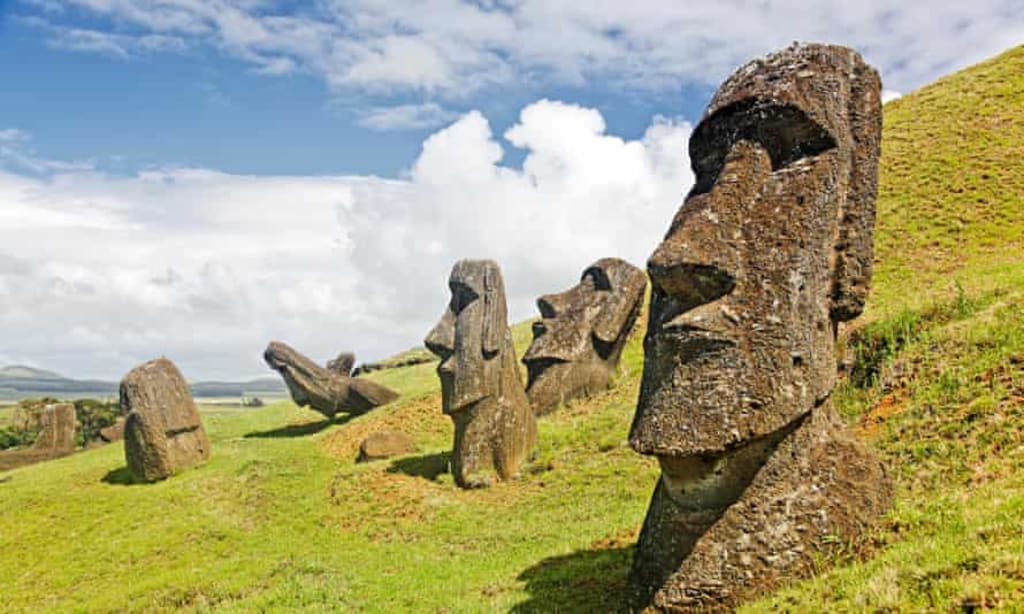
Which ancient civilization constructed these impressive statues? More than 800 massive statues of varying sizes and geometric shapes are spread throughout one of the most isolated islands globally.
These statues serve as a captivating attraction, drawing numerous visitors to this remote island in the South Pacific region.
The enigmatic statues prompt inquiries that have yet to be answered. How did such magnificent statues come to exist in a place seemingly apart from the human world? What do these stone figures represent? Why were they made? How were the colossal stone statues transported across the island by their creators? Why did the entire island population vanish without a trace in the 19th century? Is it possible that a previously unknown civilization constructed these statues?
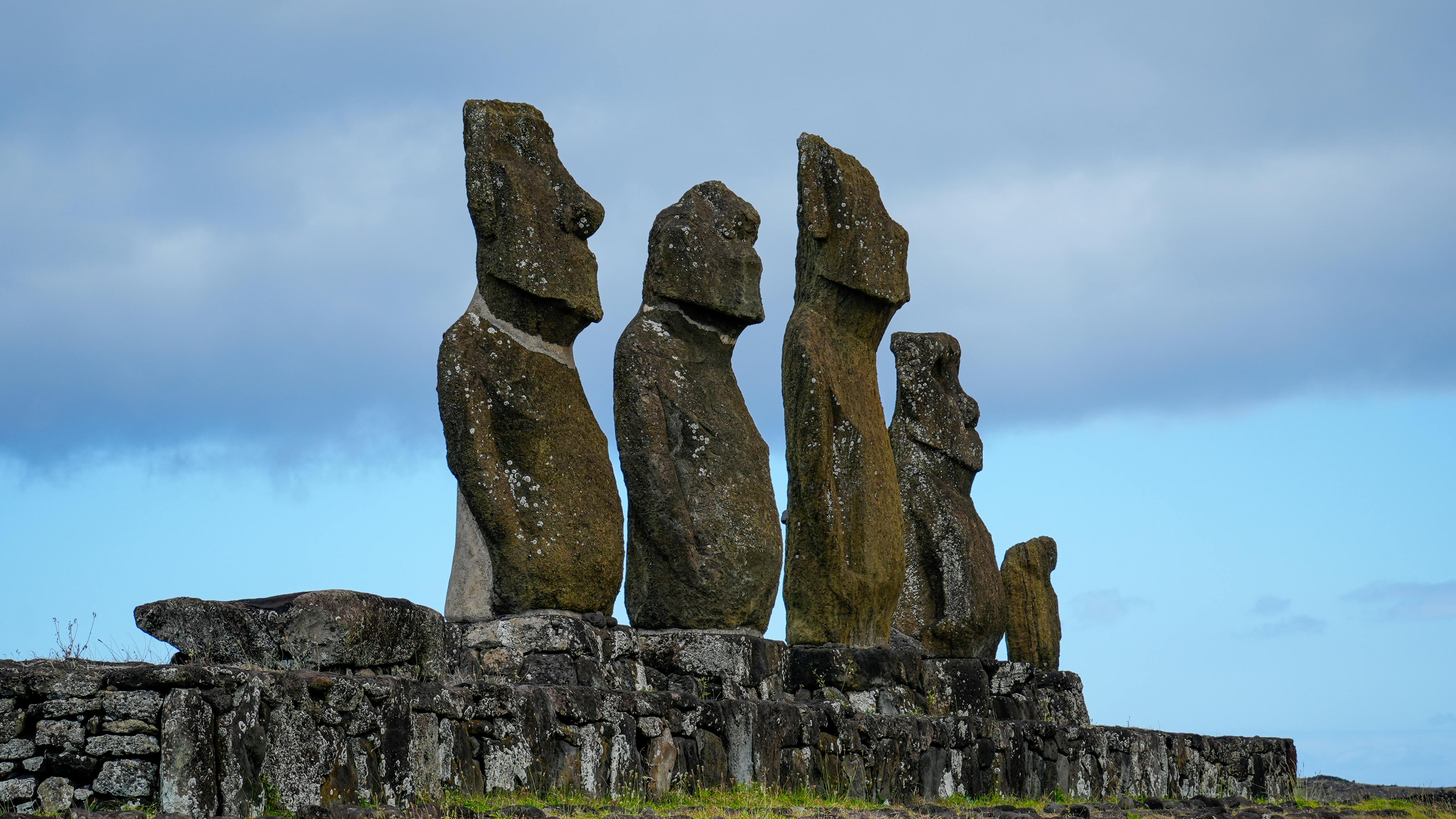
Easter Island, situated in the southeastern Pacific Triangle near Bali, Indonesia, and under Chilean sovereignty, is triangular in shape, formed by volcanic eruptions, and boasts a tropical, sunny, and relatively mild climate.
Apart from its rugged terrain with treacherous hills and caves leading to volcanic vents, the island features the largest volcano, Rano Kao, and the highest peak, Mount Terevaka, at 600 meters above sea level.
Named after Dutch explorer Jacob Roggeveen, who discovered it on Easter Sunday in 1772, Easter Island is one of the most remote inhabited islands globally, with the nearest inhabited island, Pitcairn Island, being 2075 km away, and the closest land, Central Chile, being 3512 km away.
This seclusion emphasizes Easter Island's isolation from the rest of the world.
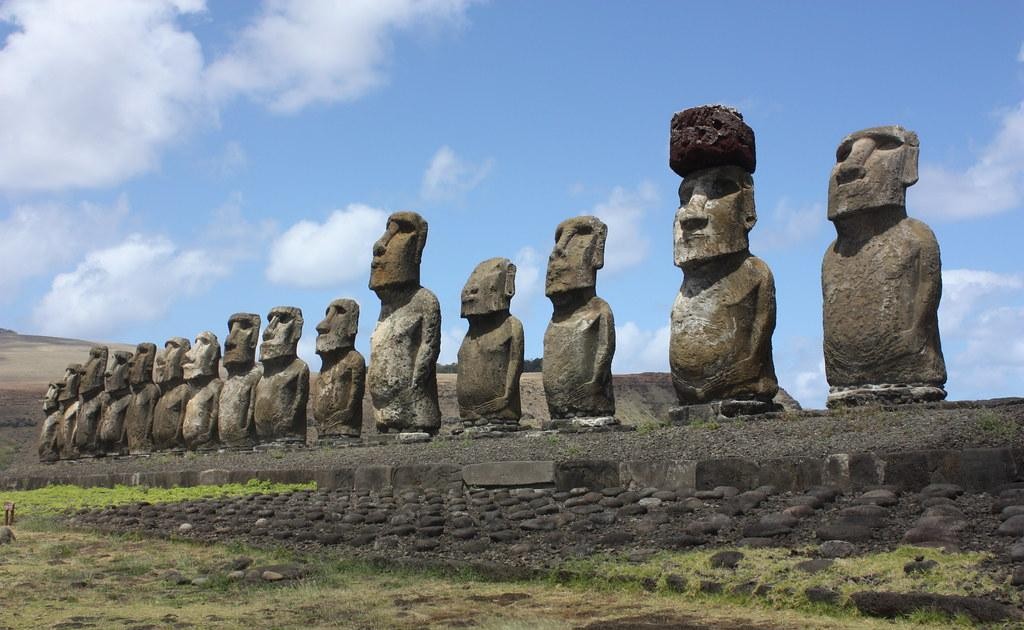
Mentioning Easter Island inevitably brings to mind the 887 monumental stone statues scattered across the island. Referred to as Moai by the islanders, these statues are placed on stone platforms called Ahu.
All statues are carved from single blocks of stone, indicating they are sculpted from a single rock. The tallest Moai ever erected, Paulo, stands at 10 meters tall and weighs 75 tons. Notably, out of the nearly 900 statues, only 70 wear what appear to be hats, some weighing several tons.
The tallest of these hats, weighing up to 12 tons, are made of a unique red volcanic tuff. Scholars believe these hats symbolize the highest rank of tribal leaders, those who succeeded in power struggles and were honored with large statues.
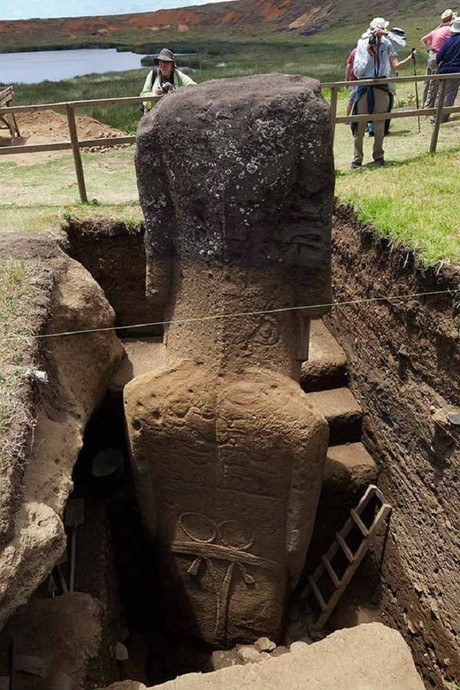
Although online images mostly display these gigantic statues with heads towering above the ground, in reality, they are much larger below the surface, with buried bodies adorned with petroglyphs.
Additionally, the Moai statues feature carvings of neck details, spiral whirls, and knot patterns, believed to symbolize the canoes of the local Polynesian people, although this remains speculative. One peculiar aspect is the islanders' lack of knowledge about the origins of these stone statues. No one partook in their construction; the statues have been there for as long as they can remember.
Scholars posit that the ancient Rapa Nui people, a Polynesian group believed to have arrived from the Marquesas Islands around 300 to 400 AD, possibly the island's first inhabitants, created these statues.
The Moai serve as the primary evidence of a once-thriving culture of the Rapa Nui people. Nevertheless, the construction methods, transportation techniques, purpose, and significance of the Moai statues remain a mystery.
Moreover, the placement of these statues, some over 6,000 years old, at times follows no discernible pattern, with many facing towards the sea, an intriguing configuration. Various hypotheses have been proposed.
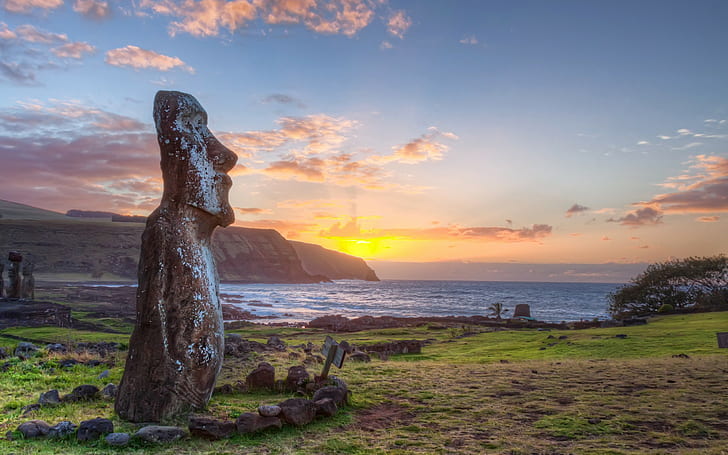
Research indicates that islanders predominantly inhabit and work around the statue locations, suggesting that the statues might have been positioned near valuable resources, with freshwater being the most cited resource. Freshwater is a scarce commodity on Easter Island.
Anthropologist Carl Lipo from the University of Birmingham noted, "Every time we find a major freshwater source, we find a Moai statue and a pond there." This correlation appears consistent. Conversely, areas lacking freshwater show no statues or Ahu platforms.
Therefore, scientists theorize that the statues served a practical rather than purely religious function for the islanders, indicating their intent to inhabit and erect statues in specific regions.
Additionally, excavations have uncovered fish bones, leading to the hypothesis that the statues represent a desire for sustenance, specifically fish and shellfish, among the islanders. Nevertheless, these claims remain speculative, lacking solid evidence.
One mystery is how the ancient Rapa Nui people managed to transport these massive stone blocks, some weighing tens of tons, across the island. Archaeologists suggest that these statues were carved from the island's highest point, a volcano.
Once carved, a statue could have been rolled or dragged down the mountainside. The colossal stone blocks, reaching heights of up to 18 meters, were crafted without the use of wheels, levers, or large animals.
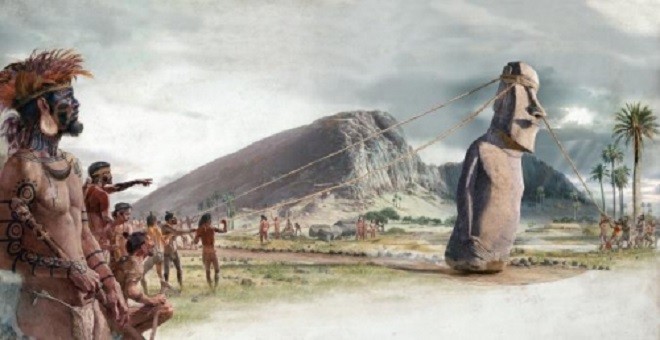
In 2016, archaeologists introduced a new theory proposing that the Moai statues were designed to move in straight, swaying motions, utilizing only human labor. Scientists Terry Hunt from the University of Hawaii and Carl Lipo collaborated with archaeologists on this idea.
They observed that the statues' bellies could tilt forward and backward, resembling a "V" shape, allowing for a seesaw-like movement. By swaying the Moai statues from side to side, following a successful trial involving only three ropes and an 18-person team, a 3-meter-tall, 5-ton statue could be swiftly moved several hundred meters.
The ropes, wrapped around the statue's head, functioned as pulleys. One group would pull one end of the rope to the left, tilting the statue to the left. Then the group on the right would pull, tilting it to the right, causing the statue to sway back and forth and be pulled forward. Another group would hold the rear end of the rope to prevent the statue from toppling forward.
However, this experiment remains a hypothesis, and the question of how these solid stone blocks were erected remains a mystery. The indigenous people suggest a simple answer: the statues walked themselves.
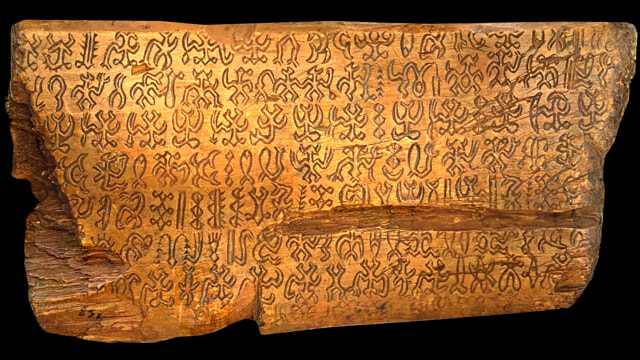
The ancient Rapa Nui civilization of Easter Island still holds many mysteries yet to be fully understood. The inhabitants of Easter Island created a unique writing system, Rongorongo, unlike any other. Linguists have been unable to decipher it to this day.
It's surprising that most inhabitants of Pacific Islands, including Easter Island, don't know how to write. So, who taught the Easter Islanders to write, or did they develop their writing system independently?
Norwegian explorer Thor Heyerdahl discovered the Rongorongo writing system found at Lake Tikitaka in the Andes mountain range in South America, where the first red-headed people were found. But how could a language from the Andes, nearly 4,000 km away from Easter Island, appear here?
The most important question remains: where did the civilization that created the Rongorongo writing system and the Moai statues ultimately go? Why did most of the island's inhabitants disappear after the 1860s?
The extinction of the Rapa Nui civilization on Easter Island remains a mystery. The most widely supported hypothesis regarding the complete disappearance of the civilization on Easter Island is the arrival of Europeans, internal conflicts, and diseases.
Population growth led to deforestation and depletion of natural resources, ultimately leading to the collapse of the once prosperous Rapa Nui civilization.
Some argue that the inhabitants themselves caused ecological devastation by destroying the island's vegetation, leading to an ecological disaster, a major factor in the extinction catastrophe here.
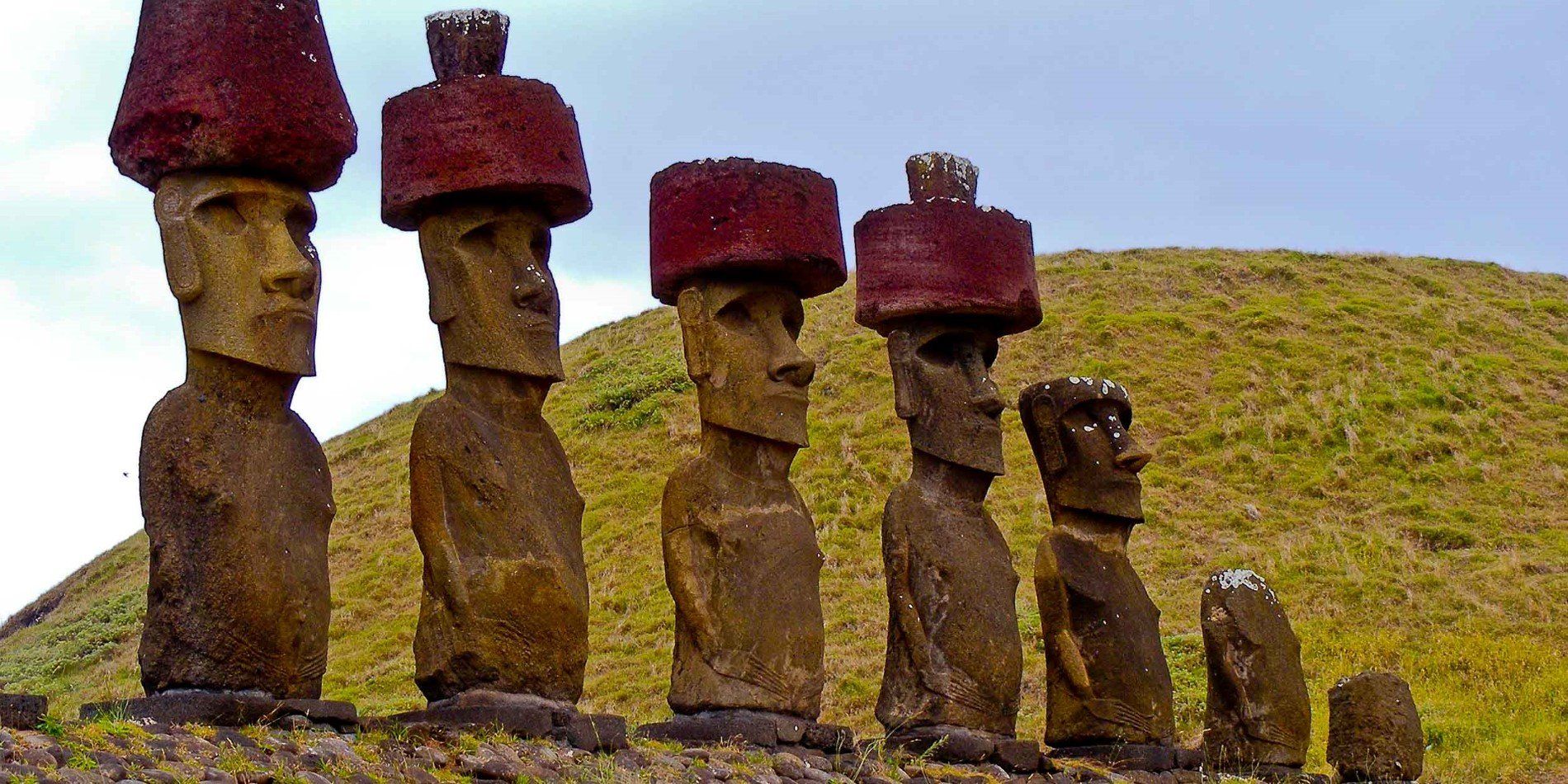
However, according to isotopic analysis, Polynesians did not arrive on the island until around 850 AD, not the commonly believed 400 years earlier. This means that Rapa Nui culture only lasted for about 155 years. Can a civilization transform such a lush, large island into such a barren, dry one in just 155 years? These arguments remain speculative and lack concrete evidence.
Easter Island remains one of the world's greatest mysteries yet to be fully explored. The statues still stand there, seemingly challenging humanity to find the answers to what truly happened here.
About the Creator
Enjoyed the story? Support the Creator.
Subscribe for free to receive all their stories in your feed.
Comments
There are no comments for this story
Be the first to respond and start the conversation.