
Unlocking the Mysteries of Time Travel: A Journey Through Physics and Speculation
From Einsteinian Realms to Hypothetical Tachyons and Wormholes - Navigating the Path to Temporal Exploration

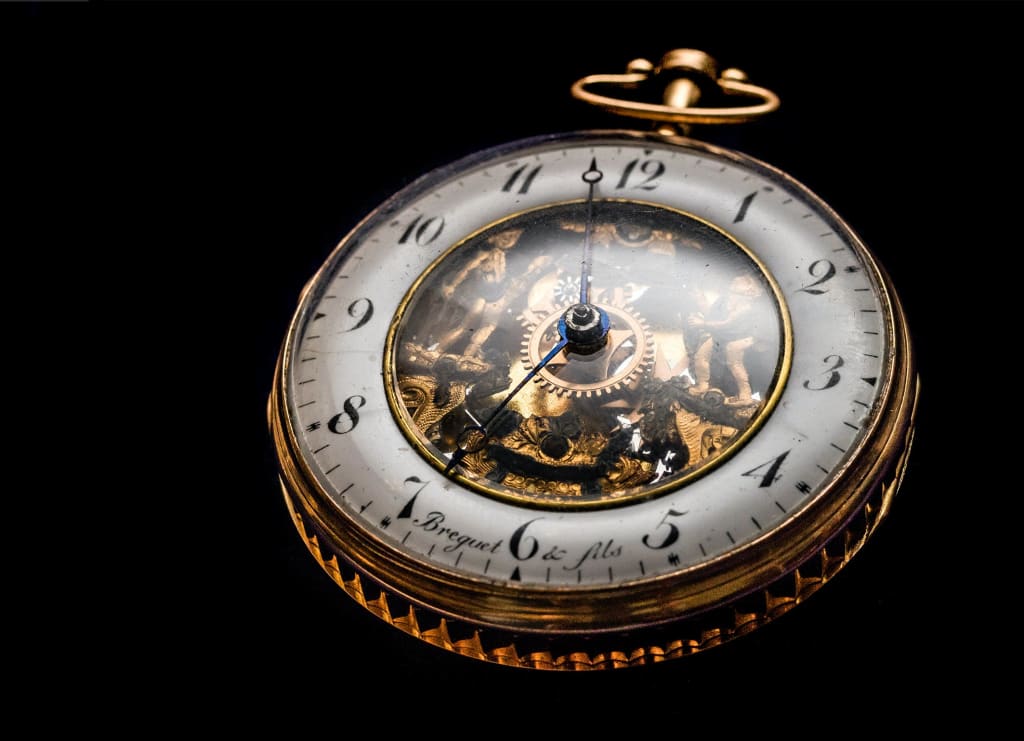
Have you ever dreamt of traveling through time? I'm sure we all have. Maybe you want to go back to the past to witness historical events or change something, or perhaps you're curious about the future and want to see how it unfolds. Time travel has been a captivating concept in science fiction, with books and movies exploring the potential benefits and risks of such an ability. But is time travel more than just a fantastical idea?
In classical physics, time was perceived as a universal concept, progressing at the same pace for everyone and everywhere. However, Einstein's theory of relativity challenged this notion, viewing time as a component of four-dimensional space-time influenced by various factors. Objects in motion experience time differently, and gravitational fields can also impact its flow.
Consider black holes, with their immense gravitational pull causing time to slow down significantly. Falling into a black hole could mean witnessing millions of years pass by in the rest of the universe before meeting an inevitable fate. This showcases the dynamic nature of time as proposed by Einstein's theory.
Einsteinian Perspective: A Shift in Temporal Paradigm
Einstein's theory of relativity not only redefined our understanding of time but also introduced the concept that time is relative to the observer's frame of reference. The faster an object moves or the stronger the gravitational field it's in, the slower time passes for it. This revelation opened up new avenues for contemplating the possibility of time travel.
Another intriguing aspect involves the speed of light. As an object approaches the speed of light, time for that object slows down. If one were to travel at the speed of light, time would appear almost stagnant. This suggests a potential route for traveling forward in time—speed away from Earth and return to find that many years have passed for the rest of the world.
Challenges and Theoretical Particles: Tachyons and Wormholes
The challenge lies in going backward in time. Some researchers propose the existence of theoretical particles called tachyons, capable of moving faster than light and potentially reversing the flow of time. However, these particles are purely hypothetical and have never been observed. If they exist, their properties challenge our conventional understanding of causality, where cause precedes effect.
Wormholes, theoretical bridges through the fabric of space-time, offer another avenue for time travel. While the theory of relativity allows for their existence, the energy levels required to create a stable wormhole could be astronomical, possibly leading to the formation of a black hole.
Physicist Stephen Hawking expressed concerns about the instability of wormholes, suggesting they might not last long enough to serve as time machines due to radiation feedback. Other ideas involve harnessing space-time through lasers, utilizing extreme gravity levels, exploring quantum physics for quantum tunnels between universes, or delving into string theory to understand how cosmic strings and black holes could warp space-time for time travel.
Beyond Theories: Imagining Practical Applications
In recent years, scientists have explored various avenues to make time travel more tangible. Theoretical frameworks suggest that lasers could be used to create extreme levels of gravity, potentially bending space-time. Quantum physics, with its principles of superposition and entanglement, sparks ideas of creating quantum tunnels that could connect different points in time or even alternate universes.
String theory, which aims to unify the fundamental forces of nature, including gravity, suggests that cosmic strings or black holes might hold the key to manipulating space-time for time travel. These emerging concepts push the boundaries of our understanding and challenge us to envision practical applications beyond the theoretical realm.
Conclusion: The Quest Continues
In conclusion, while the notion of time travel has fascinated researchers and the public alike, it remains beyond our current capabilities. Advances in understanding the universe have made it seem less impossible, but it still relies on the laws of physics that are yet to be fully explored. Time travel might transition from fiction to fact in the future, but for now, it remains a captivating enigma.
What are your thoughts? Do you believe time travel is within our grasp, or is it still firmly in the realm of science fiction? As we continue to unravel the mysteries of the cosmos, the quest for temporal exploration persists, with each breakthrough bringing us closer to understanding the enigmatic nature of time itself.
About the Creator
Enjoyed the story? Support the Creator.
Subscribe for free to receive all their stories in your feed.
Comments