
Universe's Ultimate Bash: From Tiny Blip to Cosmic Extravaganza!
Kaboom!

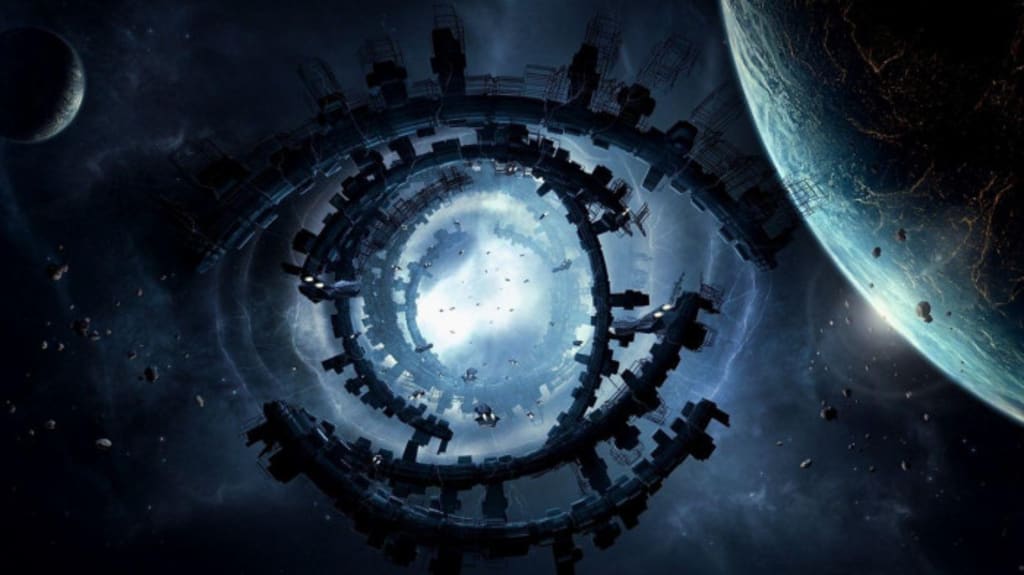
Ever heard of the Big Bang? You probably have - it's like the universe's rockstar origin story. The whole cosmic journey, from being a zit-sized point to the colossal extravaganza we know today, is what they call the Big Bang model. So, how did the universe go from "tiny blip" to "mega-huge spectacle"? Well, prepare for a cosmic rollercoaster ride.
Hold on tight because the Big Bang wasn't some grand space explosion with pyrotechnics and all. Instead, picture space itself popping up everywhere in the universe at once. Imagine the universe showing up fashionably late, born as a dense spot that'd make any crowd uncomfortable. No one's certain what happened before this cosmic debut, but scientists are on it, with the cosmic microwave background playing cosmic detective.
In its early days, the universe was the ultimate speed demon. In a teeny-tiny fraction of time—think a blink of a cosmic eye—it pulled off a growth spurt that would make any teenager envious. They call it "inflation," and it's like the universe's awkward growth spurt, only it doubled in size like 90 times or something. As the universe expanded, it turned cooler and less dense, basically evolving from "cosmic sauna" to "space-chill lounge."
After this wild expansion bash, things cooled down enough for matter to start mingling. It's like the universe had a party and atoms were mingling like it's 380,000 B.C. Light elements got busy in the first three cosmic minutes, and protons and neutrons were playing atomic bumper cars, giving birth to deuterium (the fancy hydrogen isotope) and even helium. But, whoa, things eventually slowed down, like a cosmic hangover.
Picture this: early universe parties were so wild that atoms crashed into each other like crazy, forming a foggy mix of electrons, protons, and neutrons. Imagine a disco, but with atoms partying way too hard. Around 380,000 years after the big bash, matter finally sobered up enough for electrons and nuclei to play nice, forming atoms and clearing up the cosmic fog. The universe was officially off the wild party train and starting to get its act together.
After that hazy era, stars and celestial celebs started strutting their stuff about 400 million years after the big cosmic bash. Clumps of gas collided like giant cosmic bumper cars, creating galaxies and stars that lit up the space like extravagant fireworks. Think of it as the universe's after-party—stars, galaxies, and space glam were all the rage.
Then comes reionization, where stars partied so hard that they started throwing ultraviolet light around like confetti. This light cleared out most of the cosmic confetti—uh, I mean neutral hydrogen gas—and suddenly, the universe was all "check out my ultraviolet tan!" It was the cosmic equivalent of turning on a neon sign in space.
But the universe wasn't done partying. Astronomers today are like cosmic detectives on a galaxy scavenger hunt. They're chasing ancient galaxies like they're cosmic Pokémon. Finding these ancient gems helps us understand how the universe partied way back when.
Our solar system, the universe's way-late surprise, was born around 9 billion years after the universe's grand opening. Earth's sun is just one of more than 100 billion stars in the Milky Way—our galaxy's glitzy nightclub. It's like a star-studded after-party up there.
Scientists even got into a debate about universe weight gain. They were like, "Hey, there might be more universe hidden than we can see!" Enter dark matter, the universe's version of "I'm here, but you can't see me." It's like the ultimate hide-and-seek champion, totally ghosting regular matter and light.
Turns out, the universe has commitment issues with expansion. It's like, "I'm outta here!" The universe is expanding, and it's doing it with pizzazz, against all odds. It's like gravity's trying to play the strict parent, but expansion is throwing a cosmic tantrum.
We're all normal matter, and we're like the universe's 5% that everyone can see. Dark matter's like the mysterious neighbor who never leaves their house, accounting for around 27% of the universe. Dark energy's the universe's caffeine, making up nearly three-quarters and pushing the universe to accelerate its expansion.
But wait, there's more! Imagine giant stars turning into cosmic black holes, like a cosmic magic trick. And guess what? The vacuum energy in those cosmic magic hats—uh, black holes—is almost the same as the dark energy that's supposed to be partying across the universe. Coincidence? We think not!
Now, while we've uncovered some universe secrets, there's still plenty left in the cosmic vault. Dark matter, dark energy, and the universe's ultimate origin story still puzzle us. But fear not, cosmic adventurers! We're strapped into the universe's rollercoaster, armed with telescopes and satellites, ready to uncover the universe's deepest enigmas.
Launching in 2021, the James Webb Telescope is like our cosmic magnifying glass, giving us a VIP backstage pass to the universe's earliest days. With its infrared vision, it's gonna take us on a space safari, peering back into time itself. So, buckle up, space enthusiasts—there's more universe out there than meets the eye, and we're just getting started!
About the Creator
Ellaine Victoria Casallo
Loving mother of 3 and a determined entrepreneur. Juggling parenthood with business, turning dreams into reality. Inspiring balance and embracing the journey!
Enjoyed the story? Support the Creator.
Subscribe for free to receive all their stories in your feed.
Comments
There are no comments for this story
Be the first to respond and start the conversation.