
Unearthing the Hidden Factors Behind Morocco's Catastrophic Earthquake
Cracking the Earth's Puzzle: A Geologist's Insight into Morocco's 6.8 Magnitude Earthquake

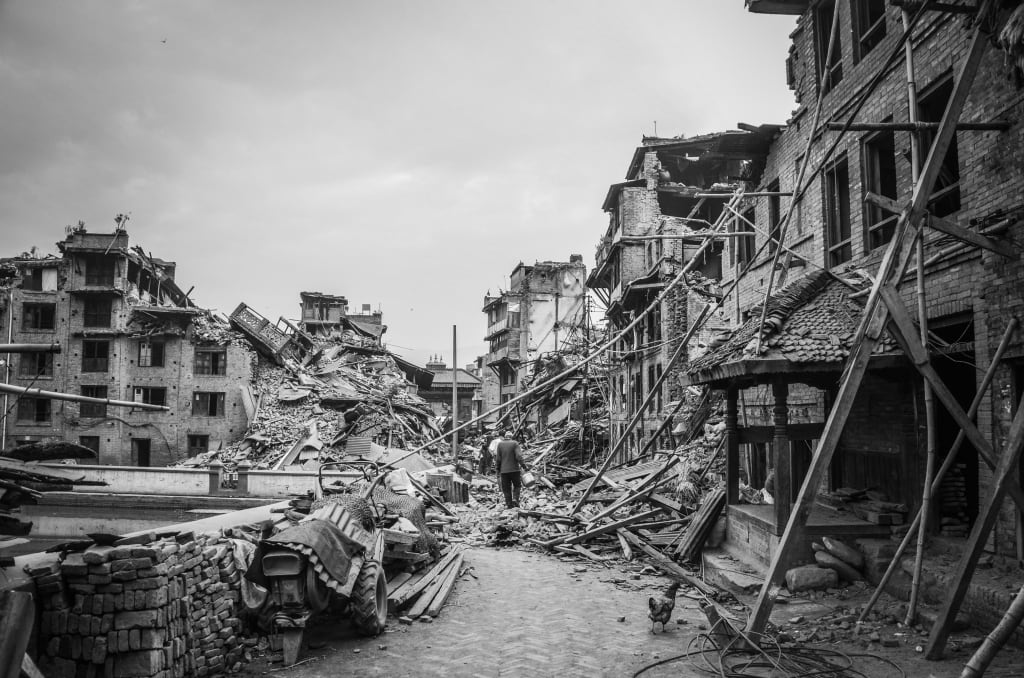
Situated at the geological crossroads of Morocco's natural wonders, the epicenter of the devastating earthquake that struck on September 8th emerged as a focal point of both curiosity and concern. Nestled deep within the rugged terrain of the High Atlas Mountains, approximately 71 kilometers to the south-west of the vibrant city of Marrakesh, this seismic epicenter became the source of a catastrophic event that sent tremors reverberating across the region
What kind of research activities have been conducted in Morocco's Atlas Mountains?
Indeed, the Atlas Mountains are a captivating mountain range located in the north-western region of Africa, spanning across the countries of Morocco, Algeria, and Tunisia. These mountains hold a unique geological significance as they are situated to the south of the primary tectonic plate boundary between Eurasia and Africa, specifically the Nubia plate. This geographical positioning has played a pivotal role in shaping the landscape, climate, and geological characteristics of the Atlas Mountains, making them a subject of great interest and study for geologists, environmental scientists, and researchers across various disciplines.
The region in question typically experiences minimal seismic activity in contrast to areas located near tectonic plate boundaries, where the interaction of plates leads to frequent and intense earthquakes. However, the noteworthy Agadir earthquake of 1960, which resulted in significant damage and loss of life, serves as a compelling exception. I am a member of a collaborative team consisting of geologists, geophysicists, and geodesists from various Moroccan universities and Spanish research institutions, and our primary objective is to conduct comprehensive research within this region.
Our research mission revolves around unraveling the complex development and positioning of the mountain range in this area, particularly its location adjacent to a continental plate boundary. By conducting in-depth investigations into seismic activity, gravitational variations, and various geophysical phenomena, we endeavor to gain profound insights into the Earth's subsurface structure, delving to depths exceeding 100 kilometers.
One of our key research focuses involves the detection and analysis of faults—those fractures or fissures within the Earth's crust where significant movement has transpired. These movements, be they horizontal, vertical, or diagonal, are a direct result of the colossal forces exerted upon the Earth's tectonic plates. By meticulously studying these fault systems, we aim to reconstruct the history of geological movements and dynamics, which in turn contributes indispensable data for assessing seismic hazards and improving earthquake prediction capabilities.
Additionally, we employ advanced geodetic techniques, such as GPS recordings, to monitor the movements of tectonic plates. Our methodology involves regular measurements of benchmark sites with unparalleled millimeter accuracy. Through this precise and continuous monitoring, we gain valuable insights into the ongoing motions and interactions of tectonic plates in the region, further enriching our understanding of the geological processes at play.
In summary, our collaborative, multidisciplinary research efforts are aimed at deepening our comprehension of the unique geological and seismic characteristics of this region. This knowledge not only advances the scientific community's understanding but also has the potential to enhance preparedness and resilience in the face of geological hazards, ultimately benefiting the communities residing in this area and beyond.
What are the most notable outcomes or revelations from your studies in the Atlas Mountains area?
The Atlas Mountains, a majestic range in North Africa, bear the geological imprints of a fascinating history. They owe their origin to the ancient breakup of the Pangea supercontinent, an event that unfolded over millions of years. Today, these mountains stand as a testament to the Earth's ever-evolving landscape, actively rising with a remarkable display of high peaks and steep slopes.
Our research in this region has unveiled intriguing geological features. The Atlas Mountains exhibit not only their towering heights but also an intricate pattern of steep slopes and linear formations. These straight lines, which traverse the landscape, are indicative of cracks and faults in the Earth's crust. Importantly, they suggest recent movements deep beneath the surface.
It's indeed surprising that this region, marked by such geological dynamism, doesn't experience more frequent earthquakes. The presence of these straight lines and fault structures implies the potential for significant tectonic activity. However, the actual occurrence of earthquakes may be influenced by complex interactions of various geological factors, such as the type of fault, the rate of strain accumulation, and local stress conditions.
This enigmatic interplay of geological forces continues to pique our curiosity and underscores the intricate nature of Earth's dynamic processes. As we delve further into our research, we hope to unravel the underlying mechanisms that govern seismic activity in this unique region, shedding light on the reasons behind the surprising absence of more frequent earthquakes in the Atlas Mountains.
What proactive measures should governmental authorities take to enhance preparedness for potential seismic events in the region?
Predicting earthquakes remains a challenging endeavor, and complete avoidance is beyond our capabilities. However, we possess the means to mitigate their impact effectively. By conducting comprehensive studies encompassing geology, geophysics, and geodesy within the region, we can identify active earthquake faults. Furthermore, we can gauge the potential magnitude and frequency of seismic events along these faults, thereby gaining insights into the potential strength of future earthquakes in a specific area.
Of particular concern are faults that infrequently experience earthquakes but have the potential to generate powerful ones. In our ongoing pursuit of earthquake research, there will be a heightened focus on the discovery and analysis of such fault systems. This endeavor aims to enhance our understanding of seismic hazards and bolster our preparedness for mitigating their impact.
What are the most effective strategies for minimizing earthquake damage and ensuring the resilience of communities?
The optimal approach for minimizing earthquake damage involves several key strategies. One of the foremost methods is the enhancement of seismic building design codes, with a focus on ensuring that structures are engineered to withstand the most severe seismic activity conceivable. This fortified construction will empower buildings and various other structures to better endure intense shaking during earthquakes.
Furthermore, it is of paramount importance to reinforce traditional homes and rock constructions in mountain villages. This proactive measure is essential to mitigate potential future disasters and safeguard the lives and properties of those residing in these vulnerable areas.
For newly planned constructions, rigorous testing and efficient design methods are essential. These should be developed in compliance with the latest seismic building standards, ensuring that new buildings are both cost-effective and resilient against seismic events. This approach not only addresses the immediate need for safety but also contributes to the long-term resilience of communities in earthquake-prone regions.
About the Creator
Hamza Sadiou
I'm embarking on a new expedition, delving into scientific discoveries, or exploring strategies for a healthier life, or discovering the best countries for traveling
I'm always eager to share my knowledge and experiences with the world.
Enjoyed the story? Support the Creator.
Subscribe for free to receive all their stories in your feed.
Comments
There are no comments for this story
Be the first to respond and start the conversation.