
Understanding Solar Storms
A Glimpse into the Sun's Fury
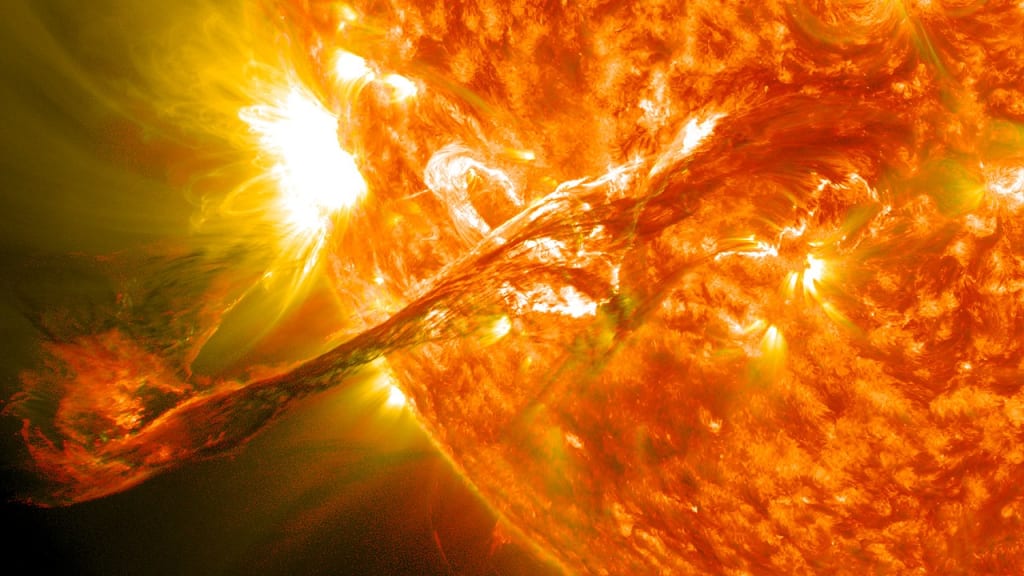
Understanding Solar Storms: A Glimpse into the Sun's Fury
The Sun: A Roiling Mass of Chaos
The Sun, our closest star, is not just a tranquil ball of light in the sky; it's a violent and dynamic entity. With magnetic tornadoes spiraling upward for tens of thousands of miles and dark spots large enough to engulf our planet, the Sun’s surface is a battleground for cosmic forces. These phenomena result in explosive eruptions that hurl charged particles into space at astonishing speeds, often exceeding 2 million mph. As we enhance our observational technologies, we are gaining insights into these spectacular and sometimes threatening solar activities.
Monitoring Solar Activity
At the National Space Weather Prediction Center, experts maintain vigilance over the Sun’s surface, monitoring for significant anomalies. A recent day began as usual, with the team meticulously analyzing solar conditions. Despite being situated 93 million miles away, the solar activity observed can significantly impact life on Earth, manifesting in disruptions that can be surprising and destructive.
The M6 Solar Storm: A Case Study
A major development occurred when a satellite recorded a dramatic explosion classified as an M6 solar storm. This intense solar event released a massive shockwave, rapidly approaching Earth. As predictions were being made about its potential effects, scientists began modeling the storm, anticipating its arrival in a matter of hours.
The Dynamics of Solar Flares and CMEs
The M6 solar storm consisted of two principal components:
Solar Flare: This is the first mandate, unleashing a burst of x-rays that can reach Earth in just minutes. These instant emissions can disrupt communication systems and affect satellite operations.
Coronal Mass Ejection (CME): The second, more significant threat follows a few days later. A CME is a massive burst of solar wind and magnetic fields rising above the solar corona or being released into space. These ejections carry billions of tons of electrically charged particles.
The combination of a solar flare and a coronal mass ejection can have a profound effect on Earth, akin to a cosmic tsunami. The simulation of this event illustrates the storm racing toward our planet, showcasing the powerful nature of these solar occurrences.
Historical Impacts: The Quebec Disaster
Concern about solar storms is not merely theoretical. A historical reference point was the solar storm that struck Quebec, Canada, in March 1989. This event led to the failure of power stations across the province, as they were not equipped to handle the overwhelming influx of solar energy, effectively disabling the power grid.
Conclusion: Preparedness is Key
As we continue to enhance our understanding of solar phenomena and improve our monitoring capabilities, we must acknowledge the potential dangers posed by solar storms. Preparing for these cosmic events using data-driven models and simulations is crucial in safeguarding our technology-dependent society from the disruptions that are caused by the Sun’s unpredictable nature. The cosmos might still hold many mysteries, but with science as our ally, we can better predict and prepare for what the Sun has in store.
Historical Impacts: The Quebec Disaster
Concern about solar storms is not merely theoretical. A historical reference point was the solar storm that struck Quebec, Canada, in March 1989. This event led to the failure of power stations across the province, as they were not equipped to handle the overwhelming influx of solar energy, effectively disabling the power grid.
Conclusion: Preparedness is Key
As we continue to enhance our understanding of solar phenomena and improve our monitoring capabilities, we must acknowledge the potential dangers posed by solar storms. Preparing for these cosmic events using data-driven models and simulations is crucial in safeguarding our technology-dependent society from the disruptions that are caused by the Sun’s unpredictable nature. The cosmos might still hold many mysteries, but with science as our ally, we can better predict and prepare for what the Sun has in store.
About the Creator
Enjoyed the story? Support the Creator.
Subscribe for free to receive all their stories in your feed.
Comments
There are no comments for this story
Be the first to respond and start the conversation.