
Understanding Earthquakes: Nature's Unpredictable Fury
Nature's Unpredictable Fury
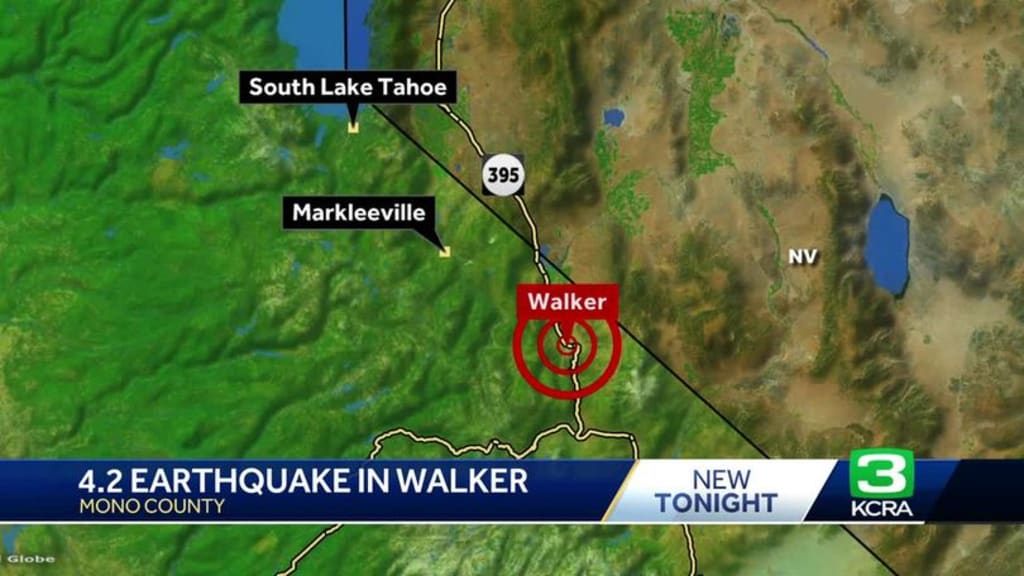
One of the most destructive and unexpected natural disasters, earthquakes can occur at any time and leave a path of devastation in their wake. The Earth's terrain has been sculpted by these geological events for millions of years, and our knowledge of them has grown throughout time. We will examine the science underlying earthquakes in this blog article, as well as their causes, impacts, and possible mitigating actions.
CLICK HERE TO WIN $10,000 FOR FREE
Section 1: Earthquake Fundamentals
1.1 Earthquake: What Is It?
An earthquake is a quick, intense shaking of the surface of the Earth brought on by the release of energy from the crust. Numerous geological processes release this energy, which causes seismic waves to propagate and cause tremors in the earth.
1.2 Earthquake Scale
The Richter scale or the moment magnitude scale (Mw) are tools used by seismologists to gauge the strength of an earthquake. With each unit rise on the scale denoting a tenfold increase in amplitude, these scales provide us a numerical value that aids in our understanding of an earthquake's magnitude. A 7.0 magnitude earthquake, for instance, has 10 times the strength of a 6.0 magnitude earthquake.
CLICK HERE TO WIN $10,000 FOR FREE
Section 2: Earthquake Causes
2.1 Movements of Tectonic Plates
The tectonic plate movement of Earth is the main source of earthquakes. There is a constant shifting, colliding, or pulling apart of these vast, unyielding plates, which causes stress buildup at plate borders. An earthquake occurs when the stress becomes too great for the rocks to withstand. The Pacific Ring of Fire, the San Andreas Fault, and the Himalayan area are some of the most prominent plate borders.
2.2 Zones of Subduction
Subduction zones are places of extreme pressure created when two tectonic plates are driven beneath one another. When this pressure is released, strong earthquakes and volcanic eruptions frequently occur. Subduction zone activity has been the cause of disasters such as the Tohoku earthquake in Japan in 2011 and the tsunami and earthquake in the Indian Ocean in 2004.
CLICK HERE TO WIN $10,000 FOR FREE
2.3 Additional Earthquake Initiators
Although tectonic plate movements are the main cause of earthquakes, other factors that can cause them include landslides, volcanic activity, mining, reservoir-induced seismicity (a phenomenon brought on by major dams), and hydraulic fracturing (fracking).
Section 3: The Process of Earthquakes
3.1 The Buildup of Stress
The rocks in the area are stressed by the movement of tectonic plates. The Earth's crust stores this stress as potential energy as it builds up over time.
3.2 Releasing Stress
Seismic waves are the result of stress being released when the strength of the rocks is exceeded. The ground trembles as a result of these waves spreading outward from the epicenter of the earthquake.
3.3 The Focus and Epicenter
The location on Earth's surface immediately above the focal of an earthquake, where seismic energy is initially released, is known as the epicenter. There are three primary depths of earthquakes: shallow (0-70 km), middle (70-300 km), and deep (>300 km), each of which has a distinct impact on the ground.
Section 4: The Impacts of Natural Disasters
4.1 Earth Shook
The ground trembling that occurs during an earthquake is its most obvious and immediate consequence. The magnitude, depth, separation from the epicenter, and local geological parameters of the earthquake all affect how much the ground shakes. Infrastructure can collapse and buildings can collapse as a result of severe shaking.
4.2 Hurricanes
Massive ocean waves known as tsunamis, which can swamp coasts with disastrous results, can be caused by underwater earthquakes. The deadly combination of underwater earthquakes and tsunamis is exemplified by the devastating 2004 Indian Ocean tsunami.
4.3 Earthquakes and Landslides
Strong shaking has the potential to cause landslides, which might bury buildings below and harm hillsides. Another common impact of earthquakes is ground ruptures, which occur when the Earth's surface cracks and moves along a fault line.
4.4 Repercussions
There are frequently aftershocks—smaller earthquakes that occur after the original shock. These may exacerbate damage and make rescue and recovery operations more difficult.
Section 5: Preparation and Mitigation
CLICK HERE TO WIN $10,000 FOR FREE
5.1 Constructing Sturdy Structures
Buildings and infrastructure that are earthquake-resistant are among the best ways to reduce the effects of earthquake damage. Engineering methods that assist absorb and disperse seismic energy include reinforced concrete and foundation isolation.
5.2 Systems of Early Warning
Early warning systems for earthquakes can give vital seconds or even minutes in advance, enabling people to seek shelter and automating the shutdown of vital infrastructure.
5.3 Reaction to Emergencies
The secret to preserving lives and lessening the effects of earthquakes is preparation and quick action. Plans for disaster response that are well-coordinated and include search and rescue teams, medical support, and shelter are essential for both governments and communities.
5.4 Education in Public
It is crucial to inform people about the dangers of earthquakes and safety precautions. This include preparing an evacuation plan, having emergency supplies, and understanding what to do in the event of an earthquake.
Section 6: Prominent Earthquake Occurrences
6.1 Earthquake in San Francisco, 1906
Among the most well-known earthquakes in history is the one that struck San Francisco in 1906. With a magnitude of 7.9, it caused extensive damage and fires that raged for days. It led to important developments in disaster response and earthquake engineering.
6.2 The Tsunami and Earthquake in Tohoku, 2011
With a magnitude of 9.0, the 2011 Tohoku earthquake and tsunami caused the Fukushima Daiichi nuclear accident as well as over 15,000 fatalities. It demonstrated the devastation that subduction zone earthquakes may do and the significance of being ready.
6.3 The Northridge Earthquake of 1994
With a magnitude of 6.7, the Northridge earthquake of 1994 took place in California's heavily populated San Fernando Valley. It brought attention to how susceptible cities are to earthquakes and changed building regulations.
Section 7: Research on Earthquakes and Upcoming Difficulties
CLICK HERE TO WIN $10,000 FOR FREE
7.1 Predicting Earthquakes using Seismology
Seismologists are still researching earthquakes in order to forecast and comprehend them better. It is still very difficult to forecast the precise moment and position of an earthquake, though.
7.2 Seismicity Induced
Man-made seismicity has been connected to subterranean nuclear testing and hydraulic fracturing. There is increasing concern about comprehending and controlling these man-made earthquake triggers.
7.3 Worldwide Readiness
There has never been a more pressing need for worldwide earthquake preparedness as the world's population continues to rise and become more urbanized. Particularly developing nations confront enormous obstacles in their attempts to mitigate earthquake damage and recover from it.
CLICK HERE TO WIN $10,000 FOR FREE
Conclusion
The Earth's surface has been sculpted for eons by the intense and unexpected force of earthquakes. Even while we cannot stop earthquakes from happening, we can lessen their effects by preparation, sturdy infrastructure, and continuing research. We can better defend ourselves and our communities against these geological events' deadly effects as our awareness of them deepens. We may bravely and resolutely face the wrath of nature's earthquakes by remaining knowledgeable, ready, and resilient.
About the Creator
Enjoyed the story? Support the Creator.
Subscribe for free to receive all their stories in your feed.
Comments
There are no comments for this story
Be the first to respond and start the conversation.