
Two places you should never SWIM
DANGER SPOTS AS POOLS OR BEACHES

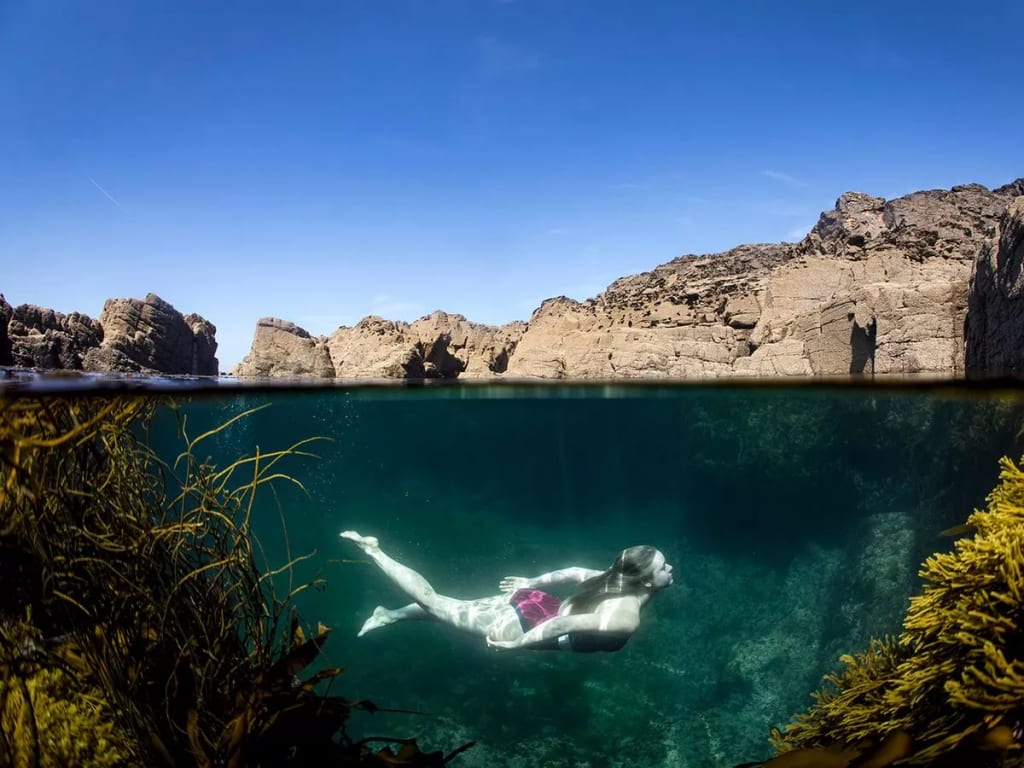
There's nothing like a cool dip in the pool to cool down on a hot day. But make sure you know which water bodies are safe to swim in before stripping off your clothes and jumping in. Some lakes, rivers, and pools look inviting, but be aware that they may hold fatal dangers for swimmers. Some pools are flooded with acid, while other Locations may be hopeless escape positions if things go wrong. Let's take a look at some of the safest and most treacherous swimming spots.
1. LAKE NATRON
Tanzania is a country in Africa known for its diverse wildlife and unique natural features. One of these remarkable features is Lake Natron, a 490-square-mile body of water with an extraordinary phenomenon. Due to the intense heat in this region, Lake Natron experiences high levels of evaporation, leaving behind salty and mineral-rich remnants that create a crust over the lake bed. These remnants harbor microorganisms with a deep red pigment that thrive on the available nutrients. However, the water that remains in Lake Natron is so saturated with salt that migratory birds that stop for a refreshing bath become coated in salt crystals. In just a matter of minutes, these birds can become trapped and mummified alive by the layers of salt. This process gives rise to the myth that living things turn to stone at Lake Natron. Although not entirely accurate, it does capture the haunting nature of this phenomenon. Furthermore, due to the sodium and mineral-rich composition of Lake Natron's bedrock, its environment becomes strongly alkaline, resulting in water with pH levels ranging from 10 on an average day to 12 when temperatures soar to scalding heights of 140 degrees Fahrenheit. So at its worst, taking a dip in this lake would be like swimming through hot bleach, leaving you with serious alkaline burns. This is something a group of wildlife photographers horrifyingly experienced firsthand back in 2007. As they were flying over the lake, their helicopter pilot became disoriented and crashed. The chemicals in the water immediately began irritating their eyes, practically blinding them while slowly burning their skin. But miraculously, they managed to brave the pain and scramble two miles across the shallow waters to the nearest solid ground. Luckily, they all made a full recovery. But if they had crashed much further out, or if it had been an even hotter day, this could have ended fatally.
2. JACOB’S WELL
Jacob's Well is a renowned spring located near Wimberley, Texas, where children in the summer can often be found enjoying themselves in the creek that leads to it. This particular spring stands out due to its unusually large 12-foot diameter mouth and its astounding 30-foot plunge into darkness. While it may seem like an ideal spot for some adventurous cannonballs, caution must be exercised when exploring this fascinating natural wonder. Jacob's Well is not just an ordinary spring; it is part of an intricate karstic cave system that extends far beyond the main chamber. Beyond the initial descent lies a labyrinth of tunnels and chambers connected by narrow shafts, with depths averaging over 120 feet and a vast expanse stretching more than 4,500 feet. Explorers and divers from around the globe have been drawn to this impressive underground network, but it comes with inherent risks. Many lives have been tragically lost to its treacherous depths. Though not harboring any supernatural creatures, the complexity of Jacob's Well serves as a stark reminder of nature's power and demands utmost respect from those seeking adventure within its watery embrace.
The entrances to certain tunnels are incredibly narrow, forcing divers to remove their oxygen tanks in order to pass through. This poses a great risk, as one mistake could result in the loss of their oxygen supply into the abyss below. Tragically, more than a dozen divers have lost their lives in Jacob's Well due to this danger. To make matters even scarier, Diego Adame experienced a terrifying incident while freediving in the cave back in 2015. Without an oxygen tank for assistance, he relied solely on his lung capacity and determination as he descended about 100 feet and maneuvered through unbelievably tight spaces. Suddenly, disaster struck when he lost one of his flippers. Filled with terror and fearing that time was running out, Diego made the desperate decision to cut away his weight belt and frantically scramble towards the exit. Through some miracle, Diego managed to reach the surface just in time. However, had he been slightly deeper underwater or unable to remove his belt, the outcome could have been much different indeed.
About the Creator
Enjoyed the story? Support the Creator.
Subscribe for free to receive all their stories in your feed.
Comments
There are no comments for this story
Be the first to respond and start the conversation.