
Transparent Carbon Future: Guarding Earth’s Emission Reduction Commitments with dMRV
Making Every Ton of Carbon Fully Traceable & Accountable

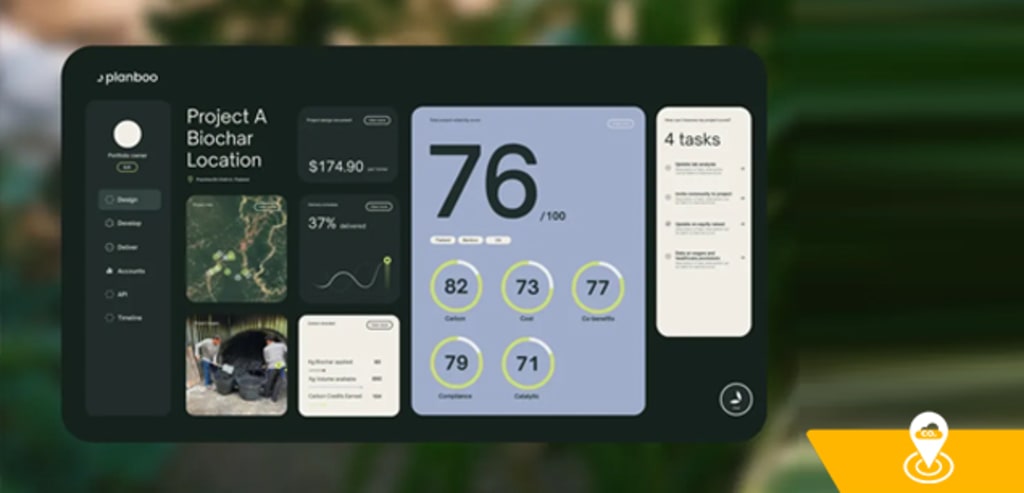
As the world accelerates toward carbon neutrality, innovative solutions are emerging at the intersection of technology, industry, and environmental stewardship. Among these, biochar has gained attention not only as a soil enhancer but also as a powerful carbon removal tool. Coupled with industrial-scale pyrolysis equipment and digital measurement, reporting, and verification (dMRV) systems, biochar production can deliver both environmental impact and economic value. This article explores how integrating dMRV into industrial biochar pyrolysis operations strengthens carbon accountability, optimizes production, and supports sustainable business models.
The Role of Biochar in Carbon Removal
Biochar is a carbon-rich material produced through the pyrolysis of biomass—such as agricultural residues, forestry waste, or organic byproducts—under controlled, oxygen-limited conditions. The resulting solid material has several environmental benefits:
- Carbon Sequestration: Biochar stores carbon in a stable form for decades or even centuries, preventing CO₂ from returning to the atmosphere.
- Soil Improvement: Its porous structure enhances soil fertility, water retention, and nutrient availability.
- Pollution Mitigation: Biochar can absorb heavy metals and reduce nutrient runoff, improving water quality.
Beyond these direct benefits, biochar production represents a measurable form of carbon removal, making it an attractive candidate for carbon credit programs and sustainability reporting.
Industrial Biochar Pyrolysis: Scaling Carbon Solutions
While small-scale biochar production can support local agriculture or home gardening, industrial pyrolysis equipment enables the mass production of biochar with consistent quality. Modern pyrolysis systems are designed to:
Handle large volumes of biomass efficiently, reducing waste.
Optimize temperature and residence time to maximize carbon retention.
Capture byproducts, such as syngas and bio-oil, which can be used for energy generation, improving overall system efficiency.
Industrial-scale biochar pyrolysis equipment not only increases the quantity of biochar produced but also provides the data needed for carbon accounting. This is where dMRV integration becomes essential.
What is dMRV and Why It Matters
dMRV, or digital Measurement, Reporting, and Verification, is a framework that uses technology to track and validate carbon removal activities. In the context of biochar:
- Measurement: Sensors and IoT devices monitor biomass input, pyrolysis conditions, and biochar output. This ensures accurate estimation of carbon sequestration.
- Reporting: Data is compiled automatically into transparent reports suitable for regulators, investors, or carbon credit platforms.
- Verification: Independent auditors can validate the results digitally, reducing errors, fraud, and administrative burden.
Integrating dMRV with industrial pyrolysis equipment enables real-time carbon accounting, providing auditable proof of each ton of CO₂ removed.
Integrating dMRV with Industrial Pyrolysis: Practical Steps
To effectively combine biochar production with digital carbon auditing, companies can follow several key steps:
Install Sensors and Data Capture Tools: Temperature, biomass flow, and biochar mass can be tracked in real time. Advanced systems can also measure moisture content and carbon content.
Connect Equipment to a Digital Platform: IoT-enabled pyrolysis units send data to a centralized dMRV platform. Cloud-based dashboards allow operators to monitor production efficiency and carbon metrics.
Automate Carbon Calculations: Software algorithms convert biomass input and pyrolysis parameters into precise estimates of carbon sequestration.
Facilitate Verification and Reporting: The platform generates standardized reports for carbon credit registries, regulatory agencies, and sustainability audits.
By integrating dMRV, industrial biochar operations not only enhance transparency and credibility but also open new revenue streams through verified carbon credits.
Economic and Environmental Synergies
The integration of industrial biochar pyrolysis with dMRV delivers a double benefit:
- Revenue Generation: Companies can sell biochar for soil amendment, energy byproducts, and verified carbon credits. Industrial-scale consistency boosts market trust and pricing potential.
- Environmental Impact: Each ton of biochar represents a quantified, verified amount of CO₂ removed from the atmosphere. dMRV ensures this impact is transparent, measurable, and credible.
Moreover, the combination of high-efficiency pyrolysis and digital auditing reduces waste, optimizes energy use, and strengthens corporate sustainability claims—critical in a world increasingly focused on ESG (Environmental, Social, and Governance) performance.
The Future of Carbon Accountability
As carbon markets expand and climate policies tighten, the ability to demonstrate verifiable carbon removal will become a key competitive advantage. Industrial biochar pyrolysis equipment integrated with dMRV technology is not just a production solution—it is a strategic tool for the low-carbon economy. By bridging industrial innovation with environmental responsibility, businesses can turn carbon accountability into a tangible asset.
Conclusion
The intersection of biochar, industrial pyrolysis, and digital carbon auditing represents a promising frontier for sustainable industry. By leveraging dMRV, companies can ensure that every ton of biochar produced is measurable, verifiable, and valuable. This integration not only enhances environmental stewardship but also creates economic opportunities through carbon markets and high-quality biochar products.
In an era where transparency, impact, and accountability are increasingly demanded by regulators, investors, and the public, industrial biochar production with integrated dMRV is more than a technology—it is a pathway to a cleaner, more sustainable future.
About the Creator
Bestonpyrolysis
Engaged in waste plastic/tyre/rubber recycling, oil sludge treatment, biomass recycling, sewage sludge management and paper recycling…
https://bestonpyrolysisplant.com/
Enjoyed the story? Support the Creator.
Subscribe for free to receive all their stories in your feed.
Comments
There are no comments for this story
Be the first to respond and start the conversation.