
Transforming Waste into Wealth:
The Green Entrepreneur’s Guide to Continuous Tyre Pyrolysis
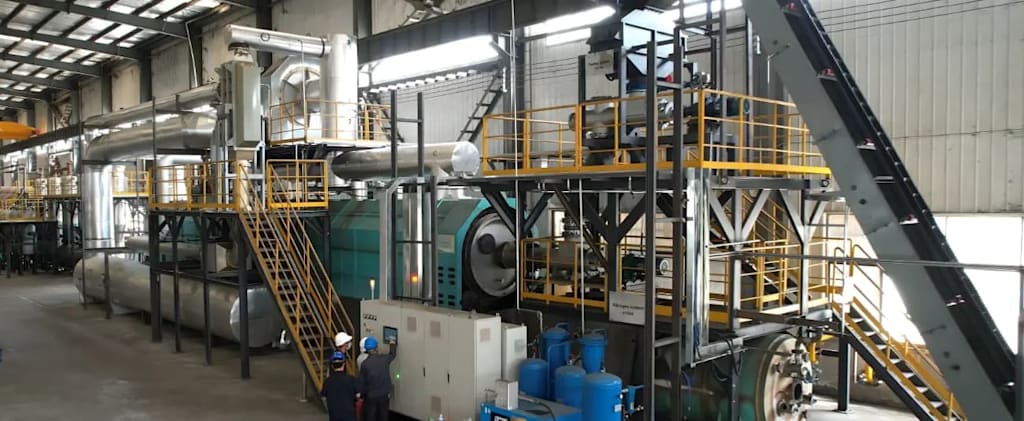
The global landscape of waste management is undergoing a radical shift. As the world grapples with the environmental burden of discarded rubber, a sophisticated and sustainable solution has emerged: the continuous tyre pyrolysis system. For the modern entrepreneur, this isn't just a business opportunity; it is a chance to stand at the forefront of the circular economy. This guide explores how to build a high-performance facility that turns an environmental hazard into a renewable goldmine.
1. The Alchemy of the Circular Economy: How it Works
At its core, the process is a masterpiece of thermal chemistry. Instead of letting tyres languish in landfills for centuries, a continuous system uses an oxygen-free thermal decomposition process. This breaks down the complex polymers of rubber into three primary high-value resources: pyrolysis oil, synthetic gas, and carbon black.
Unlike older, fragmented "batch" methods that require cooling down and restarting after every load, a continuous setup operates in a seamless, 24/7 loop. This constant flow doesn't just maximize output; it stabilizes the thermal environment, ensuring that the quality of the recovered energy remains consistent. It is the difference between a flickering candle and a steady, powerful beam of light.
2. Engineering Excellence: Selecting Your Technical Core
The heart of your operation lies in the precision-engineered continuous tyre pyrolysis plant hardware. Because the process involves extreme temperatures and high-pressure environments, the quality of your reactors and condensers is non-negotiable.
To maintain a truly sustainable footprint, your setup must prioritize automation. Advanced sensors and control systems manage the delicate balance of heat and pressure, preventing energy loss and ensuring that every scrap of rubber is converted efficiently. Investing in high-grade, corrosion-resistant materials at the start ensures that your facility remains a productive asset for decades, rather than a maintenance liability.
3. Strategic Foundations: Choosing a Sustainable Site
Location is a strategic lever for both profitability and environmental impact. Your facility should ideally sit at the intersection of supply and demand. By positioning your plant near large-scale waste tyre collection hubs, you drastically reduce the carbon footprint associated with logistics and transport.
Furthermore, the internal layout of the site should reflect a "lean" philosophy. From the moment the raw material enters the feeding system to the final packaging of the recovered carbon, the flow should be frictionless. Efficient spatial planning reduces the energy required for internal material handling and ensures that safety zones are clearly defined, protecting both your workforce and the local ecosystem.
4. Guarding the Earth: Navigating Regulations and Emissions
For a green entrepreneur, "compliance" is not a hurdle; it is a badge of honor. Operating a pyrolysis facility requires a deep commitment to clean air and water standards. Modern systems must be integrated with sophisticated multi-stage scrubbing units and gas purification technologies.
These systems ensure that the non-condensable gases—often referred to as "syngas"—are cleaned and recirculated to provide heat for the reactor itself. This creates a self-sustaining energy loop. By strictly adhering to international environmental permits, you don't just avoid fines; you build a brand that is synonymous with ecological integrity, making your venture more attractive to eco-conscious partners and governments.
5. The Green Bottom Line: Financial Planning for Impact
Establishing a state-of-the-art recovery facility requires significant upfront capital, but the long-term ROI is anchored in the "Triple Bottom Line": People, Planet, and Profit. Your financial analysis should account for the diverse revenue streams generated by the by-products.
- Pyrolysis Oil: A potent fuel for industrial furnaces or a feedstock for further refining.
- Carbon Black: A vital raw material for the rubber, plastic, and ink industries.
- Steel Wire: High-quality scrap metal ready for smelting.
When seeking funding—whether through green bonds, venture capital, or sustainability grants—your business plan must emphasize the carbon offset potential of your operation. Investors today are increasingly looking for "Impact Investing" opportunities where financial returns are matched by measurable environmental benefits.
6. Mastering Efficiency: The Path to Operational Longevity
Sustainability is a marathon, not a sprint. To ensure your facility thrives, you must implement a culture of "Predictive Maintenance." By using data analytics to monitor the health of your thermal components, you can address wear and tear before it leads to downtime.
Training is equally critical. Your team should not just be "operators" but "stewards" of a complex ecological process. Optimizing every kilowatt of electricity used and ensuring zero-waste discharge converts your facility into a model of industrial efficiency. The more refined your internal processes, the lower your overhead and the higher your contribution to a world without waste.
Conclusion: Leading the Renewable Revolution
The journey of setting up a continuous pyrolysis venture is a bold step toward a cleaner future. By marrying cutting-edge thermal technology with a steadfast commitment to environmental ethics, you do more than just recycle tyres—you redefine what "waste" means. With the right equipment, a strategic location, and a focus on circularity, your business will become a cornerstone of the new green economy, proving that profitability and planetary health go hand in hand.
About the Creator
Enjoyed the story? Support the Creator.
Subscribe for free to receive all their stories in your feed.
Comments
There are no comments for this story
Be the first to respond and start the conversation.