
Transforming Agricultural Waste into High-Value Carbon Technologies
A Circular Approach to Biomass Valorization
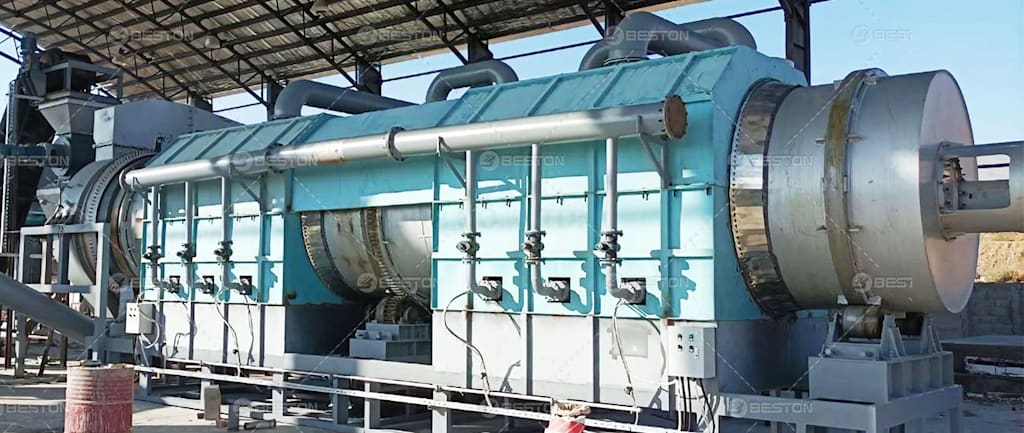
Agricultural activities generate billions of tons of organic residues annually. Materials such as coconut shells, husks, palm residues, and nut casings are frequently discarded, left to decompose naturally, or subjected to open-air burning. Though traditionally dismissed as liabilities, these lignocellulosic materials hold significant carbon content that can be systematically recovered. Transitioning from waste disposal to carbon recovery offers a highly efficient pathway to convert agricultural byproducts into premium technical carbon, transforming environmental liabilities into stable economic assets.
The Escalating Challenge of Agricultural Residue Management
The global expansion of agro-industrial production has drastically accelerated the accumulation of biomass waste, outstripping traditional management strategies.
In many production hubs, disposal practices remain inefficient and ecologically damaging:
- Atmospheric Pollution: Open-field burning releases massive volumes of black carbon, particulate matter (PM2.5), and greenhouse gases.
- Logistical Bottlenecks: Unmanaged biomass accumulation monopolizes valuable storage space, attracts agricultural pests, and causes localized soil and water degradation through uncontrolled leaching.
Consequently, modern agricultural enterprises are moving away from linear waste streams and adopting specialized thermochemical processing to optimize resource efficiency.
Mechanics of Advanced Biomass Carbonization Systems
The core methodology relies on industrial pyrolysis—the thermal decomposition of organic matter at elevated temperatures (400 to 600) in an oxygen-depleted environment.
Operating a modern coconut charcoal making machine or similar continuous carbonization plant allows operators to prevent complete combustion, instead isolating the raw biomass into three high-value streams: solid fixed carbon, condensable bio-oil, and combustible syngas.
Modern industrial systems feature automated continuous feeding, multi-stage emission scrubbing, and real-time thermal monitoring. These advancements ensure highly uniform carbonization, producing a final product with excellent structural integrity, high porosity, and a high concentration of fixed carbon.
Advancing Carbon Sequestration and Climate Goals
Biomass carbonization locks atmospheric carbon into a highly stable, crystalline matrix that resists microbial decay for centuries. When raw agricultural waste decomposes naturally or is burned, its stored carbon is rapidly returned to the atmosphere as carbon dioxide (CO2) or methane (CH4).
The Sequestration Paradigm: By intercepting these residues and converting them into engineered biochar, up to 50% of the original biomass carbon can be permanently sequestered when integrated into soils or industrial materials.
This localized, verifiable carbon sink aligns directly with global carbon removal standards and offers agricultural corporations a transparent metric for corporate sustainability reporting and carbon offset markets.
Closed-Loop Environmental and Operational Efficiencies
The ecological advantages of closed-loop pyrolysis extend far beyond carbon storage:
- Thermal Self-Sufficiency: Modern carbonization plants utilize volatile syngas loops. The gases liberated during initial heating are captured, scrubbed, and routed back into the combustion chamber to sustain the process, drastically reducing external fuel requirements.
- Mitigation of Upstream Emissions: Displacing fossil carbon (like anthracite or lignite) with bio-based alternatives directly scales down net industrial emissions.
- Resource Optimization: Converting local agricultural outputs reduces regional reliance on imported raw materials, localizing supply chains within a circular economy framework.
Economic Drivers for Agro-Industrial Ecosystems
Investing in decentralized carbonization infrastructure fundamentally alters the economics of rural and industrial agricultural regions. By converting low-value agricultural residues into a consistent, premium carbon feedstock, processors can establish entirely new profit centers.
Driven by tightening environmental regulations, corporate net-zero mandates, and the rising cost of fossil-based materials, the market for sustainably sourced carbon continues to expand. This sustained commercial demand accelerates regional economic growth, transforms waste management from a cost center into a revenue driver, and creates specialized technical jobs within rural processing hubs.
Future Trajectory of Sustainable Carbon Markets
As global industries face mounting pressure to decarbonize, the value of renewable biomass feedstocks will continue to escalate. Thermochemical carbonization bridges the gap between massive agricultural output and the urgent industrial demand for sustainable raw materials.
Continuous innovations in automation, heat integration, and tail-gas purification are establishing biomass carbonization as a foundational element of circular resource management. By optimizing waste biomass into highly stable, functional carbon, modern processing enterprises are uniquely positioned to spearhead both environmental stewardship and industrial profitability.
About the Creator
Enjoyed the story? Support the Creator.
Subscribe for free to receive all their stories in your feed.
Comments
There are no comments for this story
Be the first to respond and start the conversation.