

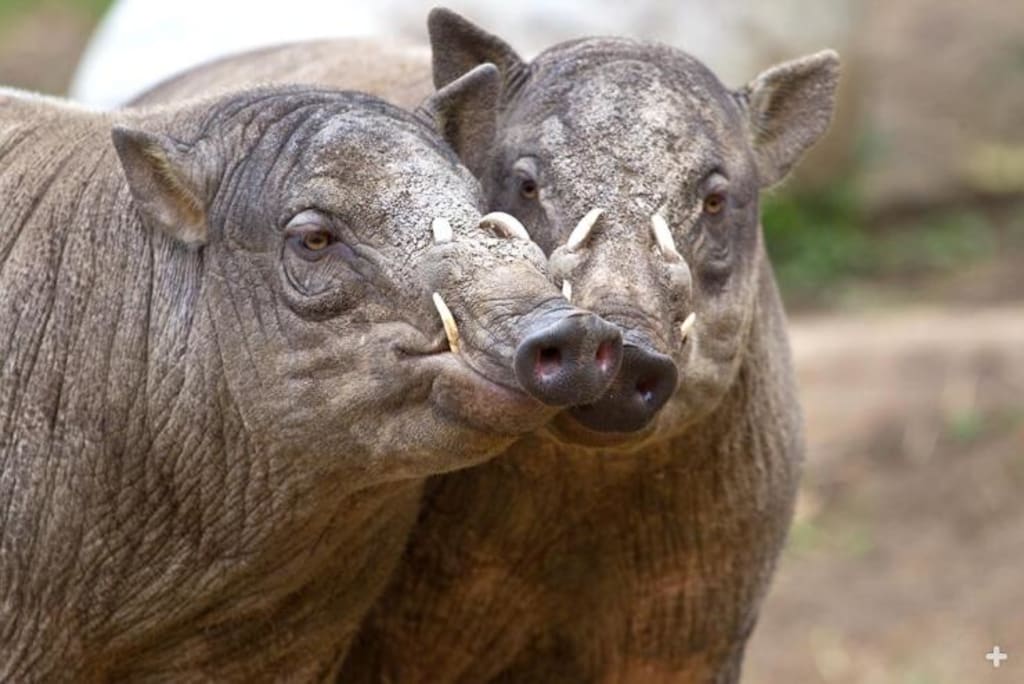
Babirusas
The babirusa, often referred to as the "pig-deer," is a unique species of wild pig native to Indonesia, particularly the islands of Sulawesi. Known for its distinctive curved tusks and prehistoric appearance, it primarily feeds on foliage and fruits and is considered endangered due to habitat loss and hunting pressures. These pigs inhabit dense jungles and swamps in Indonesia, particularly on Sulawesi and nearby islands. They primarily consume leaves, fruits, and fungi and do not root for food like other pigs. Males are known for their long, curved tusks that can grow back into their skulls. They are nocturnal and are known to be good swimmers.
Bush Pigs
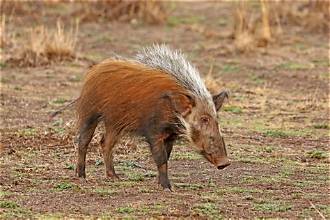
Bush pigs are primarily found in dense forests and bushy areas across Africa. They have pointed, tufted ears and a face mask, resembling domestic pigs. These pigs are nocturnal and are known for their social behavior, often found in small groups. Their diet consists mainly of roots, tubers, and fruits, making them omnivorous.
Giant Forest Hogs
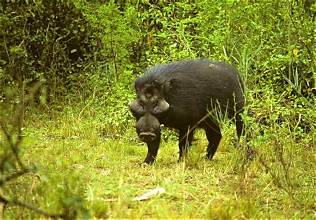
The Giant Forest Hog (Hylochoerus meinertzhageni) is the largest wild member of the pig family, primarily found in the forests of Africa. It can weigh up to 300 kg and is known for its distinctive broad head and tusks, making it a unique species among wild pigs. They inhabit various forest types, including montane, lowland, and swamp forests, often preferring dense cover to avoid sunlight. Their diet consists mainly of grasses, roots, and fruits, adapted for grazing and browsing. These hogs are generally shy and elusive, often living in small groups to avoid predators.
Mangalitsas
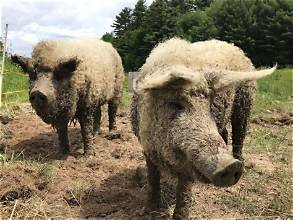
The Mangalitsa is a unique breed of pig known for its curly hair and rich, flavorful meat, originally developed in the Austro-Hungarian Empire in the early 1800s. This breed is particularly valued for its high-quality lard and is often raised in ethical farming practices. Known for their curly hair, Mangalitsa pigs are often referred to as the "woolly pig." These pigs are social animals that prefer to live in herds, which influences their farming practices.
Pygmy Hogs
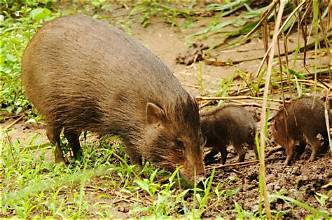
The pygmy hog (Porcula salvania) is the world's smallest wild pig, native to the grasslands of the southern Himalayan foothills. This critically endangered species plays a vital role in its ecosystem by indicating the health of its habitat. These pigs inhabit undisturbed grasslands, particularly those with dense tall grass and a variety of herbs and shrubs. They primarily feed on roots, tubers, and various plant materials, showcasing their foraging behavior. Female pygmy hogs construct waterproof nests for their young, demonstrating unique nesting behavior.
Red River Hogs
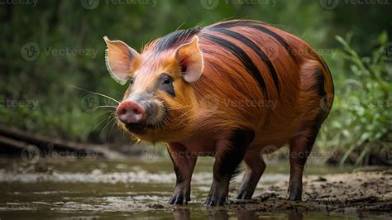
The red river hog, also known as the tufted pig, is a wild member of the pig family found primarily in western and central Africa. It is recognized for its striking red coat and is one of the most colorful members of its family. These hogs inhabit rainforests, wet savannas, and forested valleys across western and central Africa. They are omnivorous, feeding on roots, fruits, and small animals. When threatened, they fluff out their facial hair to appear larger and more intimidating. Their main predator is the leopard, but red river hog populations are currently thriving due to low leopard numbers. They have a distinctive red coat and are known for their agility, being fast runners and good swimmers.
Sulawesi Babirusas
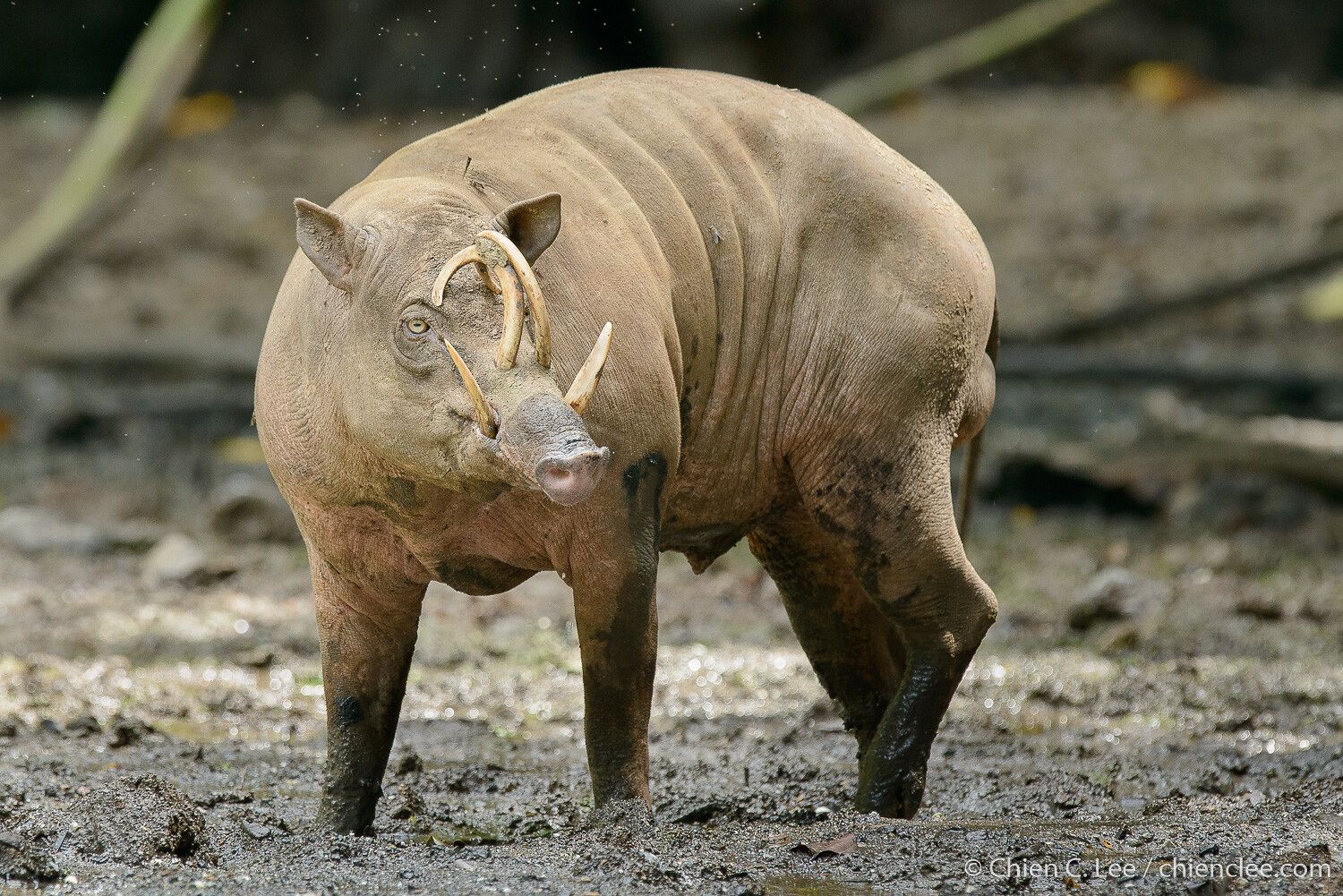
The Sulawesi babirusa (Babyrousa celebensis) is a unique species of wild pig native to the island of Sulawesi and nearby islands in Indonesia. It is characterized by its distinctive tusks, which can grow long enough to pierce its own skull, although this is rare due to their fragility. It is recognized for its naked-looking body and impressive upper tusks.
Warthogs
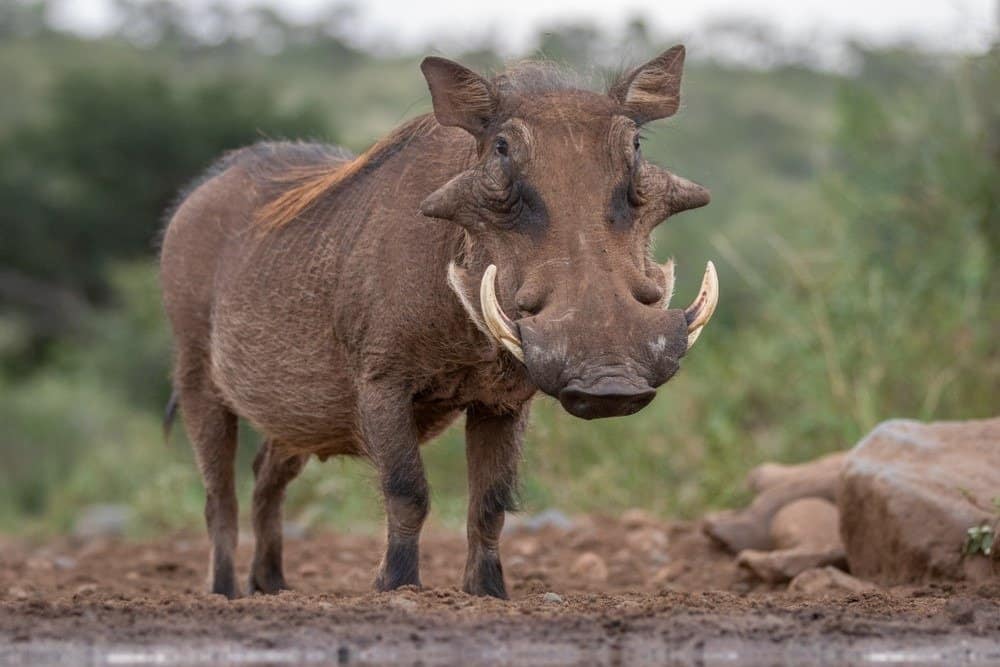
A warthog is a wild pig native to Africa, characterized by its large head, tusks, and distinctive warts on its face. They typically inhabit savannahs and open woodlands, where they forage for grasses and roots. They are found in open and lightly forested areas across sub-Saharan Africa. They have a large head, sparse hair, and prominent tusks, with males being larger than females. Warthogs often reverse into burrows for protection and wallow in mud to regulate their body temperature. Their diet mainly consists of grasses, roots, and fruits, making them herbivorous.
About the Creator
Rasma Raisters
My passions are writing and creating poetry. I write for several sites online and have four themed blogs on Wordpress. Please follow me on Twitter.
Enjoyed the story? Support the Creator.
Subscribe for free to receive all their stories in your feed. You could also become a paid subscriber, letting them know you appreciate their work.
Comments
There are no comments for this story
Be the first to respond and start the conversation.