
THE ZOMBIE APOCALYPSE IS HERE WITH US.
THE ACTUAL PERSPECTIVE.
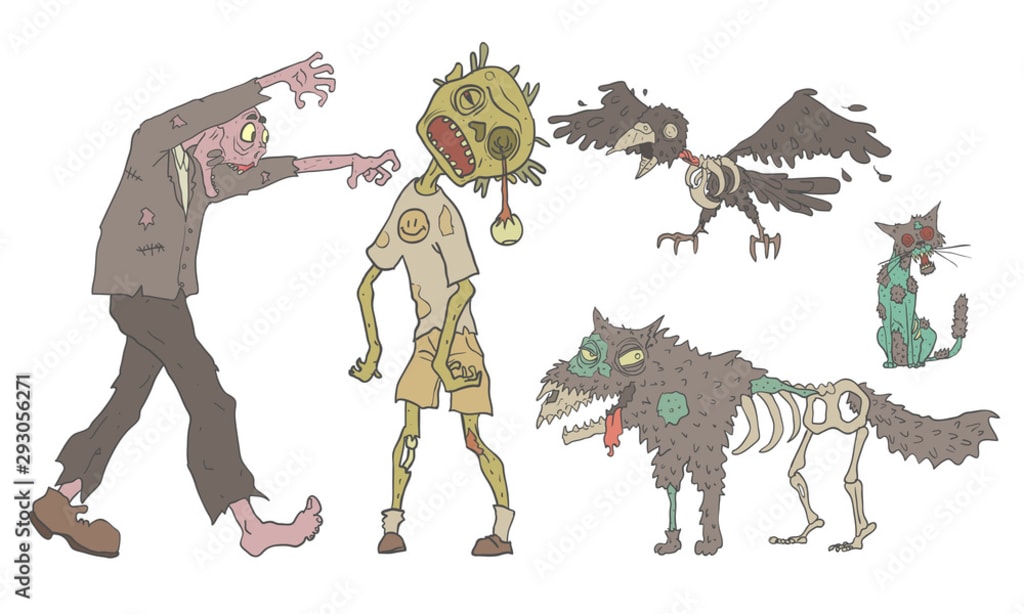
The commencement of a zombie apocalypse is already underway. Our understanding of this phenomenon comes from various sources such as movies, video games, and sci-fi literature. Whether the zombies are slow or fast, they traverse the streets of abandoned cities in search of sustenance, while survivors come together in small communities, striving to forge a new world. However, the reality of a genuine zombie apocalypse may deviate significantly from these depictions.
Envision large cities in quarantine, with crowds of people sporting vacant stares, refraining from physical contact, appearing harmless, and exhibiting a detached demeanor. Their actions seem beyond their control, as if they've relinquished their personalities. Soon, they commence an unusual behavior – climbing lamp posts. Scaling to the highest point, individuals adhere to metal surfaces using saliva as a glue. Subsequently, a peculiar white substance emerges from their backs, releasing fungal spores into the atmosphere.
These spores disperse throughout the city, landing on uninfected individuals and infiltrating their bodies to assume control of their brains. This constitutes the actual manifestation of a zombie apocalypse, which has, in fact, already commenced. The scenario involves not just people, but also insects, particularly a specific parasitic fungus capable of manipulating the thoughts and actions of wild fruit flies. The fungus infiltrates the insect's body, manipulates its nervous system, and compels it to execute specific behaviors.
As the infected fly surrenders control of its body to the parasite, which feeds internally on the insect, it eventually reaches the fly's brain, influencing it in some manner. Scientists posit that the fungus secretes a peculiar substance, stimulating the fly's neurons and prompting the release of a specific hormone. This hormone induces heightened motor activity, increasing the fly's speed while diminishing its interest in food. At sunset, the fly ascends to elevated positions, such as blades of grass, where it adheres with a sticky substance from its proboscis.
This parasitic fungus produces adhesive saliva, enabling flies to affix themselves in place. Unable to escape, the fly remains stuck to the grass, subsequently raising its wings as the fungus releases spores from its back. These spores descend onto other flies, penetrating their bodies. The parasite, reliant on a new host, deems it imperative to reach the highest point for optimal spore dispersion.
In addition to spores, the fungus can infect flies through penetration of the insect's hemolymph, or blood. Scientists demonstrated this by extracting hemolymph from an infected fly and transferring it to a healthy one. The second fly, too, began climbing to elevated positions, indicating a change in behavior induced by a substance injected into its blood.
The phenomenon extends beyond flies, mirroring another fungus, Cordyceps, known for taking control of ants' minds and turning them into zombies. This parallel emphasizes the capability of certain parasitic fungi to manipulate the behavior of their hosts. Numerous examples abound in the natural world, including wasp larvae invading spider bodies, barnacles controlling crab behavior, and parasites inducing mice to jump into a cat's mouth.
While the planet teems with organisms capable of instigating a form of zombie apocalypse in the insect and animal realms, the pivotal question remains: Can these entities extend their control to the human mind? Unlike scenarios depicted in fiction, infected individuals exhibit no aggressiveness toward others; instead, they calmly ascend to high points and release spores, painting a less thrilling yet unnerving fate for humanity.
Fortunately, the likelihood of such parasites overtaking human minds in the near future is low. The evolution of Cordyceps, which targets ants, took millions of years to adapt to controlling small insects' minds. The challenge lies in finding the appropriate "key" to the human body, a process that could span hundreds of millions of years, assuming the parasite coexists with humans throughout this duration. The comfort in this situation is that such fungi are not currently our neighbors.
Another barrier to infection is temperature. Parasitic fungi select insects due to their specific temperature adaptations, which differ from human temperatures. Consequently, these organisms struggle to survive in human bodies. However, exceptions exist, as demonstrated by dangerous fungal diseases infecting people, presenting challenges for doctors to devise effective treatments.
Despite potential threats, the fragility and sensitivity of fungi render them susceptible to environmental changes. Colonies can be destroyed with minor temperature fluctuations. Most fungi prefer colder climates, while human bodies generate excessive heat, making us an unattractive host. Additionally, the abundance of alternative breeding grounds diminishes their interest in infecting humans.
Assuming a hypothetical scenario where global temperatures rise, and fungi adapt to new conditions, immunity development among insects and insects' natural enemies could thwart the fungi's effectiveness. If infected individuals lose their minds and resort to spraying spores from elevated locations, human responses would likely involve prevention of access to high places, isolation of infected areas, and the implementation of quarantine measures.
While chaos may initially ensue due to panic and lawbreaking, humanity's resilience would ultimately prevail. Scientists might develop effective medicines or individuals could take temperature-regulating pills, rendering parasitic fungi unable to survive in human bodies. The severity of the threat amplifies if infected individuals exhibit aggression and speed, presenting substantial challenges.
In the worst-case scenario, nature might provide a solution over time, with the emergence of organisms capable of destroying parasitic threats. Observing the balance in kingdoms of insects, animals, and fish, where no single species dominates its environment, offers hope that such equilibrium would prevail in the face of potential zombie-like threats.
Despite these considerations, the likelihood of fungi causing harm to human minds remains slim. The delay in creating a cure can be attributed to the relatively limited global prevalence of fungal diseases, requiring substantial investments for research and development. Resources tend to be allocated based on the severity of threats, and until fungi pose a significant menace, funds may not be dedicated to finding a cure.
Hope rests in the fact that we have recently overcome challenging events. As we reflect on these occurrences, we anticipate a future where the improbable scenarios described remain just that – improbable.
About the Creator
Enjoyed the story? Support the Creator.
Subscribe for free to receive all their stories in your feed.
Comments
There are no comments for this story
Be the first to respond and start the conversation.