
The Weight Above: What Really Protects Mature Trees When Severe Storms Hit
Heavy rain and high winds test every branch near your roofline. Here is how trees handle storm stress—and how to spot trouble early.

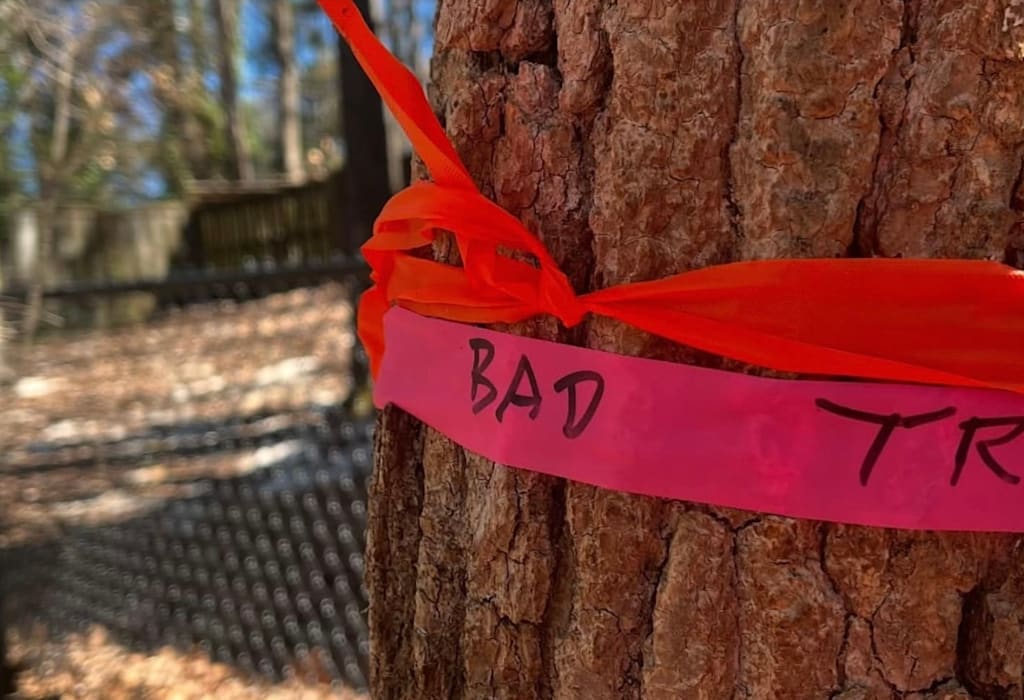
Anyone living near mature hardwoods knows the specific tension that comes with an approaching storm. It starts with a shift in the afternoon light, followed by rain drumming against the siding. But for most homeowners, the real anxiety is not the water. It is the steady sway of forty-foot limbs hanging directly over the driveway, the garage, and the bedrooms.
When the wind picks up and a massive oak begins to creak, you realize just how much weight sits suspended overhead.
Every storm season brings the same frantic cycle. Weather maps turn bright orange on local news, store shelves empty of chainsaws, and people head into the yard in a mild panic. That adrenaline usually leads to bad choices—either dragging an aluminum ladder into thirty-mile-per-hour gusts to hack off branches, or paying thousands to clear-cut healthy timber out of fear.
Neither reaction solves the real issue. Trees rarely fail during severe weather purely out of nowhere. More often, they come down because months of quiet structural weakness finally cross paths with relentless rain and wind.
During severe inland storms, the danger is rarely wind speed alone. It is what happens to the ground beneath your feet.
Dense clay soils act like a sponge. In dry weather, clay packs tight, anchoring roots firmly in place. But when a storm dumps several inches of rain over twenty-four hours, the earth reaches its saturation point. The soil softens into loose mud, destroying the friction that holds the root ball upright.
Meanwhile, an overgrown canopy acts like a giant ship sail. High winds catch the dense crown, transferring thousands of pounds of leverage down the trunk. If the soil around the base is waterlogged, the entire tree can lever right out of the earth.
You do not need a forestry degree to spot the red flags that cause failures. A walk around your yard on a dry afternoon tells you most of what you need to know.
First, look at the canopy. Watch for dead limbs, cracked branches hanging loose in the upper crown, and limbs rubbing together. Note any heavy lateral branches scraping against your roofline. Above all, resist the urge to “top” your trees. Chopping main leaders into blunt stubs does not make a tree safer. It triggers a shock response where the tree shoots out fast-growing, weakly attached sprouts that snap easily in the next storm. Pruning should selectively thin crossing branches so wind blows cleanly through.
Next, inspect the trunk and major joints. Look at where large limbs attach to the main stem. Wide, U-shaped unions have interlocking wood fibers that flex naturally under pressure. Tight, narrow V-shaped unions trap bark between growing stems, creating an unbonded seam that splits under twisting winds. Look also for shelf fungi or vertical cracks, which point to internal rot.
Finally, check the base. Never pile mulch against the trunk into a pyramid. These mulch volcanoes hold dampness against the bark, rotting the tree at ground level. Spread mulch flat, leaving the flared root collar fully exposed to fresh air.
When a storm is forty-eight hours away, the window for trimming has closed. Focus purely on moving targets. Park vehicles away from overhanging limbs, and bring patio furniture, grills, and potted plants inside. Most importantly, leave the chainsaw in the shed.
Once the storm clears, do not rush to condemn a battered tree. A hardwood that loses a major branch can look ragged, but that does not mean it is a loss. Trees have natural defenses that isolate damaged tissue and keep rot from spreading inward. Unless the trunk has split open or the root plate is tilting, an experienced eye can often rebalance the canopy with corrective pruning, giving the tree decades of healthy life ahead.
About the Creator
ORB Tree Service Marketing
ORB Tree Service Marketing provides SEO and local search strategies for the tree care and roofing industries. Follow us for insights on search optimization and lead generation for home services.
Enjoyed the story? Support the Creator.
Subscribe for free to receive all their stories in your feed.
Comments
There are no comments for this story
Be the first to respond and start the conversation.