
The Tyre-to-Oil Industry Chain from a Circular Economy Perspective
A Win–Win for Environment and Economy

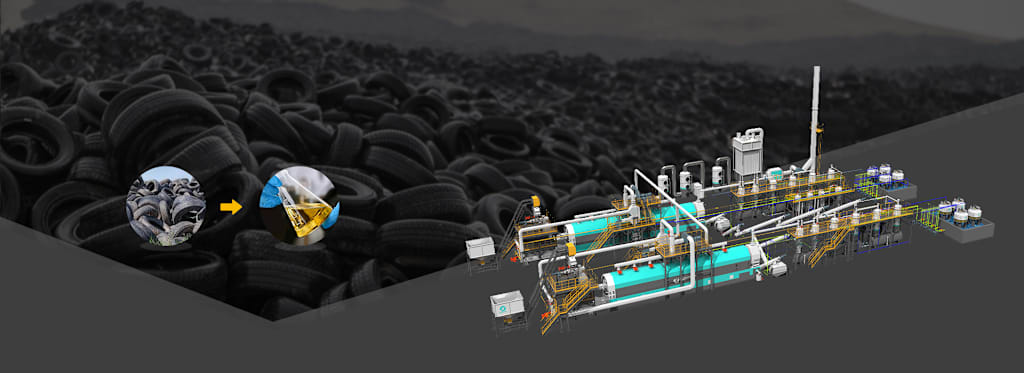
The rapid growth of the global automobile industry has led to a dramatic increase in waste tires. Every year, millions of end-of-life tires are discarded worldwide, creating significant environmental challenges. Traditional disposal methods such as landfilling or open burning not only waste valuable resources but also cause serious pollution. In response, the tyre to oil industry has emerged as a sustainable solution that aligns closely with the principles of the circular economy.
The Challenge of Waste Tires
Waste tires are difficult to decompose due to their complex composition and durable structure. Improper disposal can lead to environmental hazards such as soil contamination, fire risks, and mosquito breeding grounds. At the same time, tires contain large amounts of valuable hydrocarbons, making them a potential energy resource if properly processed.
The tyre to oil process provides an effective way to recover these resources by converting waste tires into useful products such as fuel oil, carbon black, steel wire, and combustible gas.
How the Tyre-to-Oil Process Works
The tyre to oil industry typically uses a process known as pyrolysis. In this process, waste tires are heated in an oxygen-free environment at high temperatures. As the rubber materials decompose, they are converted into several valuable outputs:
- Pyrolysis oil, which can be used as an alternative fuel in industrial boilers and furnaces
- Recovered carbon black, which can be reused in rubber, plastics, or construction materials
- Steel wire, which can be recycled in the steel industry
- Syngas, which can be used to heat the pyrolysis reactor itself
This multi-product output improves overall resource efficiency and makes the tyre to oil industry an important component of waste recycling systems.
Environmental Benefits of the Tyre-to-Oil Industry
From an environmental perspective, tyre to oil technology significantly reduces the negative impacts of waste tire disposal. By converting discarded tires into reusable resources, pyrolysis prevents them from ending up in landfills or being burned in uncontrolled conditions.
In addition, the process contributes to lower greenhouse gas emissions by recovering energy from waste materials that would otherwise be wasted. Advanced tyre to oil plants also incorporate emission control systems to minimize pollutants, ensuring compliance with environmental standards.
Through these mechanisms, the tyre to oil industry helps mitigate pollution, conserve resources, and support sustainable waste management practices.
Economic Value and Industrial Opportunities
Beyond environmental benefits, the tyre to oil industry also offers substantial economic opportunities. The products generated from tire pyrolysis have stable market demand. Pyrolysis oil can replace traditional fuel oils in certain industrial applications, while recovered carbon black and steel wire can be sold to manufacturing industries.
This diversified product structure helps create multiple revenue streams for operators. At the same time, the use of waste tires as feedstock reduces raw material costs, improving overall profitability.
The industry also generates employment opportunities in waste collection, transportation, processing, and downstream product utilization.
Supporting the Circular Economy
The circular economy emphasizes reducing waste, reusing materials, and maximizing resource efficiency. The tyre to oil industry perfectly reflects these principles by turning a problematic waste stream into valuable resources.
Instead of treating used tires as garbage, they become part of a closed-loop industrial chain where materials are continuously recycled and reused. This model not only reduces environmental pressure but also enhances economic resilience.
Governments and environmental organizations in many countries are increasingly encouraging tire recycling technologies, further supporting the development of the tyre to oil industry.
Future Prospects
As global awareness of sustainability continues to grow, the demand for innovative waste recycling technologies will increase. The tyre to oil industry is expected to expand as more regions seek effective solutions for managing waste tires while generating renewable energy resources.
With ongoing improvements in pyrolysis technology, environmental controls, and product upgrading, the tyre to oil sector will likely play an increasingly important role in both waste management and the circular economy.
Conclusion
From the perspective of the circular economy, the tyre to oil industry represents a practical model that achieves both environmental protection and economic benefits. By transforming waste tires into fuel, carbon materials, and recyclable steel, this industry reduces pollution, conserves resources, and creates new economic value.
As technology advances and global sustainability efforts intensify, tyre to oil solutions will continue to contribute to a greener and more resource-efficient future.
About the Creator
Bestonpyrolysis
Engaged in waste plastic/tyre/rubber recycling, oil sludge treatment, biomass recycling, sewage sludge management and paper recycling…
https://bestonpyrolysisplant.com/
Enjoyed the story? Support the Creator.
Subscribe for free to receive all their stories in your feed.
Comments
There are no comments for this story
Be the first to respond and start the conversation.