
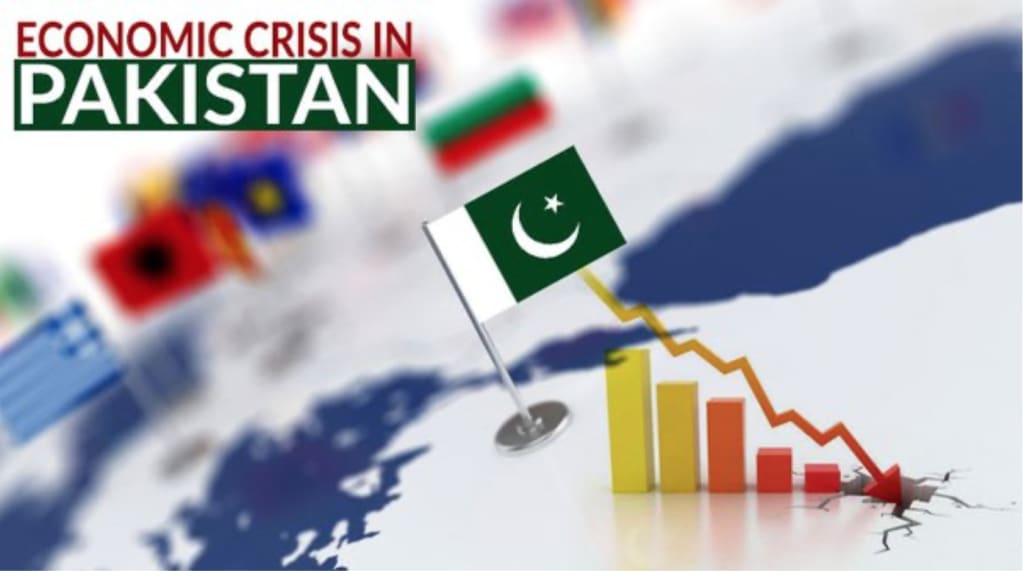
THE TRUTH ABOUT ECONOMY CRISIS IN PAKISTAN
Introduction:
Pakistan, a South Asian nation with immense potential, has experienced a challenging period in recent years, marked by the downfall of its economy. Despite the country's rich resources and a resilient population, Pakistan has faced numerous economic setbacks that have significantly impacted its growth and development. This article delves into the causes and consequences of the downfall of Pakistan's economy.
Political Instability and Governance:
One of the primary reasons behind Pakistan's economic decline is the persistent political instability and governance issues. Frequent changes in government, corruption, and a lack of consistent policies have hindered long-term economic planning and execution. The absence of stable institutions and effective governance mechanisms has eroded public trust, discouraged foreign investment, and impeded economic progress.
Energy Crisis and Infrastructure Deficit:
Pakistan has grappled with a severe energy crisis, characterized by a widening demand-supply gap and frequent power outages. Inadequate infrastructure and outdated power generation facilities have crippled industrial production and hindered the country's ability to attract foreign investment. The energy crisis has led to increased costs for businesses, reduced productivity, and limited the potential for economic expansion.
Terrorism and Security Concerns:
Persistent security challenges and the ongoing war against terrorism have taken a toll on Pakistan's economy. Terrorism not only jeopardizes the lives of citizens but also disrupts economic activities, discourages foreign investment, and hampers trade and tourism. The high costs associated with counter-terrorism efforts, including military expenditures and the maintenance of law and order, divert resources that could have been used for economic development.
Rising Inflation and Fiscal Mismanagement:
Pakistan has struggled with persistent inflation, which erodes purchasing power and places a burden on low-income households. Weak fiscal management, including excessive borrowing and uncontrolled government spending, has exacerbated inflationary pressures. Furthermore, a high fiscal deficit has led to a heavy reliance on borrowing, further straining the economy and increasing debt burdens.
Unemployment and Skill Gap:
The inability to create sufficient employment opportunities, particularly for the burgeoning youth population, has added to Pakistan's economic woes. A significant skill gap, limited access to quality education, and a mismatch between the demands of the labor market and the skills of the workforce have contributed to high unemployment rates. This not only stifles individual growth but also limits economic productivity and innovation.
Consequences:
The consequences of Pakistan's economic downfall have been far-reaching:
a) Poverty and Inequality: The decline in economic growth has increased poverty levels and exacerbated income inequality. The lack of access to basic necessities and limited opportunities for social mobility have perpetuated a cycle of poverty, further straining the social fabric of the country.
b) Brain Drain: The economic challenges have driven skilled professionals and intellectuals to seek opportunities abroad, resulting in a brain drain. The loss of talent and expertise hampers innovation, research, and development, hindering the country's long-term growth prospects.
c) External Debt Burden: Pakistan's economic struggles have led to an alarming increase in external debt, placing a heavy burden on future generations. High debt servicing costs divert resources from essential sectors such as health, education, and infrastructure.
d) Diminished Investor Confidence: The economic downturn, coupled with political instability and governance issues, has significantly eroded investor confidence. This has hindered foreign direct investment and limited the inflow of capital needed for economic growth and technological advancement.
Conclusion:
The downfall of Pakistan's economy can be attributed to a combination of factors, including political instability, energy crises, terrorism, fiscal mismanagement, unemployment, and skill gaps. The consequences of this decline are far-reaching, impacting poverty levels, inequality, external debt burdens, and investor confidence. Addressing these challenges requires comprehensive reforms, including institutional
About the Creator
Enjoyed the story? Support the Creator.
Subscribe for free to receive all their stories in your feed.
Comments
There are no comments for this story
Be the first to respond and start the conversation.