
The Terrifying Beasts Who Ruled Our World
Meet some of the most eye catching, bizarre animals that rules the world long before us.

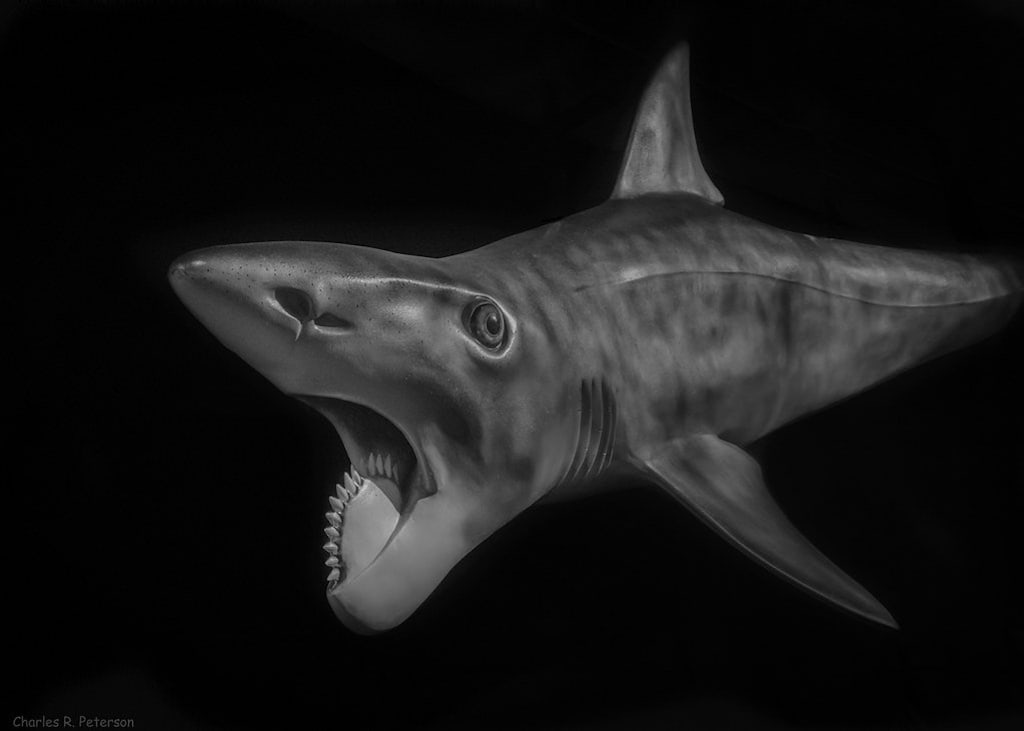
While our time on this planet has been relatively short, there is a rich history of animals long before our time. From giant cats to giant killer eagles that would be capable of snatching children, here are some of the scariest creatures that ran the world.
Anomalocaris
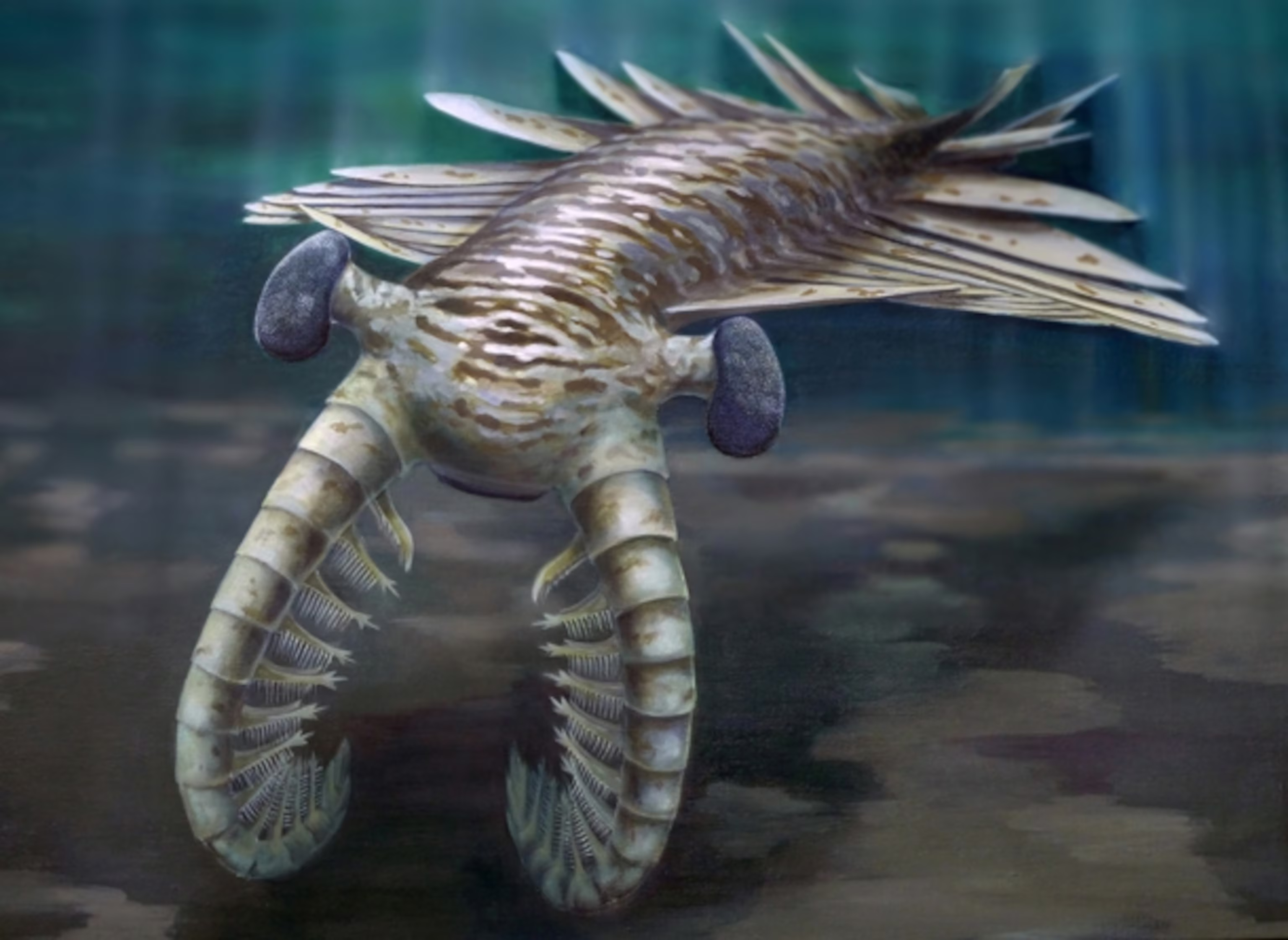
During the Cambrian period, about 500 million years ago, long before dinosaurs were walking the Earth, the oceans were filled with marine life. One in particular the world's very first apex predator, the Anomalocaris, whose name translates to abnormal shrimp.
The Anomalocaris was soft-bodied, leading its body to fall apart after death, leaving different fossils for scientists to discover. These scientists spent decades discovering these pieces separately and identifying them in different ways:
The spiny, segmented grasping arms were classified as a headless shrimp.
The circular, ring-shaped mouth was assumed to be a fossilized jellyfish.
The main body was classified as a primitive sponge.
But, in the 1980s, researchers realized that all these mismatched fossils actually belonged to a single, massive creature.
The creature was built to hunt, while the 3-foot-long creature might not sound terrifying nowadays, it was actually a giant for its time. It was perfectly engineered for hunting prey:
Two massive, stalked compound eyes that contained up to 16,000 lenses gave the creature incredibly sharp vision. Much like today's modern dragonflies who have 30,000 lenses in their eyes.
Instead of legs, it moved using undulating flexible flaps that were on the sides of its body, helping it glide effortlessly through water at high-speeds.
Its two front claws were used to catch prey out of the water column and shove them into its unique, pineapple-sliced-shaped mouth that remained opened.
It was assumed that the Anomalocaris would eat hard-shelled trilobites for quite some time, but, recent engineering models actually suggest its mouth was too fragile to crunch through the hard-armor of trilobites. So, it likely used its claws to catch soft-bodied targets instead.
Arthropleura
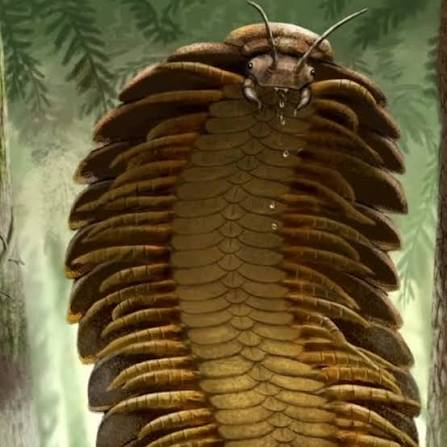
During the Carboniferous period, 300 to 340 million years ago, the world was filled with swampy, oxygen-rich forests that were bustling with massive plants and oversized bugs. One being the Arthropleura, an extinct genus of giant millipede relatives that is known as the largest land invertebrate to have ever occupied our planet.
The true size of this creature was estimated for quite some time from partial trackways and fragmented fossils. But, recent discoveries have now confirmed that it could grow up to 8.5 feet long and weigh 100 pounds.
Visually, they resembled modern flat-backed millipedes, if you were to expand them to the size of a small car. Their bodies protected by dozens of overlapping armor plates, and they moved using dozens of pairs of jointed legs.
So, how did this bug grow to be so incredibly large? The answer lies in the atmosphere of the period:
The Earth's atmosphere during the Carboniferous period was roughly 30% to 35% oxygen, today it is only 21%.
Invertebrates breathe through a network of tiny tubes rather than lungs, so the size of their bodies is strictly limited by how far oxygen can naturally diffuse through their tissues.
So, the hyper-oxygenated air allowed the creature to break past modern biological limits and grow to a massive size. When the oxygen levels dropped later, it and other giant invertebrates were no longer able to survive.
Due to its massive size, the Arthropleura was depicted as a ferocious predator, hunting primitive amphibians and small land animals. But, taking a closer look at their fossilized remains describes them a different way.
Analyzing fossilized gut contents and coprolites (fossilized droppings), scientists found overwhelming evidence that shows it was actually a herbivore or a detritivore. Spending its days lumbering through the dark undergrowth, using its powerful jaws to eat decay plant matter, rotting wood, and fern spores. It was a forest floor cleaner, rather than a terrifying, fierce hunter.
The vast majority of fossils found of the creature was its armor plates it shed and left behind as it grew. So, the appearance of its head was a mystery. However, that has changed with recently analyzed, exceptionally preserved juvenile fossils that has revealed its face.
While its body resembled a millipede, its head had a mix of traits, including stalked eyes and specific mouthparts.
Inostrancevia
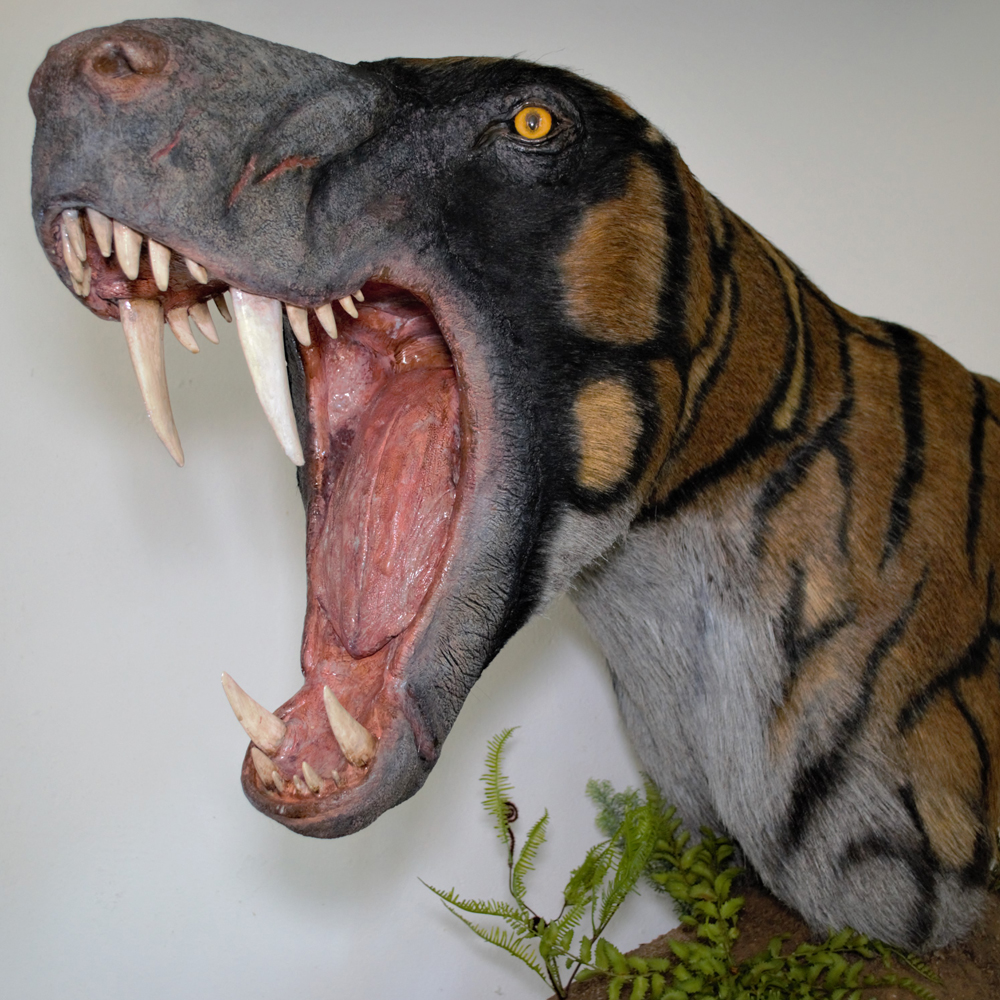
Long before dinosaurs and hundreds of millions of years before the saber-toothed tiger evolved, there was a different fanged creature roaming the planet. The Inostrancevia, a genus of massive, sarnivorous gorgonopsians, was the apex predator of the Late Permian period, 252 to 259 million years ago.
It was a therapsid, a group of "proto-mammals," mammal-like reptiles that combined reptilian frames with traits of modern mammals.
The Inostrancevia resembled a heavily muscled, reptilian tiger or bear. It measured 11.4 feet long and weighed up to 660 pounds. Every aspect of this creature was built for high-impact hunting:
Its staggering upper canine teeth reached up to 6 inches long. These flattened, serrated fangs were used to slice through the thick, armored plates of massive herbivores during the period.
Its legs were positioned more directly underneath its torso, the upright posture allowed for a faster, more efficient, and highly coordinated stride, allowing it to ambush or run down prey.
Its skull was able to unhinge incredibly wide, allowing its massive teeth to plunge into a target without its front teeth blocking the strike.
It was originally believed that Inostrancevia was strictly confined to what we know now as northern Russia, where the first near-complete skeletons of the creature were uncovered. But, new discoveries in 2023 changed everything.
Remains of a new species, Inostrancevia africana, were discovered thousands of miles away in South Africa and Mozambique.
This revealed that as the climate was rapidly shifting at the end of the Permian, the creature migrated 7,000 miles across the ancient supercontinent of Pangea. There was a local extinction in South Africa's native top predators, allowing the Inostrancevia to move across the globe and claim this spot.
Even with its adaptability and physical dominance, it was unable to survive the environmental collapse that closed out the Permian period. Catastrophic volcanic eruptions from the Siberian Traps pumped massive amounts of greenhouse gases into the atmosphere, an event called "The Great Dying," took place, the most severe mass extinction event in Earth's history. The rapid climate change, habitat loss, and collapse of the food web wiped out the Inostrancevia, as well as 70% of land species and 95% of ocean life.
Scutosaurus
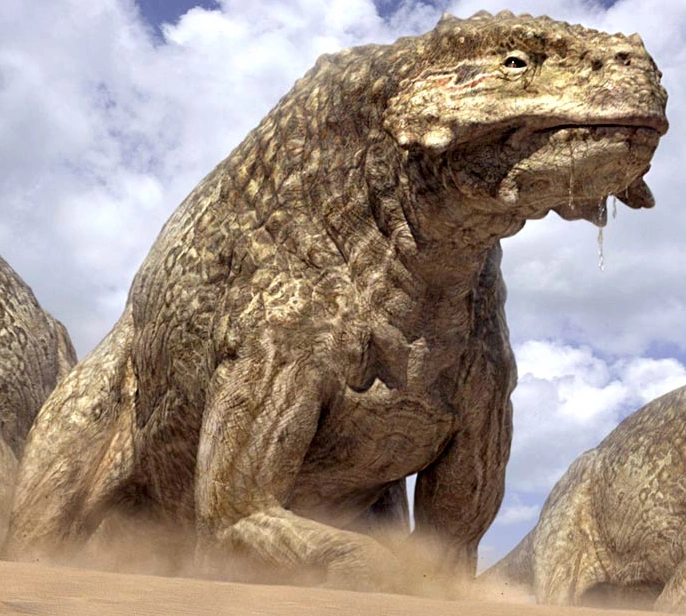
During the period that the Inostrancevia ruled, so lived its nemesis, the Scutosaurus. This heavily armored creature was one of the most successful herbivores of the time. Its name perfectly captures its primary survival strategy, translating from Greek to "shield lizard."
It wasn't built for speed, but rather to withstand an ambush. Growing up to 10 feet long and weighing up to 1,500 pounds, it had defenses embedded directly into its skin:
Its body was covered in dense, body plates called osteoderms. The plates were fused tightly into the skin, creating a tough coat of chainmail armor that protected the neck, back, and flanks from predators.
The skull was broad and flat, heavily textured with body ridges, knobs, and large spikes that pointed downward from its cheeks. The spikes likely protected its vulnerable throat and jaw joints.
In order to support its immense weight and heavy armor, it had thick, massive legs. Positioned directly beneath the body to act like pillars, giving it a slow but sturdy walking gait.
It called a harsh, arid landscape dominated by vast deserts, seasonal riverbeds, and sparse vegetation home. Meticulously adapting to survive this punishing climate.
Its teeth were small, leaf-shaped, and heavily serrated, perfect for grinding up tough, fibrous desert plants and roots. The plants provided very little nutritional value, however, so Scutosaurus relied on a massive digestive system. It is believed that the creature possessed a sprawling, barrel-shaped torso to house an enormous stomach, here plant matter could sit and slowly ferment over days in order to extract every possible nutrient.
Fossils of the creature are frequently found clustered together, so it is suspected that these animals may have been social. They may have traveled in herds, migrating vast distances across the Permian deserts to find fresh vegetation and water holes as the climate grew drier.
Tiktaalik
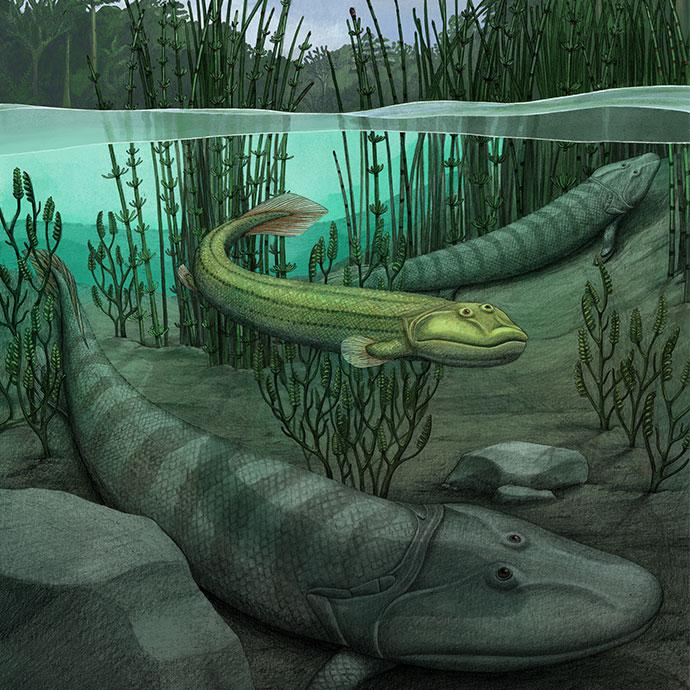
375 million years ago, during the Devonian period, one of the most pivotal chapters in the history of life took place. Oceans were crowded with fierce predators, and the land was still largely untouched, full of lush green plants and insects. This is where the Tiktaalik comes into play, an extraordinary animal that bridged that gap, starting the moment that life transitioned from water to land.
Often called a "fishapod," the creature is a morphological transitional fossil. Sitting perfectly on the evolutionary line between lobe-finned fish and the first four-legged land vertebrates, a truly beautiful mix of both worlds.
Growing up to 9 feet long, Tiktaalik lived in shallow, oxygen-poor streams and swamps. Its anatomy is fascinating, combining traits of primitive fish and advanced land-dwelling creatures:
It retained some classic aquatic features, including having a body covered in primitive scales, functional gills for breathing underwater, and a paddle-like tail fin.
It also possessed a flat, triangular skull with eyes resting on top of its head, unlike any fish before it. This is remarkably similar to a modern crocodile. It lacked the bony plates that normally connect a fish's head to its shoulders, giving it something that was entirely new to the underwater world, a neck that was able to turn independently of its body.
One of the most revolutionary features of Tiktaalik is inside its pectoral fins. Upon chipping away at surrounding rock from its fossils, paleontologists found a skeletal structure that left them shocked: primitive versions of humerus, ulna, radius, and a functional wrist joint.
While it still had webbing and fin rays on the outside, the inside bone structure was strong enough to support the creature's weight. It didn't run around on the land, however, instead it used the sturdy, flexible front limbs like crutches to push itself up off the bottom of shallow riverbeds, allowing it to lift its head completely out of the water to gulp air using its primitive lungs, search the shoreline for insects, or navigate through dense, tangled swamp vegetation while other traditional fish would get trapped in such areas.
Dimetrodon
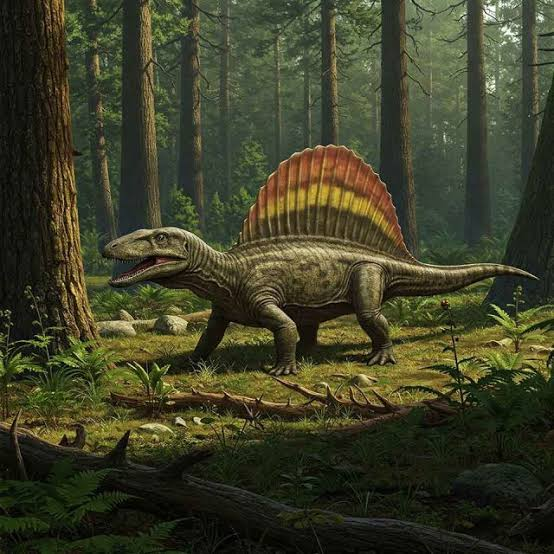
Perhaps one of the most recognizable creatures of prehistory, Dimetrodons is a prehistoric animal that is often sold in toy boxes alongside T.rex's and Triceratopses. But, in reality, it wasn't a dinosaur at all.
Going extinct roughly 40 million years before the first dinosaur ever evolved, Dimetrodon lived during the Early Permian period, and it is more closely related to you than any dinosaur. Belonging to a group called synapsids, or proto-mammals, it is a direct ancestral cousin to modern mammals.
Growing between 6 to 15 feet in length, depending on the species, Dimetrodons had long, low-slung bodies and sprawling reptile-like legs. The defining feature, however, is the magnificent, towering sail that ran down the spine, formed by incredibly elongated neural spines connected by a thin web of skin.
For decades, it has been a hot topic of debate among paleontologists, what was the sail for:
The long-standing theory was thermoregulation. Dimetrodons were cold-blooded animals, they could face the sail toward the morning sun and warm itself, giving it a high-energy head start to hunt down prey.
More recent studies suggest that it was heavily used for communication and display. It is possible that it was brightly colored to attract mates or intimidate rivals, mirroring the flashy feathers of modern birds.
It's name translates from Greek to mean "two measures of teeth," highlighting its revolutionary hunting hardware.
Unlike reptiles, who generally have rows of identical, peg-like teeth, Dimetrodon was the first creature to have a mouth filled with specialized teeth. It had large, stabbing canine tusks at the front of its jaws to pierce flesh, and smaller, shearing teeth at the back of its mouth to tear it. Its powerful, massive jaw muscles helped it become the apex predator of its ecosystem, it was able to overpower heavily armored amphibians and early plant-eaters.
Meganeura
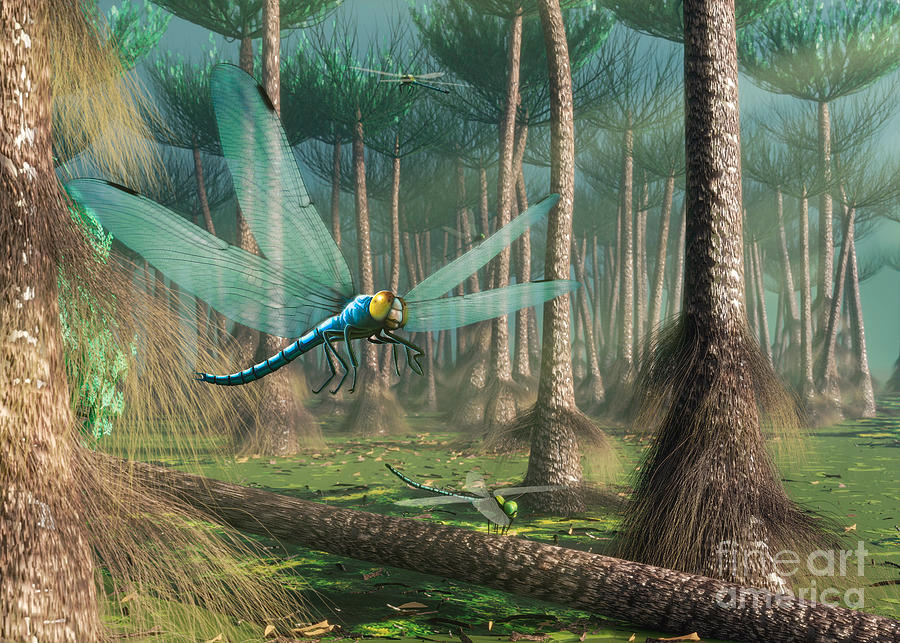
Roughly 300 million years ago, during the Carboniferous period, birds, bats, and pterosaurs weren't the rulers of the skies, instead it was giant insects. The biggest ruler of them being an extinct genus of predatory insects: Meganeura. Closely resembling modern dragonflies, only much, much bigger.
It holds the title of one of the largest flying insects to ever exist.
While visually resembling a dragonfly, its measurements reveal how truly massive it was:
Its wingspan measured up to 28 inches, making it the size of a crow or a small hawk.
Its body was robust and heavy, measuring over a foot long.
Its name translates from Greek to mean "large-nerved," referring to the dense, complex network of veins that ran through its massive wings.
Much like the Arthropleura, its neighbor on the forest-floor, Meganeura owed its staggering size to the unique climate of the Carboniferous period. The hyper-oxygenated air allowed the giant insect to easily power its massive flight muscles and fly at incredible speeds and agility without suffocating under its own weight.
A highly sophisticated, voracious aerial predator, it operated much like modern falcons do today, combining its exceptional senses and physical trains to control the airspace:
Its head was dominated with two immense compound eyes that provided a nearly 360-degree field of vision, allowing it to spot even the slightest movement in the dense forest canopy.
Much like modern dragonflies, the legs of Meganeura were lined with sharp spines and angled forward to form a 'basket' mid-flight. Swooping down, it would scoop up smaller insects, primitive amphibians, or early reptiles out of the air or off tree trunks, then it would shred them using powerful, serrated mandibles.
Tanystropheus
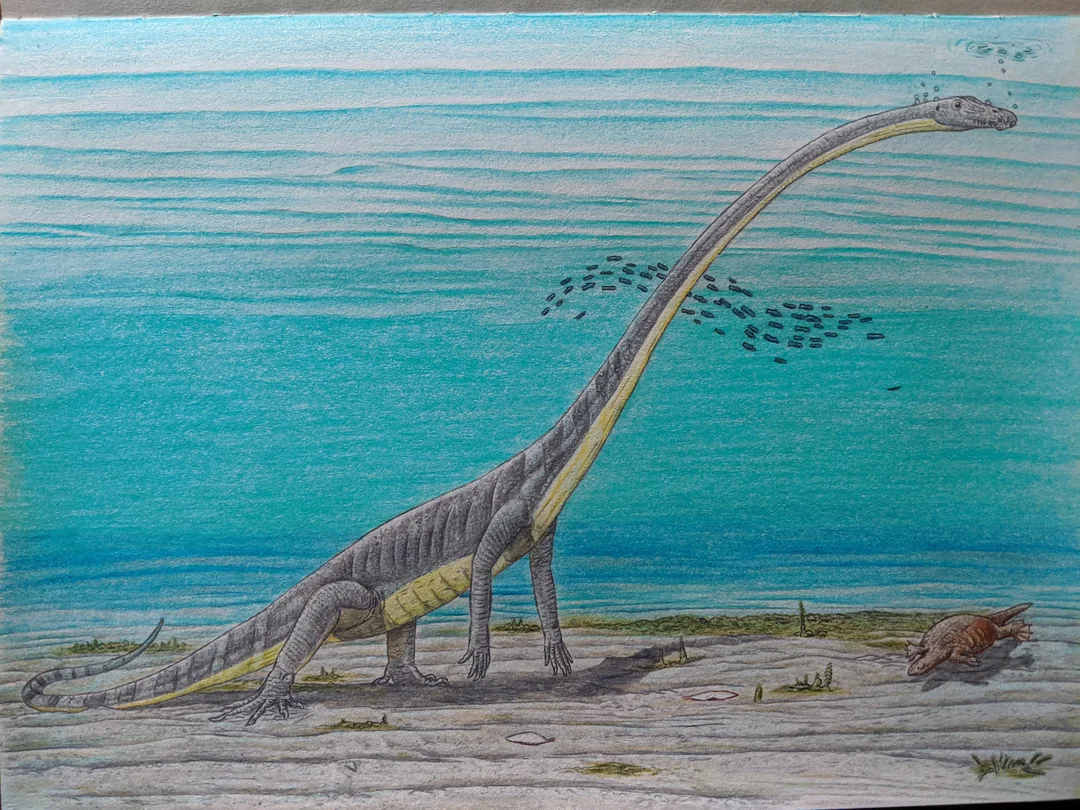
During the Middle to Late Triassic period, reptiles were evolving in some strange ways, but even during this era defined by oddities, Tanystropheus stands out the most.
The bizarre marine reptile possessed a neck that was not only longer than its entire torso and tail combined, but it also defied the basic rules of vertebrate anatomy.
Growing up to 20 feet long, its torso was surprisingly compact and its legs were relatively small. Half of its total body length was due to the staggering length of the neck.
Making it truly unique compared to other long-necked prehistoric animals, lies in the actual structure of it:
Most long-necked creatures achieve flexibility with dozens of small vertebrae in their necks, Tanystropheus did the opposite. Its entire 10-foot neck contained only 12 to 13 extremely elongated vertebrae.
Because these bones were shaped like hollow, elongated tubes and locked together tightly, it was not flexible or snake-like, it was actually stiff, acting like a lightweight crane or a bridge extending out from its body.
Paleontologists have argued for nearly a century and a half about where the creature actually lived. Its feet didn't have obvious flippers, suggesting that it was a land-dweller, but its long neck would make it front-heavy, clumsy, and vulnerable to land predators.
In 2020, the mystery was finally solved through advanced CT scanning of crushed fossil skulls. The data revealed definitive aquatic adaptions:
Its nostrils were positioned on the very top of its snout, perfectly suited for a creature that spent its life submerged in water.
Its mouth was also lined with long, interlocking, needle-like teeth, ideal for catching slippery fish and cephalopods out of the water column.
It is now pictured as a specialized coastal predator. Likely stalking the shallow water or remaining sat along the shoreline. It would slowly extend its neck out of the water, its body hidden from view until a fish swam too close, allowing it to strike.
Dunkleosteus
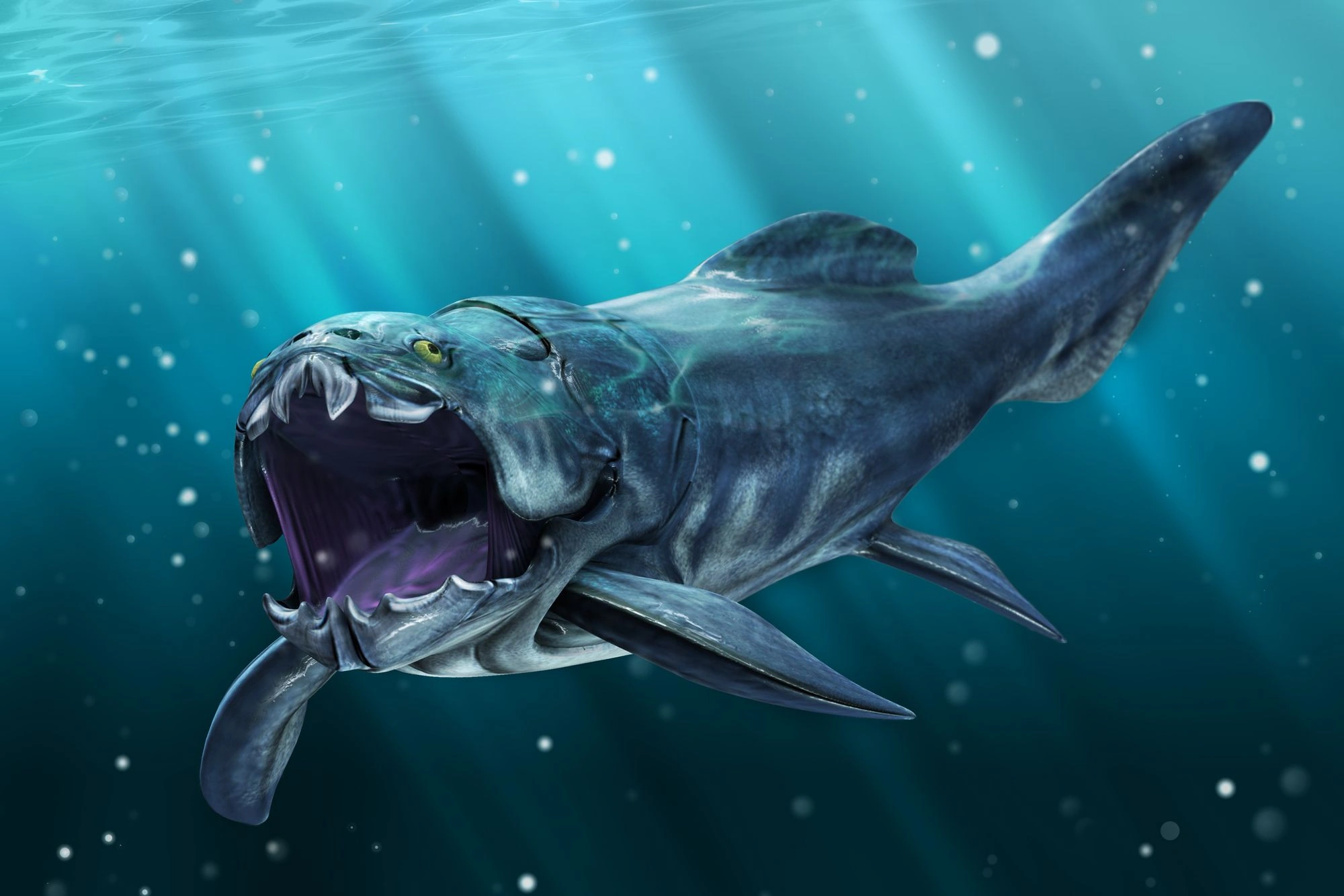
The oceans were dominated by a class of armored fish known as placoderms during the Late Devonian period. One of the largest and most legendary of these was Dunkleosteus.
Built like an underwater tank, Dunkleosteus was estimated to measure over 30 feet long for quite some time, but scientific re-evaluations suggest a more compact, exceptionally robust body that instead measured around 13 to 16 feet long and weighing over a ton.
Unlike the modern fish we know today, its armor wasn't made of small scales:
The front half of the body was encased in massive, interlocking plates of heavy dermal bone. A natural helmet that protected its head and shoulders from rival predators, including other Dunkleosteus.
It did not have teeth. It actually used the body plates of its skull that extended down into its mouth as two pairs of razor-sharp, self-sharpening blades. As it opened and closed its mouth, the upper and lower jaws scraped against each other, keeping the edges sharp to slice clean through prey.
Typically heavy armor slows an animal down, but Dunkleosteus possessed a jaw mechanism that utilized a unique four-bar linkage system to open. It allowed it to drop its lower jaw and raise the upper skull simultaneously in just 20 milliseconds. This insane speed created a powerful vacuum inside its mouth, sucking helpless fish and cephalopods straight into its waiting blades before they had the chance to swim away. Once closed, it exerted a crushing force of up to 1,100 pounds, easily fracturing the heavy defensive armor of other placoderms or snapping rigid shells of ancient ammonites like it was a cracker.
Smilodon
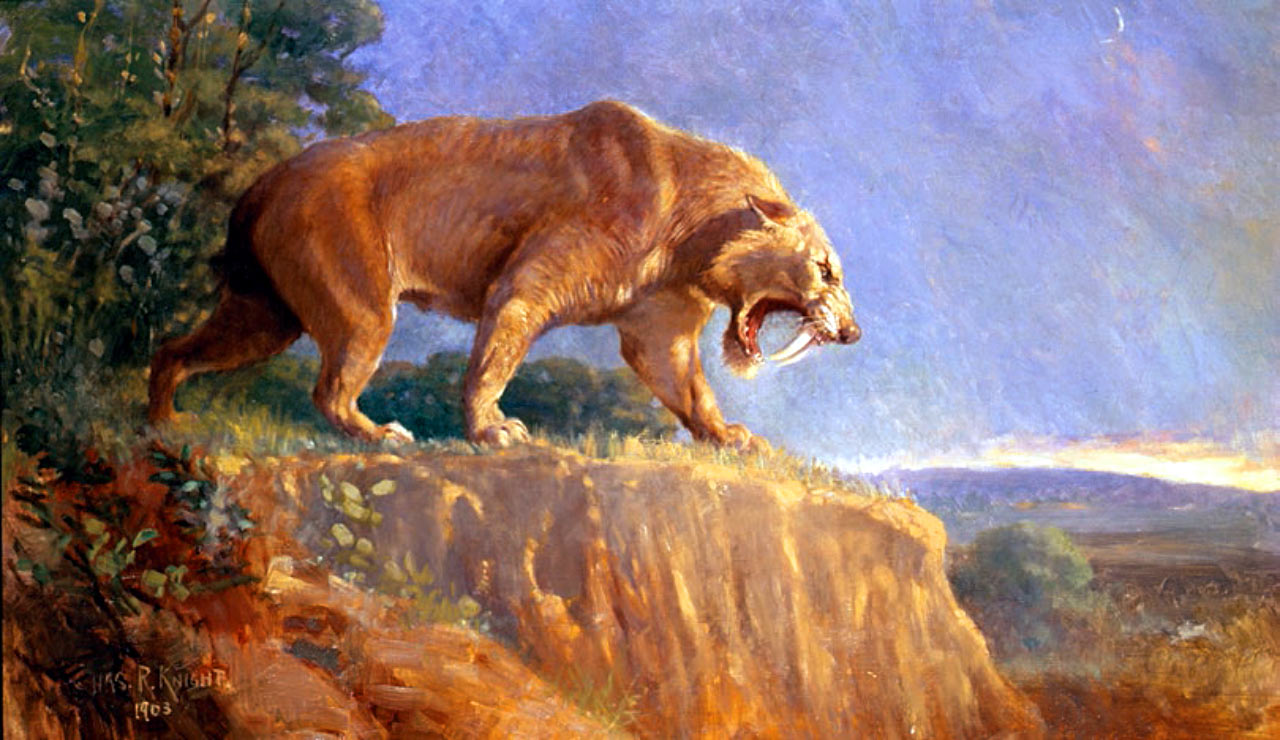
The legendary genus of extinct felids, Smilodon, is universally known as the saber-toothed cat. They prowled landscapes of North and South America during the Pleisotcene epoch, from about 2.5 million to just 10,000 years ago. Smilodon was a high specialized, hyper-carnivorous power-house.
Much like Dimetrodon, Smilodon is often a victim of a common linguistic slip, it was not a tiger. While, as I referred to it earlier, it is popularly called the "saber-toothed tiger," it actually belongs to an entirely separate sub-family of cats, Machairodontinae, and is only distantly related to any modern big cat.
Imagining a modern lion or tiger, you picture an elegant, long-bodied runner. But, Smilodon was built entirely different, it was more like a heavyweight wrestler designed for close-quarters combat:
Sporting an exceptionally robust, muscular build with a broad chest and immensely powerful front limbs, it was shorter than a modern lion but weight significantly more. The largest species grew up to 900 pounds.
Unlike modern cats that utilize a long tail for balance while hunting, Smilodon had a bobbed tail. Confirming that it was an ambush predator, hiding in vegetation before launching itself into a high-impact, short-distance tackle.
The most iconic features of the creature is of course its upper canine teeth, growing up to 11 inches long in the species Smilodon fatalis.
It was believed for a long period that these fangs were used to crunch through bone. But, in reality, they were surprisingly brittle and could easily snap if they came into contact with a hard skeleton or if its prey struggled too violently. To protect these, Smilodon evolved a highly calculated hunting sequence:
The Pin: It used its massive forearm muscles to slam into prey, such as jvenile mammoths, bison, or camels, bringing them to the ground and pinning them completely motionless.
The Gape: The creature would unhinge its jaws to a massive 120-degree angle, compared to the modern lion's 65 degrees, in order to clear its long fangs.
The Throat Strike: It then delivered a precise, surgical bite to the soft throat or belly of the pinned animal, slicing open major arteries to ensure a rapid, clean kill without risking damage to its teeth.
Gigantopithecus
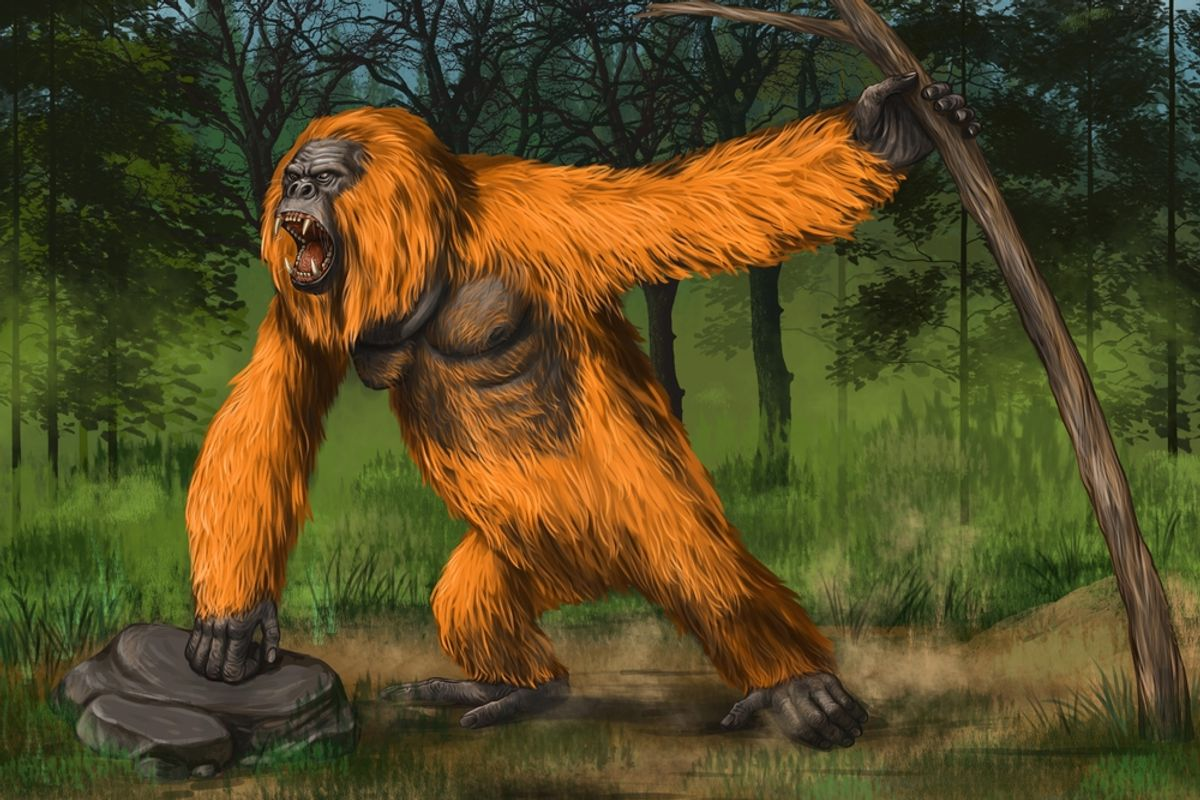
Deep in the evolutionary history of Asia lived a real-life giant, Gigantopithecus, an extinct genus of truly massive apes that were roaming the tropical forests of what is now China, India, and Vietnam. They roamed these lands from about 2 million years ago to roughly 300,000 years ago.
It holds the title of the largest primate to ever walk the Earth, it lived alongside early human ancestors like Homo erectus, making it a fascinating piece of our own evolutionary backdrop.
The story of Gigantopithecus started in a traditional apothecary shop in Hong Kong in 1935. German-Dutch paleontologist, G.H.R. von Koenigswald, was browsing a collection of fossilized teeth that were being sold as traditional "dragon bones." Among them he found a massive primate molar that was twice the size of a modern gorilla's tooth. Once he recognized it belonged to an undiscovered species of giant ape, he named it Gigantopithecus blacki.
Since that discovery, four massive jawbones and thousands of individual teeth were unearthed, but a complete skeleton still has not been found.
Having only jaws and teeth, estimating the exact size and appearance of this creature requires careful comparative anatomy. Scaling the teeth and jaw dimensions against modern great apes, scientists have constructed a portrait of a breathtakingly massive animal:
Estimated to have stood up to 10 feet tall when rearing up on hind legs
Weighing between 440 to 660 pounds, with some upper estimates being even heavier.
Due to the immense weight, it almost certainly spent its life on the ground rather than in the trees. It likely moved using a quadrupedal, knuckle-walking gait.
Despite its terrifying size, it wasn't a ferocious monster, it was a strict vegetarian. Living in dense, subtropical forests, spending its days grinding up highly fibrous, tough vegetation. Its diet was heavily dominated by bamboo, tough fruits, seeds, and wood cavities.
Stephanoaetus Coronatus
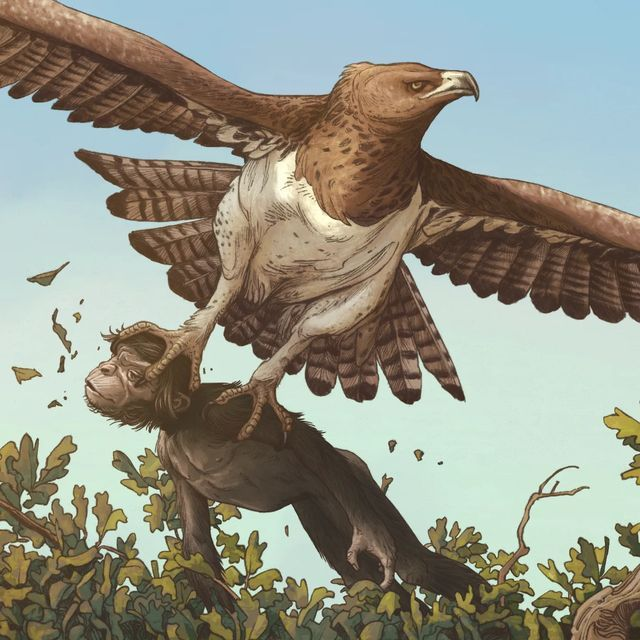
While we know the crowned eagle (Stephanoaetus coronatus) as a modern bird of prey, its lineage actually dates back millions of years. It holds a rather unique and somber distinction: definitive, fossilized evidence proving that it actively hunted and consumed our early human ancestors.
The most profound of this evidence comes from one of the most famous fossils in the world: the Taung Child.
Discovered in South Africa in 1924, a fossilized skull belonging to a 3-year-old Australopithecus africanus, a hominin ancestor that lived about 2 to 2.5 million years ago. Scientists struggled to determine what killed the child for nearly a century, many blamed mammalian predators like leopards or saber-toothed cats.
It wasn't until 2006 when a breakthrough happened. Paleoanthropologists Lee Berger and Ron Clarke re-examined the fossil, comparing the skull's damage to modern monkey skulls collected from beneath active crowned eagle nests, the similarities were unmistakable:
The child's eye sockets contained deep puncture marks and scratches at the bottom of the bone. The damage being identical to the injuries modern crowned eagles inflict when they drive their razor-sharp talons into a monkey's skull to kill it and tear out the eyes for food.
Microscopic scratches and specific V-shaped bone breaks on the rest of the skull match the feeding signatures left by an eagle's powerful, sharp beak.
The conclusion? Over 2 million years ago, a prehistoric ancestor of the crowned eagle swooped down from the forest canopy, snatched the toddler, and carried it off to a nest to be eaten.
About the Creator
Max
I wish for a better world
Enjoyed the story? Support the Creator.
Subscribe for free to receive all their stories in your feed.
Comments
There are no comments for this story
Be the first to respond and start the conversation.