
The Source, Length & Origin of The Ravi River
The Ravi River is a River in South Asia that flows through northwestern India and eastern Pakistan. It forms the boundary between the two nations.

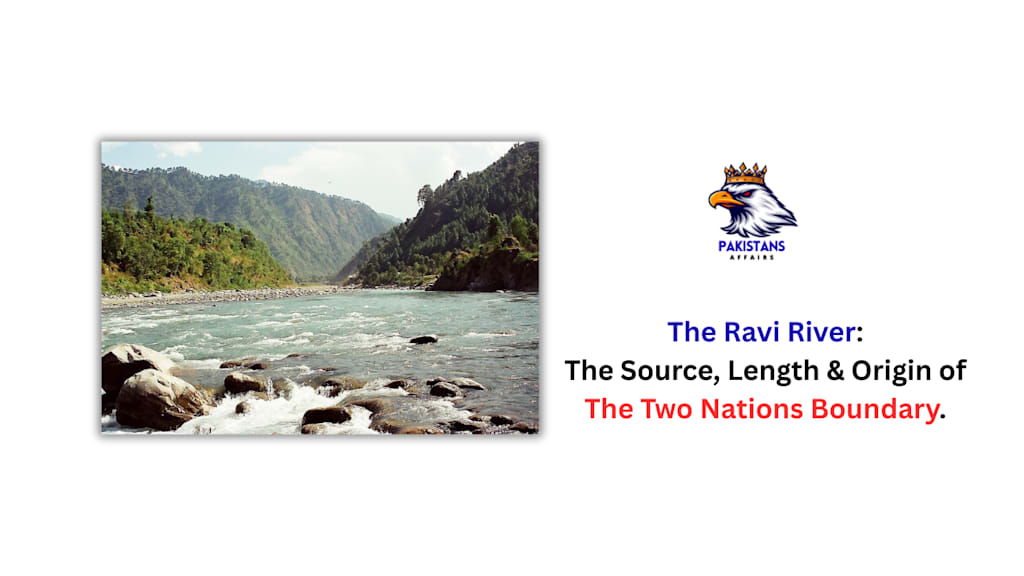
Ravi River: Origin, Length and Source:
The Ravi River runs through northwestern India and northeastern Pakistan. It is one of the five famous rivers which fell into the Indus River which gives the Punjab ( meaning “ Five Rivers ”) its name. On the other hand, it rises in the Himalayas in Himachal Pradesh state, India, and also flows west-northwest once in Chamba. Thus, it turns southwest at the boundary of the Jammu and Kashmir Union Home.
The swash also flows to Pakistan's border and is along it for further than 50 long hauls (80 km) before entering Pakistan’s Punjab province. Further, it flows past Lahore and turns west near Kamalia and evacuates into the Chenab River. It's located to the south of Ahmadpur Sial after a course of about 450 long hauls (725 km).
The spring snowmelt and South Asian thunderstorms originally control the hydrology of the Ravi. As it also bring heavy rains from June to September. While the Ravi had flood tide discharges in excess of 600,000 boxy bases (17,000 boxy metres) per second during the summer thunderstorm season. But during downtime, the inflow is mainly reduced, together with suspended deposition cargo.
The Division of The Ravi:
The Ravi’s waters are used to flush large areas of land along its course. The Upper Bari Doab Canal, with headworks at Madhopur at the northern tip of the Indian Punjab state, was completed in 1878 – 79; it irrigates a large area east of the Ravi in India, and its distributary conduits extend into Pakistan.
The two countries had frequent controversies over water before concluding the Indus Waters Treaty in 1960, which allocated the water of the Ravi to India, in exchange for which Pakistan entered into exclusive rights to the waters of the Indus and its western feeders. The Lower Bari Dam Canal, completed in 1917, lies entirely in Pakistan.
The Significance of Ravi:
The Ravi River is one of the five major gutters in the Punjab region, as we discussed above. Meanwhile, it also holds literal significance, appearing in Vedic textbooks. Additionally this river provides pivotal coffers for husbandry and power generation in the region.
The Ravi begins in the Bara Bhangal area of Multhan Tehsil, Kangra District, especially in Himachal Pradesh. But originally the Ravi River's origin was from the Himalayan glacier fields. So, this river drains through a large catchment area in India, supporting different foliage.
It starts at a high altitude where snow melts and small aqueducts join together. Finally this fresh mountain water makes the Ravi River clean and fast-flowing in its early stages.
The length, Division and the Boundary Line Between Two Countries:
The Ravi River's Sanskrit name is Parushni. While this name was originally found in ancient Indian literature. Basically, the Ravi River's Vedic name is Parushni. Because this name is mentioned in the Rigveda.
In Vedic times, the Ravi River was known for its strong inflow and wide valley. Numerous important literary events took place near its banks. This is because, the Ravi River holds a special place in the history of the subcontinent.
The river flows north-westerly and travels through the Chamba quarter of the Ravi River in Himachal Pradesh. After this it enters the plains of Punjab. The Ravi River in Punjab flows through flat and enriching plains. Then, the river was substantially used for husbandry and irrigation.
The Boundary Line
In Punjab, conduits across the Ravi River help growers grow crops. The river is less presto then but veritably important for diurnal life and husbandry. Finally, for about 80 kilometers it forms the boundary line between India and Pakistan.
When entering Pakistan, the Ravi River joins another major river. Eventually, after crossing the Indian border the Ravi River merges into the Chenab River. This collaboration makes it part of the Indus River system. On the other hand, the total length is about 720 kilometers (450km long runs).
The Basin, Valley and Major Tributaries to Ravi:
All minor streams and rainfall drain into the Ravi River from the Ravi River Basin. While this basin supports many towns, farms, and woods all around it.
In the plains, the Ravi River valley is broader than it is in the mountains. So farmers can cultivate crops like wheat and rice just because of the valley's well-known rich soil. Therefore the Ravi River is very essential for life in the basin.
The Budhil, Dhona (Nai), Siul, Baira, Tant Giri, and Ujh rivers are important tributaries of the Ravi River. On the other hand, many minor rivers greatly influence the flow of this main river. Many water springs and snowpack nourishe these small rivers that come from high mountain ranges.
Water Sharing & Environmental Issues in The Ravi River:
The river's waters are also divided between India and Pakistan under the Indus Water Treaty of 1960. On the other hand, this legislative framework specifies how water is used in both Pakistan and India. However, there are occasionally numerous disagreements about the distribution of water among Indian states.
Particularly in the vicinity of cities like Lahore the river is severely contaminated. This is because agricultural and industrial wastes cause the Ravi river's high amount of pollution. There are some initiatives that must be taken in place in order to deal with these kinds of environmental issues.
About the Creator
Laura Hoover
I hold a bachelor's degree in computer science. I also work as an Assistant Manager at Bindia Indian Restaurant in Denmark.
Passions:-
Watching Cricket, Good Represented, Blog Writer and Content Writer.
Also an employ of Pakistan's Affairs
Enjoyed the story? Support the Creator.
Subscribe for free to receive all their stories in your feed.
Comments
There are no comments for this story
Be the first to respond and start the conversation.