
The Silent Canopy Collapse: Why California’s Trees Die After the Heatwave Ends
When drought depletes internal water pressure, trees lose their primary physical defense against lethal boring insects.

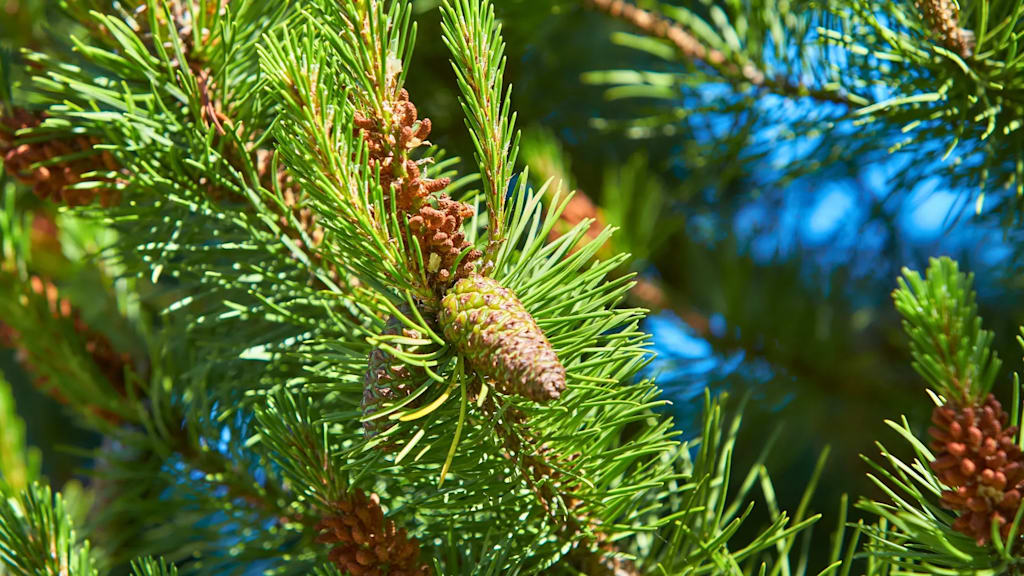
Every autumn across northern California, a familiar and frustrating pattern catches property owners off guard. The relentless summer heatwaves break, daytime temperatures drop, and the surrounding landscape seems to have survived the seasonal gauntlet. Lawns might be scorched, but mature Monterey pines and native Coast live oaks still stand tall, giving the impression that the worst is over.
Then, just a few weeks later, the decline begins.
A mature pine’s needles start shifting from rich forest green to pale yellow. Within a month, whole limbs turn dull reddish-brown, and the canopy sheds needles rapidly. It is easy to assume the tree simply succumbed to months of baking in the sun, but the truth is rarely that straightforward. The heat did not kill the tree directly. Instead, extended drought quietly compromised the tree's internal plumbing, disarming its natural defenses and clearing the path for an opportunistic invader: the bark beetle.
To understand why a tree collapses after a drought, look at how it defends itself when conditions are normal. Trees are far from passive when insects attack. Over thousands of years, conifers like pines have developed an active hydraulic weapon against wood-boring pests: oleoresin, commonly known as pitch.
When a beetle lands on a trunk and attempts to chew through the bark to reach the nutrient-dense cambium, a healthy tree pushes back. It channels sticky, pressurized resin directly into the wound. This biological reaction can trap the insect in gooey pitch, suffocate it, or physically force it backward out of the hole before it can tunnel further. In forestry, this is known as "pitching out" the invader.
That entire defense system relies on steady hydraulic pressure.
Producing and mobilizing sap requires a consistent supply of moisture in the soil. When dry conditions drag on for months, a tree’s internal water pressure plummets. Without sufficient moisture to generate defensive pitch flow, the protective mechanism fails completely. The tree's defensive ducts run dry, allowing beetles to bore through the outer bark without facing physical resistance.
The danger compounds once an initial beetle establishes a foothold. Pioneer beetles that successfully penetrate a defenseless host release airborne chemical signals called aggregation pheromones. Carried on the breeze, these pheromones signal other beetles in the area that a viable host has been located. What began as an isolated insect turns into a coordinated mass arrival. The resulting numbers quickly overwhelm whatever trace amounts of defensive resin the tree has left.
As adult beetles and their larvae excavate winding galleries beneath the bark, they chew through the living phloem responsible for circulating sugars and nutrients. Many bark beetle species also carry fungal spores, particularly blue-stain fungi. Once introduced into the wood, the fungus spreads through the sapwood, obstructing the microscopic vessels that pull water upward from the root system. Cut off from both sugar circulation and water transport, the tree experiences rapid vascular collapse.
By the time a tree's canopy turns bright rust-red, the inner bark is usually already heavily damaged. Catching an issue early requires inspecting the trunk up close. Property owners should look for pitch tubes—small, gummy mounds of resin mixed with boring dust clinging to bark crevices—as well as fine, reddish-brown powder collecting in bark furrows or around the root flare at the base.
Once beetle larvae are established beneath the bark, standard surface treatments cannot reach them. Preserving landscape trees requires proactive cultural care. Infrequent, deep watering out toward the canopy's drip line replenishes the internal moisture reserves needed to maintain resin pressure. Adding a protective layer of organic mulch across the critical root zone keeps soil cooler, protects delicate feeder roots, and significantly reduces evaporative water loss during hot spells.
Recognizing these subtle signs of moisture stress early remains the most dependable way to keep mature trees resilient through severe California dry spells.
About the Creator
ORB Tree Service Marketing
ORB Tree Service Marketing provides SEO and local search strategies for the tree care and roofing industries. Follow us for insights on search optimization and lead generation for home services.
Enjoyed the story? Support the Creator.
Subscribe for free to receive all their stories in your feed.
Comments
There are no comments for this story
Be the first to respond and start the conversation.