
The Shrub Slayer: Understanding the Invasive Box Tree Moth Threat
How a destructive invader is reshaping Midwestern landscapes, and the essential steps property owners must take to defend their greenery.

Most people view moths as benign evening fixtures fluttering around porch lights. They seem harmless. However, an environmental crisis unfolding in the Midwest proves some species are devastating. The box moth (Cydalima perspectalis) is a prime example. This destructive invasive insect has established a firm foothold in Michigan. For homeowners and landscape professionals, ignoring this pest is no longer an option. Protecting our local outdoor environments begins with understanding its biology, identifying vulnerabilities, and acting decisively.
The Evolutionary History of a Green Threat
The box moth is native to East Asia, ranging from the Korean Peninsula to eastern India. In its home range, it isn't a major pest; local boxwoods evolved natural immunities over centuries, and native predators kept populations stable. This balance shattered when the insect was accidentally introduced to Europe in 2007. Lacking specialized predators there, it spread rapidly, decimating nearly 75 percent of the continent's boxwood shrubs. By 2018, the pest crossed the Atlantic into Toronto before migrating into United States landscapes, quickly establishing active populations across Delaware, Massachusetts, New York, Ohio, and Michigan.
Anatomy of Destruction: The Leaf-Crunching Caterpillar
The adult box moth features non-functional mouthparts and does not feed during its brief lifespan. The true engine of destruction is the caterpillar stage. Equipped with powerful jaws, a dense population can strip a mature shrub to bare twigs in days. The caterpillars emerge with warm spring temperatures, having overwintered in silken landscape shelters. Newly emerged larvae are lime green with dark heads, developing black stripes as they mature through stages called instars. At the fifth instar, consumption peaks. They eventually spin silken cocoons within the foliage, metamorphosing over several weeks. They emerge as adult moths in two color varieties—light and dark—though the white-winged light variety is most common in North America. Once airborne, they mate, deposit eggs, and restart the cycle.
Identifying the Targets: Cultivars at Risk
Because the United States has no native boxwoods, virtually every variety anchoring American yards belongs to imported cultivars or domestic hybrids. None possess natural immunity. The box moth aggressively targets all common local choices, including Common (Buxus sempervirens), Japanese (Buxus microphylla), and Chinese boxwood (Buxus sinica). When local boxwood supplies are completely exhausted, these adaptable caterpillars easily transition to secondary host plants, including Spindle trees, Hollies, and Orange Jessamine.
Integrated Pest Management: A Defense Framework
Managing this invader requires a multi-tiered Integrated Pest Management approach. First, proactive canopy monitoring is critical. Homeowners should routinely inspect the interior of shrubs for skeletonized leaves, active green caterpillars, and the characteristic silken webbing that binds foliage together. Catching them early maximizes treatment success.
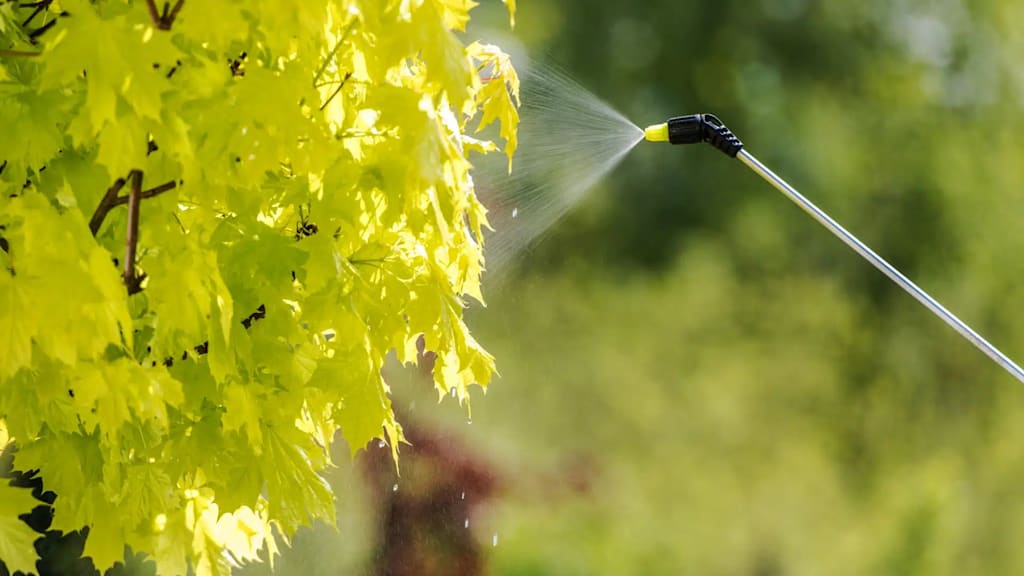
For active management, biological controls like Bacillus thuringiensis kurstaki (Btk) are highly effective. This naturally occurring soil bacterium disrupts the caterpillar's digestive system when sprayed onto foliage, without harming birds, humans, or beneficial pollinators. For severe infestations, chemical insecticides containing spinosad, bifenthrin, or carbaryl deliver rapid results, though they should be used cautiously to protect predatory insects. Manual extraction also works; plucking caterpillars by hand into soapy water curbs localized populations. If removing a ruined shrub, double-bag all debris in heavy plastic to prevent larval escape.
Navigating Regional Regulatory Quarantines
The economic stakes are high for Midwestern nursery infrastructure. In response, the Michigan Department of Agriculture and Rural Development established a strict legal interior quarantine zone. This framework restricts the movement of boxwood nursery stock, requiring commercial growers to implement rigorous compliance agreements and diagnostic testing. Currently, the quarantine encompasses 13 counties in Southeast Michigan: Clinton, Eaton, Ingham, Lapeer, Livingston, Oakland, Jackson, Washtenaw, Wayne, Lenawee, Monroe, Macomb, and St. Clair. Identifying the striped caterpillar or adult moth outside these boundaries should be reported to state officials through online portals immediately.
About the Creator
ORB Tree Service Marketing
ORB Tree Service Marketing provides SEO and local search strategies for the tree care and roofing industries. Follow us for insights on search optimization and lead generation for home services.
Enjoyed the story? Support the Creator.
Subscribe for free to receive all their stories in your feed.
Comments
There are no comments for this story
Be the first to respond and start the conversation.