
The secret superpowers of jellyfish
Jellyfish possess several fascinating and unique features that could be considered as "superpowers" in the animal kingdom. While these may not be traditional superpowers, they are adaptations that allow jellyfish to thrive in their environments.

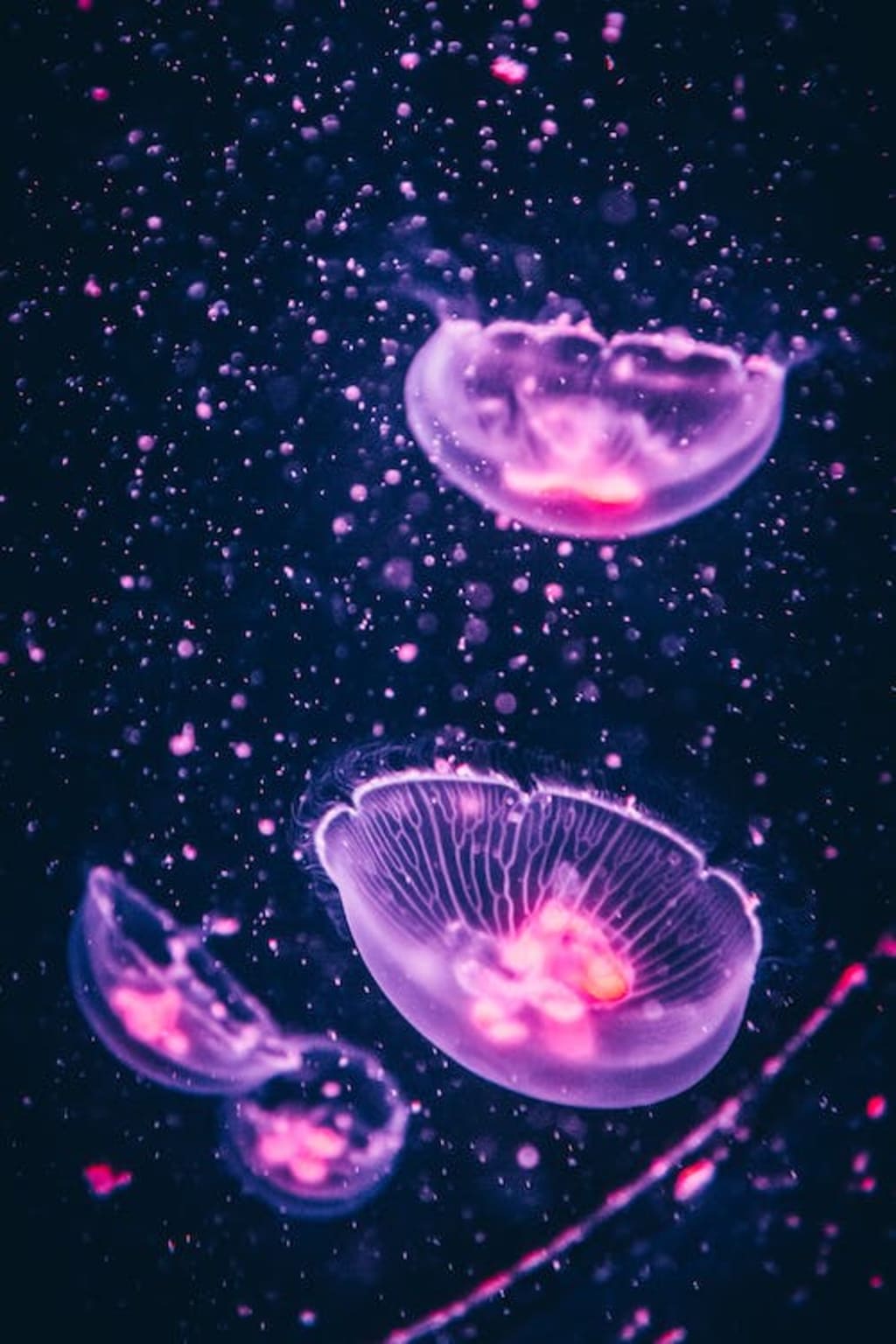
Jellyfish are amazing, incredible, unearthly.
The mesmerizing world of jellyfish, often referred to as the ocean's ethereal dancers, unveils a captivating tale of evolution, adaptation, and the intricate beauty of marine life. These gelatinous beings, with their pulsating bells and trailing tentacles, have existed for hundreds of millions of years, making them some of the oldest inhabitants of our planet's oceans.
Jellyfish belong to the phylum Cnidaria, a diverse group that includes corals and sea anemones. Their characteristic umbrella-shaped bells and trailing tentacles are not only mesmerizing but also serve vital purposes in their survival. Found in oceans worldwide, from the surface waters to the deepest abysses, jellyfish have evolved into a myriad of species, each uniquely adapted to its environment.
One of the defining features of jellyfish is their simplicity. Lacking a centralized brain, heart, or even a true respiratory system, they navigate the ocean currents in a seemingly simple yet effective manner. Their bodies consist of a gelatinous substance composed mostly of water, which gives them their transparent appearance. This simplicity, however, belies their remarkable capabilities and adaptations.
Jellyfish exhibit a wide range of sizes, from the minuscule to giants with bells spanning several feet in diameter. The pulsating motion of their bells propels them through the water, while their tentacles, armed with specialized cells called cnidocytes, capture prey. These cnidocytes contain nematocysts, tiny harpoon-like structures that inject toxins into their prey, paralyzing or killing it. While jellyfish are primarily carnivorous, feeding on plankton, small fish, and even other jellyfish, some species also engage in photosynthesis, harnessing the power of symbiotic algae living within their tissues.
One of the most intriguing aspects of jellyfish is their life cycle, which typically involves both sexual and asexual reproduction. The life cycle comprises several stages: a tiny larval stage, a polyp stage resembling a small tube affixed to a substrate, and the familiar medusa stage, characterized by the bell and tentacles. The ability to switch between sexual and asexual reproduction provides jellyfish with a unique resilience and adaptability in various environmental conditions.
Jellyfish are renowned for their remarkable locomotion. While some species are strong swimmers, capable of actively propelling themselves through the water, others are more passive drifters, relying on ocean currents to carry them. This ability to adapt their swimming strategy allows them to colonize different regions of the ocean, from coastal areas to open seas.
Perhaps one of the most enchanting characteristics of certain jellyfish species is their bioluminescence. Emitting light through a chemical reaction, bioluminescent jellyfish create a spectacular display in the dark ocean depths. This bioluminescence serves various purposes, including attracting prey, deterring predators, and communicating with other members of their species.
Despite their enchanting qualities, jellyfish are often perceived as nuisances due to their ability to form large blooms, known as "jellyfish blooms," which can impact fisheries, clog fishing nets, and disrupt ecosystems. The factors contributing to these blooms include environmental changes, overfishing, and the warming of ocean waters.
In recent years, scientists have intensified their efforts to study jellyfish not only for their ecological significance but also for potential applications in biotechnology and medicine. The unique proteins and compounds found in jellyfish have sparked interest in fields such as genetics, with the green fluorescent protein gene, initially discovered in jellyfish, becoming a valuable tool in molecular and cellular biology research.
In conclusion, the world of jellyfish is a testament to the beauty and complexity of life in our oceans. From their ancient origins to their diverse adaptations, jellyfish continue to intrigue scientists and enthusiasts alike. As we delve deeper into the mysteries of these gelatinous wonders, we gain not only a better understanding of marine ecosystems but also an appreciation for the delicate dance of life beneath the waves.
By Jf.Ks
About the Creator
Jellyfish
I love fragile and transient things. I crave quiet and drifting. What kills me is the feeling of excitement and bustle. A cup of coffee and a book, a computer and a phone, I can live all day.
Enjoyed the story? Support the Creator.
Subscribe for free to receive all their stories in your feed.
Comments
There are no comments for this story
Be the first to respond and start the conversation.