
The Role of Biochar Reactors in Sustainable Charcoal Production
Redefining Carbon Stewardship
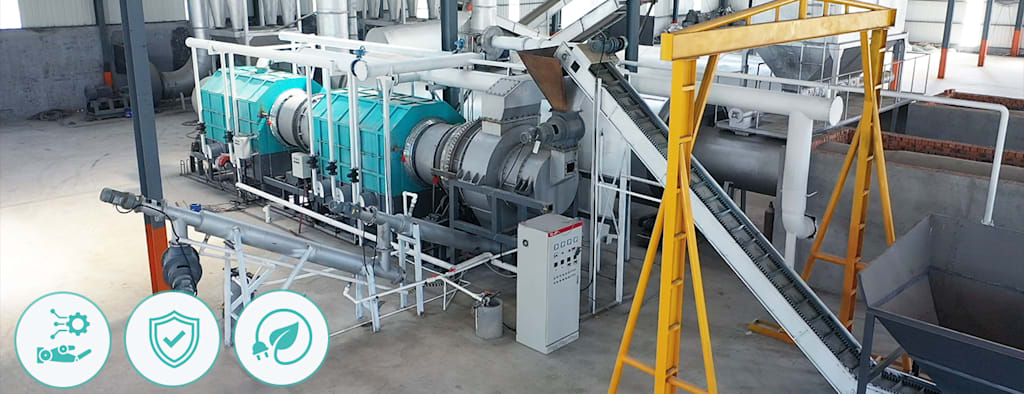
The global imperative for sustainable industrial practices has reached a critical tipping point. As climate change accelerates, traditional biomass energy sectors—once criticized for high emissions and resource depletion—are being forced to undergo a radical transformation. At the vanguard of this movement is the biochar reactor, a sophisticated technological solution engineered to harmonize industrial output with ecological preservation. By maximizing carbon retention and eliminating the destructive practices associated with legacy charcoal kilns, this technology is redefining what it means to produce carbon-based materials in the 21st century.
The Science of Precision Pyrolysis: Beyond Traditional Combustion
The fundamental difference between traditional charcoal making and modern sustainable production lies in the control of the thermochemical process. Conventional kilns often operate via uncontrolled combustion, where a significant portion of the biomass is burned to generate heat, releasing vast amounts of CO2, methane, and particulate matter into the atmosphere.
Modern biochar reactors, however, utilize precision pyrolysis. This process occurs in an oxygen-limited environment, where temperature and residence time are meticulously managed to prevent the oxidation of carbon.
By regulating these parameters, the reactor ensures that the carbon structure of the feedstock remains intact, resulting in a product with a much higher carbon content and surface area. Furthermore, these systems are equipped with secondary combustion chambers. These chambers capture "syngas"—the volatile organic compounds (VOCs) and gases released during heating—and combust them to provide a clean energy source for the reactor itself. This closed-loop thermal system ensures that pollutants are not vented into the sky but are instead repurposed as a functional resource.
For industrial stakeholders looking to transition toward these green technologies, finding a high-performance biochar reactor for sale is the first step in replacing outdated, high-emission equipment with a system designed for the circular economy. These modern units provide the transparency and data-driven monitoring necessary to meet increasingly stringent global environmental standards.
Valorizing Waste: The Circular Economy in Action
One of the most compelling environmental arguments for the adoption of biochar technology is its capacity for waste valorization. In many agricultural and forestry sectors, residues such as rice husks, coconut shells, sawdust, and corn stover are often treated as waste. When left to rot in fields or sent to landfills, these materials undergo anaerobic decomposition, releasing methane—a greenhouse gas significantly more potent than carbon dioxide.
Biochar reactors interrupt this waste stream. By converting these low-value residues into high-stability biochar, the technology effectively "locks" carbon into a solid form. This process transforms a potential environmental liability into a valuable ecological asset. The resulting biochar is not just a fuel; it is a powerful soil amendment. When integrated into land management, it enhances:
- Cation Exchange Capacity (CEC): Improving the soil’s ability to hold onto essential nutrients.
- Water Retention: Reducing the need for intensive irrigation in arid regions.
- Microbial Synergy: Providing a porous habitat for beneficial soil microorganisms to thrive.
Energy Autonomy and Operational Sustainability
Sustainability is not solely defined by the end product; it is also defined by the energy required to create it. Traditional charcoal production is notoriously energy-inefficient, often requiring significant external fuel sources or the sacrifice of a large portion of the feedstock to keep the fires burning.
Biochar reactors represent a shift toward energy autonomy. The exothermic nature of the pyrolysis process, when managed correctly, allows the system to become nearly self-sustaining. The syngas produced during the initial stages of carbonization—composed of hydrogen, methane, and carbon monoxide—is redirected to the burner. This thermal recycling reduces the carbon footprint of the production facility and lowers operational costs.
Advanced reactors today feature integrated heat exchangers that can capture excess thermal energy for secondary purposes, such as drying raw feedstock or providing district heating for nearby facilities. This multi-layered approach to energy recovery ensures that every joule of heat is accounted for, minimizing the overall ecological shadow of the industrial operation.
Scalability: From Local Farms to Global Industry
A common critique of green technology is the difficulty of scaling it to meet industrial demand. However, the modularity of biochar reactor design has effectively dismantled this barrier. These systems are now engineered to be scalable and adaptable, fitting seamlessly into diverse operational contexts.
- Small-Scale Modular Units: Ideal for rural cooperatives or individual farms, allowing for on-site processing of agricultural waste, which reduces the carbon emissions associated with transporting bulky biomass.
- Large-Scale Continuous Plants: Designed for high-volume industrial output, these plants utilize automated feeding and discharge systems to maintain a constant flow of production, ensuring high efficiency without the "start-stop" energy losses of batch processing.
This scalability ensures that the transition to sustainable charcoal production is not limited to wealthy nations or massive corporations. It is a democratized technology that allows various tiers of industry to participate in the global effort to reduce atmospheric carbon.
The Long-Term Vision: Carbon Sequestration and Biodiversity
The environmental impact of biochar reactors extends far beyond the factory gates. At its core, this technology is a tool for Carbon Capture and Storage (CCS). Unlike wood charcoal, which is typically burned and returned to the atmosphere as CO2 within a short timeframe, biochar used for soil application can remain stable for hundreds, or even thousands, of years. This represents a "negative emissions" strategy that is vital for achieving net-zero targets.
Furthermore, by providing a high-efficiency alternative to traditional charcoal, biochar reactors significantly alleviate the pressure on natural forests. In many parts of the world, "charcoal hunger" is a leading driver of illegal logging and habitat loss. By utilizing waste residues instead of whole-tree timber, biochar technology protects biodiversity hotspots and preserves the "lungs of the planet."
Conclusion: Pioneering a Greener Energy Landscape
The evolution of the biochar reactor from a niche experimental tool to a cornerstone of sustainable industry is a testament to the power of green engineering. These systems offer a rare "win-win" scenario: they provide a solution for waste management, generate clean renewable energy, and create a product that actively heals the soil and sequesters carbon.
As we look toward a future defined by ecological accountability, the adoption of biochar technology is no longer optional—it is essential. By integrating these reactors into our industrial infrastructure, we can redefine the carbon cycle, turning a historical source of pollution into a catalyst for global environmental restoration. The path to a sustainable future is paved with the carbon we choose to save, rather than the carbon we choose to burn.
About the Creator
Enjoyed the story? Support the Creator.
Subscribe for free to receive all their stories in your feed.
Comments
There are no comments for this story
Be the first to respond and start the conversation.