
The Rise and Fall of the Megalodon: Unravelling the Mysteries of Earth's Largest Shark
Exploring Extinction Theories, Climate Change, and Modern Legends Surrounding the Enigmatic Megalodon
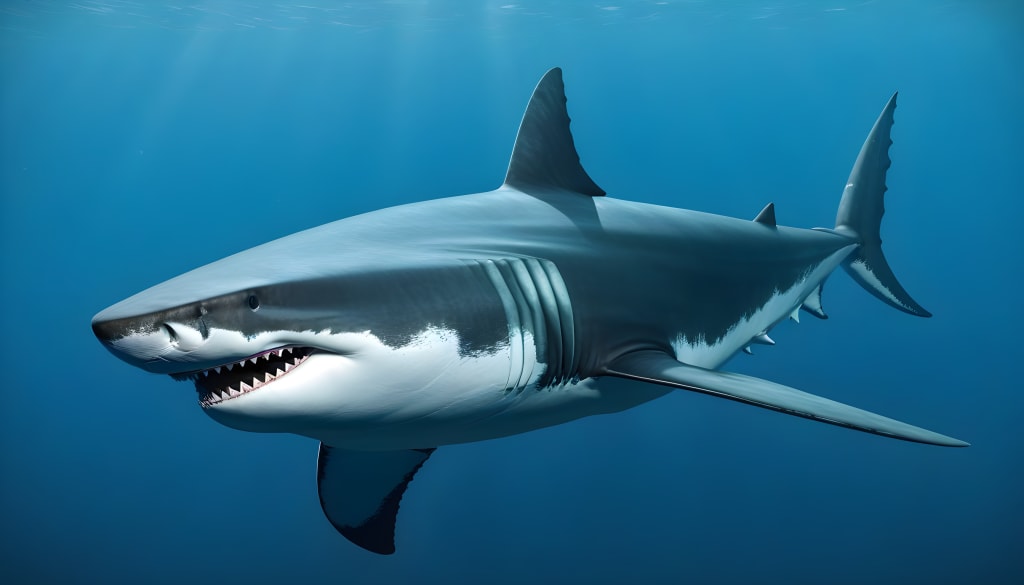
In the deep oceans, remnants of the Megalodon can still be found. It was one of the biggest and most dangerous hunters that ever lived on Earth, as well as the biggest shark. But then, about 3.6 million years ago, its kind disappeared from our planet, leaving only huge teeth for modern archaeologists to keep finding.
Megalodon was the largest and most powerful shark ever to exist. It reportedly lived around 20-3.6 million years ago and was truly enormous. Its bite was more powerful than that of a T-Rex and likely any other powerful predator that has ever roamed this planet.
It might not be a surprise because this sea creature had really strong jaws that could open up to 9 to 10 feet wide – big enough to swallow two grown-up people next to each other. The jaws also had 276 teeth, each about 7 inches long – as long as a small hedgehog. When these teeth got worn down, the shark got rid of them and grew new ones. These big, saw-like teeth helped the Meg to eat meat easily.
The giant shark, called the Megalodon, could grow up to 59 feet long, which is twice as long as a big double-decker bus in London. It was really heavy too, even more than 30 tons, much heavier than a fully grown T-Rex. The Megalodon was like the king of the oceans because it had no other animals as big as itself to compete with. It hunted sharks, big fish, and even whales.
But, why did this amazing creature disappear from Earth? Some people thought it was because of the great white shark, which is often described as a smaller version of the Megalodon. However, the Megalodon actually looked more like a modern bull shark with a flat and long snout and big fins.
The important thing is that the ancestors of today's great white sharks lived at the same time as the Megalodon. Even though the Megalodon was huge and powerful, it was not as quick and agile as the smaller great white sharks. The great whites could compete with the Megalodon for food and were often better hunters because they were faster. They couldn't fight the Megalodon directly, but they could steal its food.
According to this idea, the only food left for the Megalodon was big whales and other huge sea animals. Grown-up Megalodons could catch these creatures easily, but their babies were smaller and more vulnerable. Smaller sharks, like great whites, bull sharks, and tiger sharks, might have taken advantage of this. When the Megalodon babies were still small, these other sharks could have eaten them. Even back then, a great white shark could be as long as 20 feet, while a baby Megalodon was definitely smaller.
A big problem for a predator was keeping its body warm by having enough energy. To do this, the animal had to eat a whole lot – I mean a ton! This was tough because the oceans were changing, and new predators like the great white shark were around. If this idea is true, it means the Meg needed a lot of energy to stay warm, and that might be why it disappeared.
This new info is super important. It shows that many sea animals today might be feeling the effects of climate change. By the way, have you heard about people saying they saw the Meg or other huge monsters? Some people saw something similar not too long ago.
In July 1916, there were scary shark attacks along the coast of New Jersey in the US. This happened during a really hot time when lots of people were at the beach. People said the shark was way bigger than usual. Scientists still debate which shark it was – maybe a bull shark or a great white.
In 1999, there was a picture of a huge shark in the Pacific Ocean near Guadalupe Island. They called it "Deep Blue." Some thought it might be the Megalodon, but experts said it was a super big female white shark, the biggest ever seen. Usually, male white sharks are 11 to 13 feet long, but females can be up to 15 or 16 feet. Deep Blue was over 20 feet long, which confused a lot of people.
The last time anyone saw Deep Blue was in 2013 near Mexico's Baja California. But wait, there's another big shark found anywhere in the world. The biggest ones can be 40 feet long and weigh about five or six tons. People might think it's the Megalodon or a cousin, but nope – it's the basking shark.
Basking sharks like colder seas, not warmer than 58°F. Even though they have lots of small teeth, they don't use them to bite people. Instead, they swim with their mouths open wide, eating tiny creatures called plankton. A big basking shark can filter nearly 2,000 tons of water in just one hour. And the coolest part? They're friendly and won't bother swimmers or divers!
About the Creator
Enjoyed the story? Support the Creator.
Subscribe for free to receive all their stories in your feed.
Comments
There are no comments for this story
Be the first to respond and start the conversation.