
The Mountain Climber Who Survived Against Impossible Odds
In 1985, British climber Joe Simpson suffered a catastrophic accident while descending a remote Peruvian mountain. What happened next became one of the most extraordinary survival stories in mountaineering.
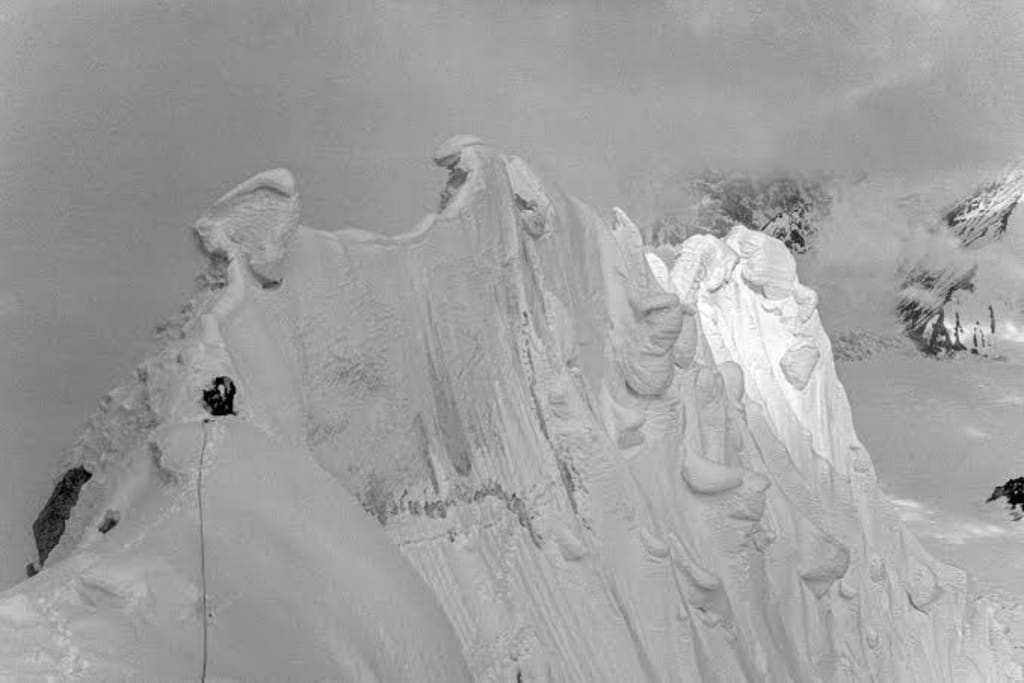
Mountaineering is often described as a test of strength, endurance and courage. But sometimes survival depends on something even more important: the determination to keep moving when every logical reason says to stop.
The story of British climber Joe Simpson is one of those extraordinary cases.
In 1985, Simpson and fellow climber Simon Yates attempted to climb the west face of Siula Grande in the Peruvian Andes. They successfully reached the summit, but their descent turned into a nightmare.
What followed became one of the most remarkable survival stories in modern mountaineering.
The Climb
Joe Simpson and Simon Yates were experienced climbers who wanted to attempt a difficult route on Siula Grande.
The mountain rises to more than 6,000 meters in the Peruvian Andes.
The pair chose a route on the mountain's west face that had not previously been climbed.
They climbed in alpine style, carrying their own equipment and avoiding the support systems used on larger commercial expeditions.
Their ascent was difficult but successful.
They reached the summit.
However, reaching the top was only half the journey.
The most dangerous part of many mountain expeditions is the descent.
A Catastrophic Accident
While descending, Simpson fell and suffered a severe leg injury.
His lower leg was badly damaged, leaving him unable to climb normally.
The situation immediately became critical.
The climbers were still high on the mountain, far from help, and conditions were extremely dangerous.
Yates began lowering Simpson using a rope system.
The plan was to descend the mountain one section at a time.
But the terrain presented another problem.
Simpson eventually went over the edge of a deep crevasse and became suspended below Yates.
Yates could not see him.
He could not safely pull him back up.
The rope continued to bear Simpson's weight.
An Impossible Decision
Yates faced a terrifying choice.
If he continued holding the rope, he risked being pulled from the mountain himself.
If he cut the rope, Simpson would fall.
Eventually, after holding the rope for a prolonged period and realizing that he could no longer maintain the position, Yates made the decision to cut it.
Simpson fell into the crevasse.
Yates believed that Simpson had died.
With no safe way to investigate further, Yates eventually descended alone.
He later returned to base camp believing that his climbing partner was gone.
But Simpson was still alive.
Trapped in the Crevasse
Simpson had fallen into a deep section of the mountain.
Remarkably, the fall did not kill him.
However, he was now trapped, injured and alone.
His situation appeared hopeless.
There was no easy way to climb back up.
He had limited supplies and was surrounded by ice.
But Simpson refused to give up.
He began looking for a way out.
Crawling Toward Survival
Unable to walk normally because of his injury, Simpson started moving through the crevasse.
He eventually discovered a possible route downward.
Instead of finding a clear escape, he entered a dangerous system of ice and snow.
Using his remaining strength, he lowered himself and crawled through the mountain.
Every movement was painful.
But he continued.
At some point, Simpson realized that the only chance of survival was to keep moving.
He later described the experience as a battle against exhaustion, pain and despair.
The Journey Back to Camp
Simpson eventually reached lower terrain.
He continued crawling and dragging himself toward the area where the climbing team had established camp.
The journey took hours.
Meanwhile, Yates and other members of the expedition had already begun preparing to leave the area.
They had no reason to believe Simpson was alive.
But Simpson continued moving.
Eventually, he reached the camp.
His appearance shocked the other climbers.
They had believed he was dead.
Instead, he had returned after surviving an accident that seemed almost impossible to survive.
Recovery
Simpson was severely injured and needed extensive medical treatment.
After leaving the mountain, he underwent surgery and a long rehabilitation process.
His recovery was difficult, but he eventually returned to climbing.
His experience became internationally known through his book Touching the Void, which later inspired a highly acclaimed documentary film.
The story also became a major case study in mountaineering ethics and survival.
The Meaning of the Story
Simpson's survival was not simply the result of physical strength.
It involved decision-making under extreme pressure.
Yates had to make an agonizing decision when he believed Simpson could not survive.
Simpson then had to make a series of decisions while injured and alone.
Neither man had complete information.
Both were operating in an environment where a single mistake could result in death.
Their experience demonstrates why mountaineering is as much a mental challenge as a physical one.
Why Joe Simpson's Story Still Matters
Decades later, Simpson's story remains one of the most powerful survival accounts in mountaineering.
It shows how unpredictable high-altitude climbing can be.
A successful summit does not guarantee safety.
Weather, terrain, injuries and simple bad luck can transform an achievement into an emergency within minutes.
Most importantly, the story demonstrates the extraordinary human instinct to survive.
Joe Simpson reached a point where his chances appeared almost nonexistent.
Yet he continued.
He crawled, dragged himself and fought through unimaginable conditions until he finally reached safety.
His experience on Siula Grande became more than a mountaineering story.
It became a reminder that sometimes survival begins with one simple decision: keep moving.
About the Creator
Enjoyed the story? Support the Creator.
Subscribe for free to receive all their stories in your feed.
Comments
There are no comments for this story
Be the first to respond and start the conversation.