
The Most Amazing Scientific Discoveries of the Decade
The five most amazing scientific discoveries of the decade
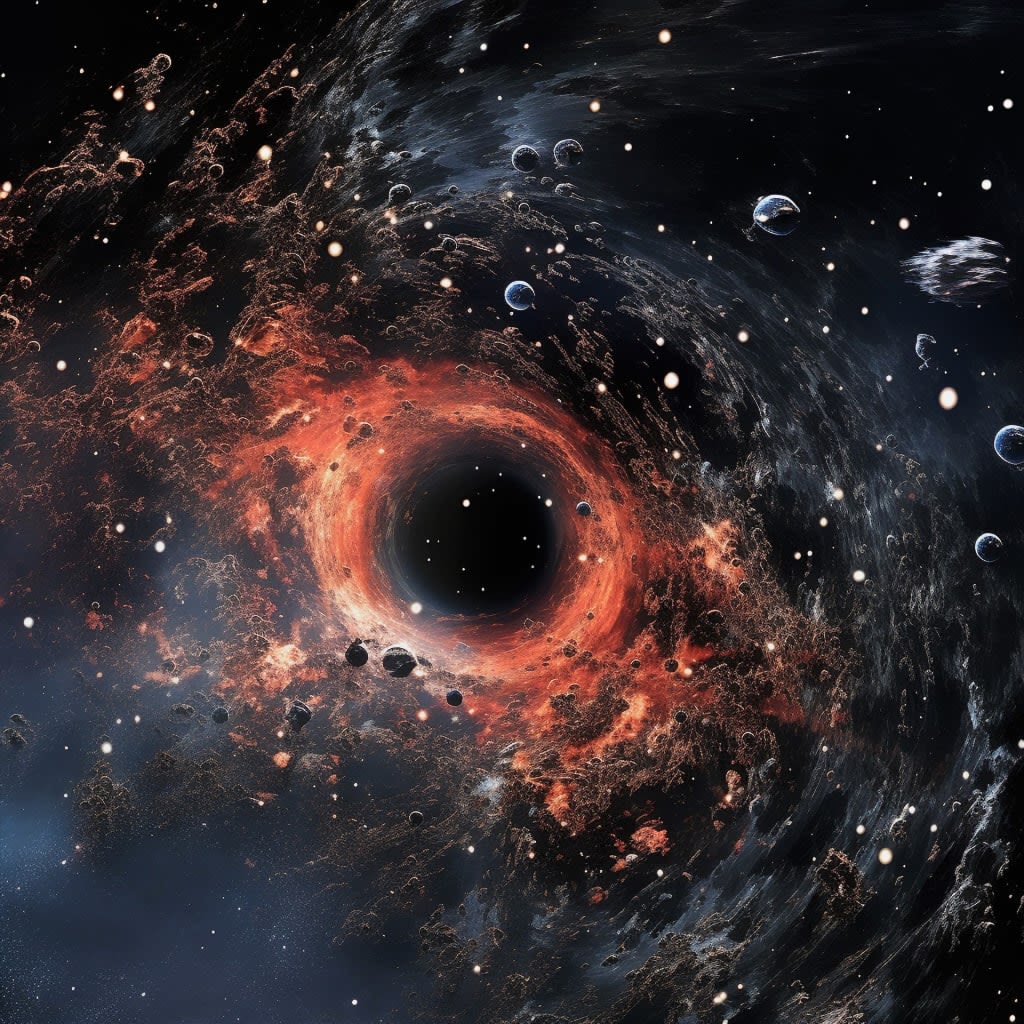
The last decade proved to be one of the most fruitful periods for scientific discovery in history. Researchers from various fields tested hypotheses, uncovered new evidence, and explored remote locations, prompting us to reevaluate our understanding not only of our own planet but of the entire universe. This era marked substantial progress in tackling some of humanity's greatest challenges. We also learned significantly more about some of the most destructive objects in existence. Here, we’ll explore five of the most remarkable scientific discoveries from the 2010s.
## 5. Pluto
In 2006, Pluto was controversially reclassified as a dwarf planet. That same year, the New Horizons spacecraft was launched, destined to travel to the outskirts of our solar system to study Pluto. Upon its arrival in July 2015, scientists were astonished by the images and data transmitted back to Earth. Far from being the static, frozen rock many expected, Pluto revealed geological features including moving glaciers, floating ice mountains, and a vast frozen sea comprised of solid nitrogen. The ice is in constant motion, slowly replenished by the pressure of the layers above, creating unexpected surface structures and offering new insights into the behavior of dwarf planets.
## 4. Higgs Boson
The discovery of the Higgs boson, also known as the "God Particle," was a monumental achievement resulting from the construction of the world's largest particle accelerator, costing almost $5 billion. Announced in 2012 at CERN’s Large Hadron Collider, this particle had been theorized back in 1964 and plays a pivotal role in our understanding of the subatomic realm. While the Standard Model of physics describes various particles like electrons and quarks, it failed to explain why objects possess mass. The Higgs boson, existing within the Higgs field, interacts with other particles to confer mass. Its discovery confirmed the last missing piece of the Standard Model, allowing researchers to further explore more complex phenomena.
## 3. Kepler
For millennia, humanity has been mesmerized by the night sky, questioning the existence of other planets and stars. The launch of the Kepler probe in 2009 revolutionized our understanding of exoplanets. By measuring fluctuations in the brightness of distant stars, scientists could detect objects orbiting them. By the end of the decade, over 4,000 exoplanets were identified, including several potentially habitable ones. This increasing abundance of exoplanet discoveries suggests that our own solar system may be far more common than originally thought, sparking imaginations about what else lies in the cosmos.
## 2. Earth’s Climate Crisis
Throughout Earth's history, climate has undergone drastic changes, but the shifts happening today are largely attributed to human actions. In the past decade, it became increasingly clear how these changes impact our planet. For instance, in 2012, Greenland lost 400 billion tons of ice, and Antarctic ice loss exceeded 250 billion tons annually. This escalating trend has raised projections that global sea levels could rise by three feet by 2100, potentially endangering 630 million people. Moreover, human activities have caused significant declines in biodiversity, putting about 40% of amphibian species, over 33% of marine mammals, and 10% of insect species at risk. While we began to fully grasp the gravity of these issues over the last decade, it is hoped that future efforts will yield solutions.
## 1. Black Holes
Historically, black holes have fascinated scientists and the public alike, and recent research has revealed much about these enigmatic objects. Typically formed from the remnants of massive stars, black holes exhibit intense gravitational pull that can lead to dramatic phenomena. In 2016, scientists detected the collision of black holes, confirming Einstein’s 1916 prediction about gravitational waves—ripples in spacetime caused by these colossal events. Yet, the most groundbreaking discovery came from the Event Horizon Telescope team, which captured the first-ever image of a black hole: a massive entity located at the center of the Messier 87 galaxy, approximately 54 million light-years from Earth. Its mass is equivalent to 6.5 billion Suns, highlighting the role black holes play in the structure and dynamics of galaxies.
The 2010s were a remarkable decade for scientific advancements, expanding our understanding of both Earth and the universe. As we continue to uncover more about the world around us, the anticipation for further discoveries grows ever stronger. Thank you for joining me in this exploration of science—stay tuned for what’s next!
About the Creator
Enjoyed the story? Support the Creator.
Subscribe for free to receive all their stories in your feed.
Comments
There are no comments for this story
Be the first to respond and start the conversation.