
The Minamata Mystery: The day a city in Japan realized their cats—and then their children—were "dancing" toward death.
The Weaponized Womb: How a Japanese corporation turned a fishing bay into a neurotoxic graveyard.

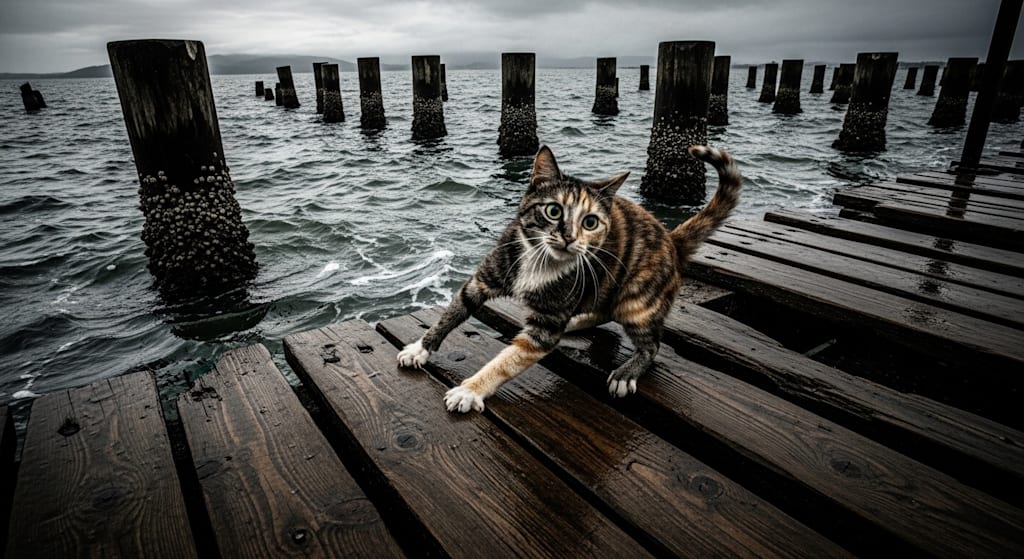
The sharp, metallic tang of raw effluent cut through the salt-heavy breeze of the Shiranui Sea. A tortoiseshell cat spun in violent, frantic circles on the wooden dock. It wasn't playing. Its spine arched into a rigid, unnatural bow, claws tearing splintered grooves into the wet cedar planks. Foam dripped from its jaws. Then, with a guttural shriek that sounded horribly human, it threw itself directly into the churning grey water and drowned. This was the summer of 1953. The fishermen of Minamata called it neko odori byo—the dancing cat disease. They laughed at first. They stopped laughing when their daughters began to dance.
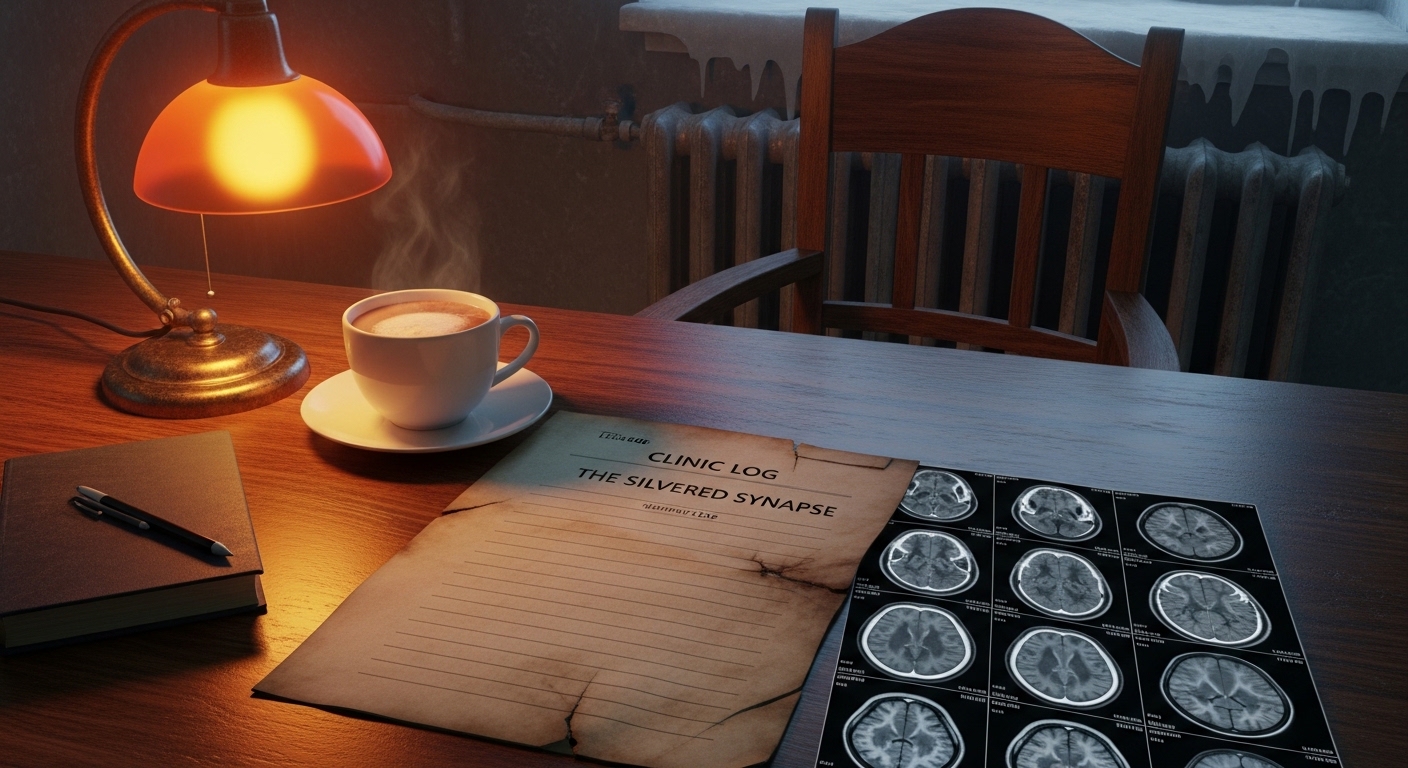
I am writing this while the cast-iron radiator beneath my window clanks with a violent, rhythmic spasm, spitting rusty water onto the warped floorboards of my library. My black tea has developed a thick, milky skin that clings to the inside of the porcelain mug like a biological film. If I’m being honest, I should have stopped reviewing these particular epidemiological ledgers hours ago. They leave a foul, chemical taste on the teeth. I had to read through four different translated Japanese medical journals to verify the timeline of the neurological collapse, but the most alarming truth was hidden in a foxed, water-damaged binder I pulled from a crate of smuggled corporate documents in a London archive. It was Dr. Hajime Hosokawa’s 1956 clinic log: The Silvered Synapse: Observations on the Chisso Outfall.
Hosokawa was a man who saw the rotting underbelly of post-war industrialization without blinking. He understood that the Chisso Corporation didn't just manufacture fertilizer and plastics. They manufactured a permanent, invisible ghost.
________________________________________
The Alchemy of the Silver Factory
To understand the slaughter, you must look at the pipes.
The Chisso Corporation’s chemical factory dominated the skyline of Minamata, a quiet fishing and farming town on the western coast of Kyushu. It was the beating heart of the local economy. In 1932, the factory began producing acetaldehyde, a chemical precursor used to make plastics. To catalyze the chemical reaction, the engineers used mercury sulfate.
Inorganic mercury is toxic, certainly. But it is relatively clumsy. The human body can often recognize and expel it before total systemic failure occurs. But deep within the high-temperature reactors of the Chisso plant, a rogue, unintended chemical reaction was taking place. The inorganic mercury was binding with carbon. It was transforming into methylmercury ([CH₃Hg]⁺).
This is an incredibly lethal, lipophilic molecule. It loves fat. It loves tissue.
The factory engineers didn't care about the chemistry of the wastewater. They simply piped the exhausted catalyst directly into Minamata Bay. It was cheap. It was highly efficient. Dr. Hosokawa’s 1956 logs model the sheer volume of the dumping using a brutal, localized concentration formula:
Cbay = [∫ Rdischarge(τ) dτ] / (Vbay – Etide)
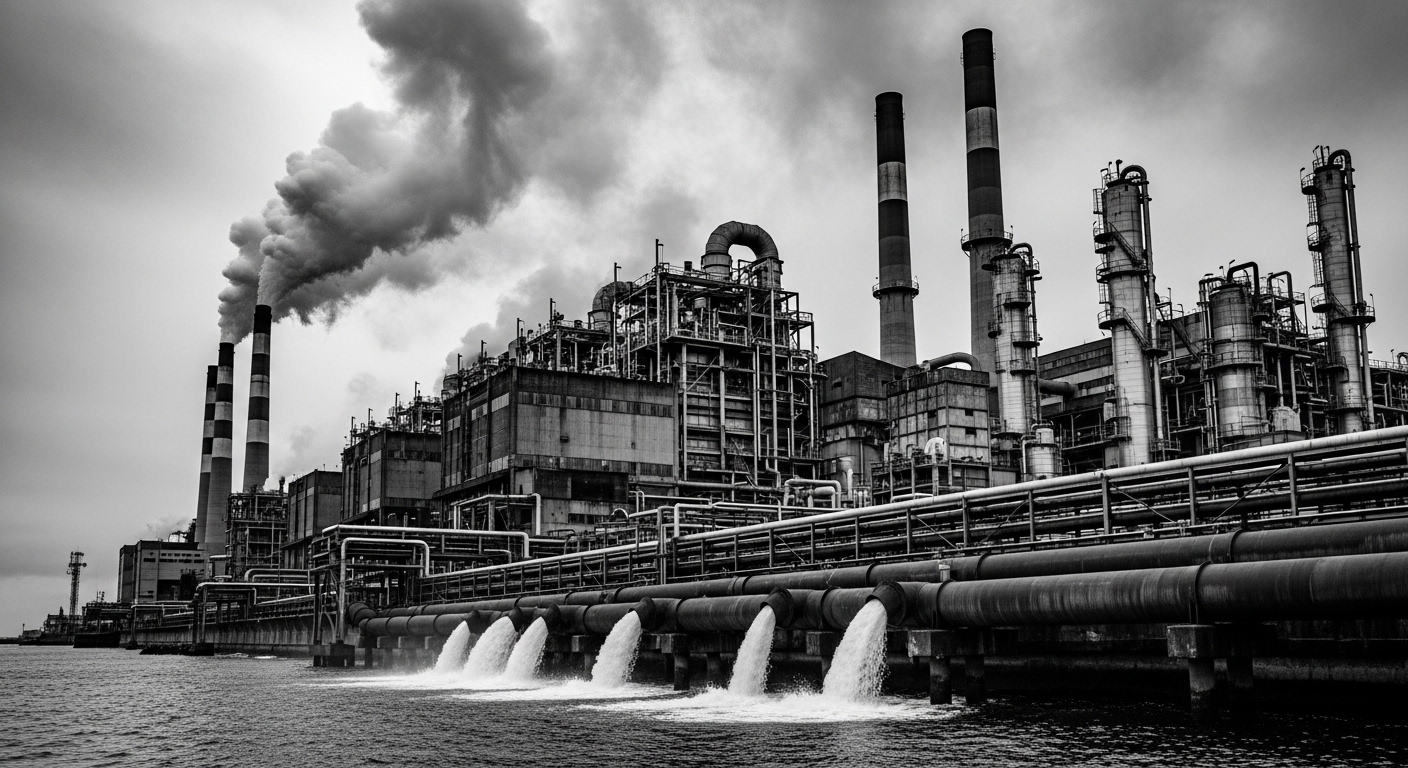
Where Cbay was the concentration of methylmercury in the water, Rdischarge was the factory's daily dumping rate, Vbay was the volume of the bay, and Etide was the minimal tidal exchange of the inland sea. The math was a death sentence. The bay was a closed loop. The mercury didn't wash out to the ocean. It sank into the sludge.
________________________________________
The Architecture of the Tainted Web
The water in Minamata Bay didn't look poisonous. It looked perfectly normal. But the heavy metal had entered the food chain, initiating a deranged process known as bioaccumulation.
Plankton absorbed the microscopic mercury particles from the silt. Small fish ate the plankton. Larger fish ate the small fish. With every step up the biological ladder, the concentration of the toxin multiplied exponentially.
Cn = C₀ · (BCF₁ · BCF₂ · ... · BCFn)
In this standard bioconcentration equation, Cn represents the toxin level in the apex predator, growing violently higher with each successive bioconcentration factor (BCF). By the time the sea bream and mullet reached the nets of the Minamata fishermen, the fish were loaded with enough methylmercury to kill a horse. But the fish looked healthy. They were brought home. They were boiled in soy sauce. They were fed to children.
Then, the central nervous system began to tear itself apart.
Methylmercury is an assassin that easily breaches the blood-brain barrier. Once inside the brain, it aggressively attacks the cerebellum—the center of balance and motor control—and the visual cortex. I had to read three separate autopsy reports from the Kumamoto University medical team to grasp the physical damage. The brains of the victims didn't just swell. They shrank. The tissue literally sponged and dissolved.
The symptoms were a visceral nightmare. It started with a slight numbness in the lips and fingertips. Then, the victims lost their peripheral vision. The world narrowed into a dark, tunnel-like tube. Their speech slurred. They lost the ability to button their shirts or hold a pair of chopsticks.

Eventually, the convulsions started. The "dancing." Patients would arch their backs in hospital beds, screaming in pain, their limbs thrashing wildly as their brains misfired a barrage of dying electrical signals. They starved to death because they could not swallow. Families locked their afflicted relatives in dark rooms out of shame, believing it to be a contagious, demonic plague.
________________________________________
The Sanctuary of the Poisoned Womb
If I’m being honest, the 1958 pediatric entries in Dr. Hosokawa’s log are the pages that make me want to burn this entire archive.
As the disease ravaged the adult population, a deeply unsettling anomaly emerged. Young women in Minamata were eating the tainted fish, but they weren't showing any symptoms of the disease. Their speech was clear. Their hands were steady. They appeared completely immune to the silver poison.
Then, they gave birth.
Their children were born broken. They had twisted limbs. They were deaf. They were blind. They suffered from severe mental retardation and horrific, daily seizures. The locals called them the "wooden dolls."
The doctors were entirely baffled until they analyzed the umbilical cords. The human placenta is a biological marvel designed to filter nutrients from the mother's blood and deliver them to the fetus. But methylmercury acts like a chemical Trojan horse. The placenta actively pumped the heavy metal out of the mother’s bloodstream, concentrating it heavily into the developing brain of the unborn child.
The mother was spared. The child was hollowed.
The womb, the ultimate biological sanctuary, had been weaponized. The fetal brain is incredibly sensitive to neurotoxins because the neurons are rapidly migrating and forming connections. The methylmercury halted this migration. It froze the brain in a state of chaotic, unfinished construction.
Hosokawa noted that the mothers, realizing what their diet had done to their babies, suffered psychological breaks that rivaled the physical devastation of the disease itself. They had literally fed their children the poison through their own blood.
________________________________________
The Calculus of Corporate Denial
The Chisso Corporation knew exactly what they were doing.
By 1959, the Kumamoto University researchers had definitively linked the disease to organic mercury. They pointed directly at the factory outfall. Chisso’s response was an entirely unhinged pantomime of corporate responsibility. They denied everything. They hired private scientists to publish fraudulent papers claiming the disease was caused by explosive remnants from World War II dumped in the bay.
But behind closed doors, Chisso’s own company hospital director—Dr. Hajime Hosokawa himself—was conducting secret experiments.
Hosokawa took healthy cats and fed them food laced with the factory’s wastewater. It didn't take long. "Cat 400" was the most famous subject. After consuming the effluent, Cat 400 began to convulse. It spun in circles. It exhibited the exact same pathological "dancing" as the cats on the docks and the children in the hospital.
Hosokawa brought the results to the Chisso executives. He proved that their wastewater was the murder weapon.
The executives ordered him to halt his experiments immediately. They sealed his notes. They forbade him from sharing the data with the government or the university researchers. To publicly placate the angry fishermen, Chisso installed a "Cyclator"—a massive water purification machine—at the factory. The company president drank a glass of water allegedly treated by the machine in front of the press.
It was a complete fraud. The Cyclator did absolutely nothing to filter out dissolved methylmercury. It only removed solid particulates. Chisso continued dumping the invisible poison into the bay for another nine years.
________________________________________
The Persistence of the Grey Tide
They bought the victims off with "sympathy money."
Chisso drafted contracts stating that the meager payouts were not an admission of guilt, and that if the factory was ever proven to be the cause of the disease, the victims would forfeit all future claims to compensation. The fishermen, starving because their catch was embargoed, signed the papers with trembling, numb hands. It was a bizarre legal extortion. The company paid pennies for the lives they had ruined.
The dumping did not officially stop until 1968, when the factory finally changed its chemical synthesis process. By then, thousands of people were dead or permanently crippled. The bay was so saturated with mercury that the government had to dredge 1.5 million cubic meters of toxic sludge from the ocean floor, burying it under a massive, sealed concrete reclamation project.
The radiator in my study has finally gone completely silent. The chill in the room is absolute.
We look back at the black-and-white photographs of Minamata. We see the haunting image of a mother bathing her blind, crippled daughter in a wooden tub, captured by the photographer W. Eugene Smith. We think we are looking at a closed chapter of industrial hubris. We tell ourselves that environmental regulations have evolved, that the pipes are monitored, and that the corporations are leashed.
But the math of the ledger hasn't changed. When the cost of safely disposing of a poison is higher than the cost of a few quiet payouts, the pipes always remain open in the dark.
The dancing stopped a long time ago. The music, however, is still playing.
About the Creator
The Chaos Cabinet
A collection of fragments—stories, essays, and ideas stitched together like constellations. A little of everything, for the curious mind.
Enjoyed the story? Support the Creator.
Subscribe for free to receive all their stories in your feed.
Comments
There are no comments for this story
Be the first to respond and start the conversation.