
The Microscopic Invader Reshaping California’s Canopy
How a beetle smaller than a sesame seed cultivates a lethal fungus inside healthy trees, and how property owners can spot the damage early.

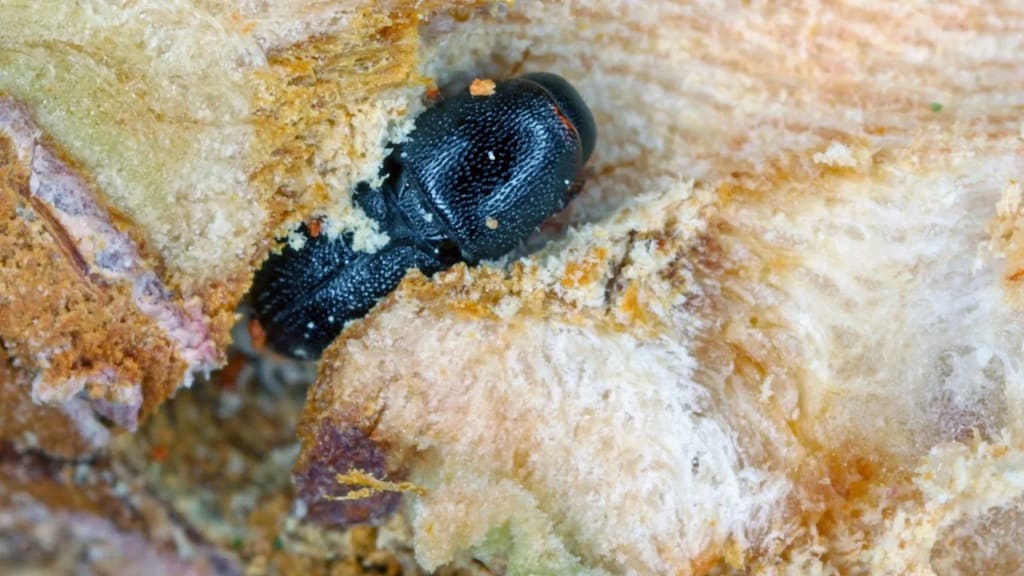
Stand beneath a mature California sycamore or an eighty-year-old valley oak, and you feel a sense of permanence. These trees endure decades of drought, winter atmospheric rivers, and suburban development. Their massive limbs carry tons of timber, anchored by root networks built to handle California’s erratic climate.
It seems impossible that an insect barely the size of a sesame seed could dismantle that strength.
Yet across Southern California, invasive shothole borers have done exactly that. Over the past decade, they have killed tens of thousands of trees across public parks, riparian corridors, and residential yards. For years, communities further north treated the crisis as an isolated regional issue.
That geographic buffer has now vanished.
With active infestations confirmed in San Jose and Santa Cruz County, the pest has officially reached the greater Bay Area. Agricultural departments, including in Marin County, are conducting field surveys to identify early arrivals. For homeowners and land stewards, understanding this quiet ecological shift is the first step toward protecting valuable trees.
An Insect That Farms Its Own Food
Most native wood-boring beetles act as nature’s clean-up crew. They colonize trees that are already dead, diseased, or severely stressed by drought.
Invasive shothole borers do not follow those rules. These tiny ambrosia beetles routinely attack healthy, vigorous trees. Even stranger is their feeding strategy: the beetles do not actually eat the wood they tunnel through.
When a mated female bores into the trunk or scaffold branches, she carries spores of Fusarium fungi in specialized pockets near her mouthparts. Inside these carved wooden galleries, she cultivates fungal gardens to feed herself and her developing larvae.
The crisis for the host tree is internal. As the fungal colony expands, it invades the xylem—the vascular highway moving water and nutrients from the roots to the crown. The fungus clogs this plumbing. Starved of hydration, individual branches begin to wilt, drop leaves, and die back in a disease known as Fusarium dieback.
A Dangerous Lack of Pickiness
Specialist pests targeting single families are easier to predict. Invasive shothole borers, however, are broad generalists. They attack hundreds of plant species and reproduce across dozens of diverse tree varieties.
In Northern California, confirmed reproductive hosts include prominent native trees like California sycamores, valley oaks, bigleaf maples, willows, and cottonwoods. Common landscape ornamentals are equally vulnerable, including Japanese maples, English oaks, London planes, acacias, and avocado trees.
Reading the Diagnostic Clues
Because adult beetles live enclosed within heartwood, you will rarely spot the bug itself. Early detection depends on recognizing physical distress signals on the bark:
Entry Holes: Clean, perfectly circular punctures measuring about one-sixteenth of an inch wide—the size of a ballpoint pen tip.
Sap and Staining: Dark, wet rings of oozing sap or thick amber resin bleeding from the wounds.
Boring Dust: Fine, sawdust-like frass collecting in bark furrows or protruding in fragile cylinders.
Sugar Volcanoes: A chalky, white mineral efflorescence surrounding entry holes on avocado trees and select landscape specimens.
Isolated Dieback: Individual upper branches wilting and turning brown while the rest of the canopy remains green.
Sensible Protection
When invasive pests arrive, the instinct is often to spray chemicals immediately. However, blanket pesticide sprays on healthy, uninfested trees provide no systemic immunity and harm local pollinators.
Instead, focus on sensible biosecurity. Wood-boring beetles spread primarily through human transport. Buy firewood locally where you plan to burn it, and never haul unseasoned wood across county lines.
If you prune an infested branch, chip the wood to under an inch or seal it under clear plastic to solarize in the sun. Maintain baseline tree vigor with deep seasonal watering and a generous layer of mulch. If you suspect an infestation, have an ISA-certified arborist confirm the symptoms before undertaking removals.
About the Creator
ORB Tree Service Marketing
ORB Tree Service Marketing provides SEO and local search strategies for the tree care and roofing industries. Follow us for insights on search optimization and lead generation for home services.
Enjoyed the story? Support the Creator.
Subscribe for free to receive all their stories in your feed.
Comments
There are no comments for this story
Be the first to respond and start the conversation.