
The future of fertilizer is local: Bakry Osman on regenerative agriculture and food security
The Easy Environmental Solutions director wants fertilizer treated as strategic infrastructure, and a rice trial in Ghana is his proof.


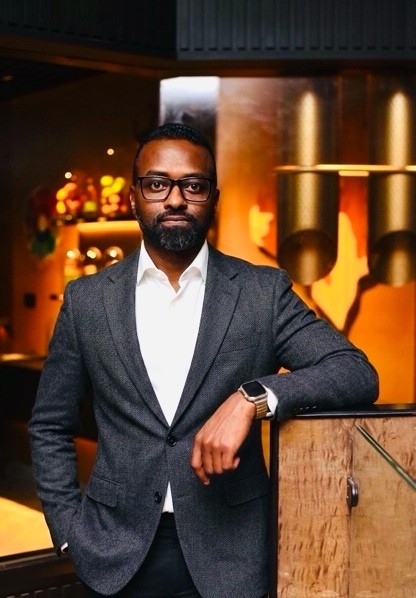
Bakry Osman's strongest argument for the future of agriculture sits in a rice paddy in southern Ghana. Osman, Director for Africa and the Middle East at Easy Environmental Solutions, believes the next shift in farming will come from three moves at once: rebuilding soil biology through regenerative practices, manufacturing fertilizer close to where food is grown, and using technology so countries can produce more with fewer imported inputs.
At the Ashaiman Irrigation Scheme, researchers from the Department of Crop Science at the University of Ghana, Legon, compared three fertilizer treatments on rice. One plot got the full recommended synthetic program. Two others got half that amount, topped up with Terreplenish®, a liquid microbial soil amendment made with technology from Easy Environmental Solutions. Both reduced treatments beat the conventional one. The full synthetic plot yielded 7.92 tonnes per hectare. The two Terreplenish plots produced 8.53 and 8.86.
The yield gain matters, but the bigger question is this. Can regenerative agriculture stop being a sustainability talking point and start working as commercial farming at industrial scale? For Osman, the answer starts with technology.
Regenerative agriculture that pays for itself
Regenerative agriculture gets misread as a retreat to low yield, back to nature farming. In practice it means running a farm so the natural systems it depends on grow stronger instead of steadily wearing down. Healthy soil is alive. Microorganisms cycle nutrients, organic matter holds water, and roots and microbes make nutrients already in the ground available to the crop again. Modern agriculture produces high yields, but often only through repeated external inputs.
Osman's version does not ask farmers to give up synthetic fertilizer. It asks how much of the work the soil can be brought back to doing itself. The Ghana trial answers in practical terms. Cut the synthetic program in half, add Terreplenish, and yields rose. That reframes the proposition. Rather than asking farmers to trade yield for sustainability, regenerative agriculture starts to offer more output from soil in better condition, which is a far easier sell.
From imported commodity to local infrastructure
The hard part is scale. Most of the conversation about regenerative farming stays at the level of practice: cover crops, rotation, reduced tillage, composting. Those matter, but feeding billions of people takes industrial systems that can supply millions of farms reliably and cheaply. Easy Environmental Solutions is trying to close that gap with a platform called EasyFEN™, now being rolled out across a growing set of international projects.
EasyFEN is modular equipment that turns suitable local organic and green waste into Terreplenish, and it changes the economics of where fertilizer comes from. Instead of shipping finished product thousands of kilometers, a country can make biological inputs at home. Organic waste stops being only a disposal problem and becomes feedstock. Soil stops being something farming mines and becomes something the system feeds back into. More of the value stays inside the country growing the food.
For most of the past century, fertilizer has been made at large centralized plants and shipped through ports and warehouses to farmers a continent away. That system fed the world, but it built in dependence. Gas prices, conflict, currency shortages, sanctions and shipping disruptions all shape what a farmer finally pays. Because EasyFEN is modular, it can sit near farming regions, food processing plants or waste streams rather than in one central factory.
The diplomat's case for fertilizer sovereignty
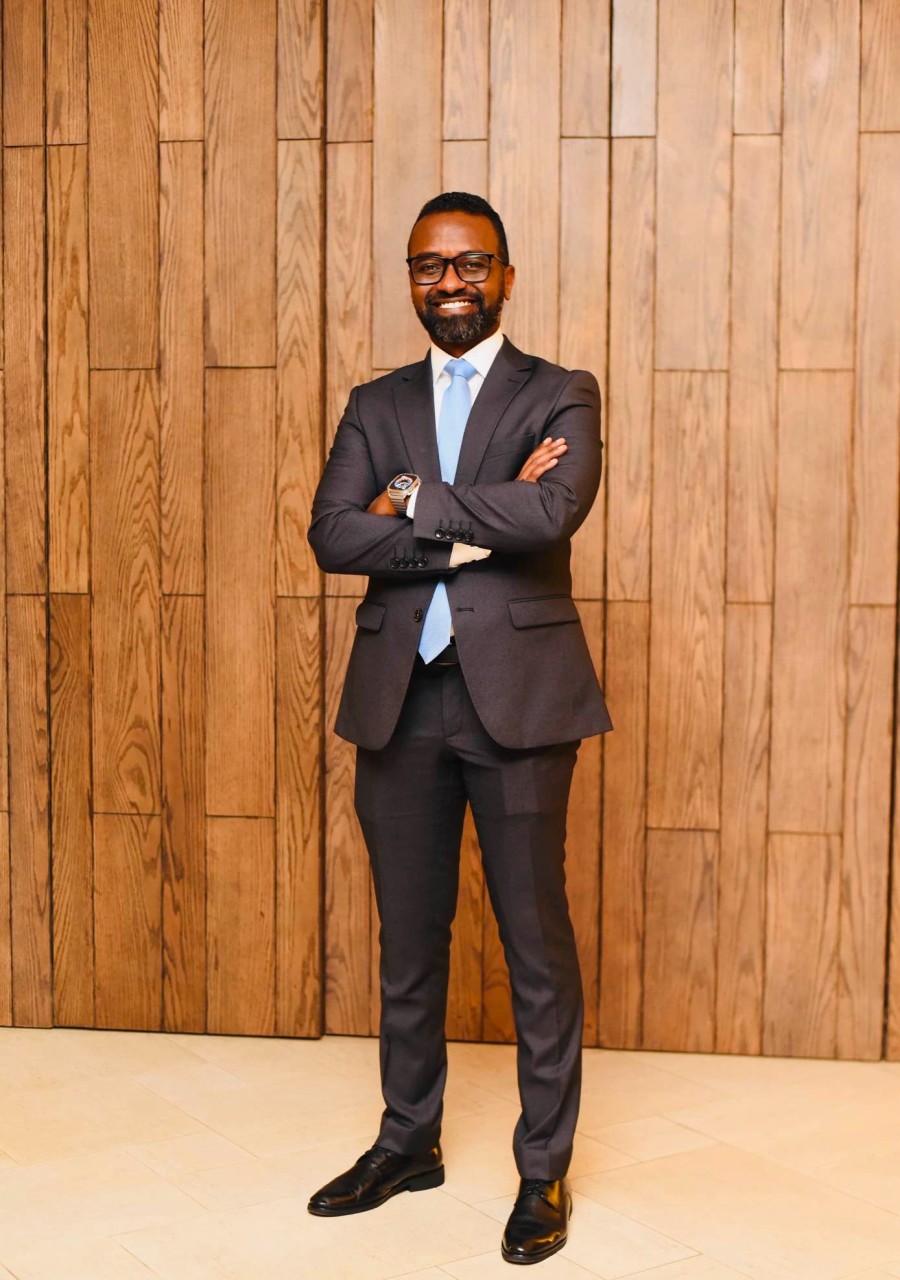
Bakry Osman did not come to agriculture through farming. Before Easy Environmental Solutions, his career ran through government engagement, political economy, stabilization and strategic communications, much of it in fragile and emerging markets. That shapes how he sells the technology, because good science rarely guarantees adoption. A product has to clear ministries, regulators, laboratories, field trials and financing institutions before it reaches a farm, and connecting those worlds is most of what Osman does. His pitch to governments is blunt.
"The future of agriculture cannot simply be about finding another product to import," he argues. "The real transformation happens when countries begin producing critical agricultural inputs themselves, using resources they already have."
He wants fertilizer treated the way governments treat energy, water, ports and power grids, as strategic infrastructure. Countries guard food reserves and pour billions into water security; Osman thinks fertilizer belongs in the same bracket. Fertilizer sovereignty, in his framing, does not mean banning imports tomorrow. It means building the capacity to lean on them less. A country that cuts imported fertilizer by 20 percent while holding yields steady has done something real. At 30 percent the national economics shift. If Ghana's 50 percent reduction can be repeated across crops and commercial systems, the story stops being about efficiency and becomes about resilience.
He made the same case when Easy Environmental Solutions announced its second African deployment in 2025: "Real food security begins when a nation can nourish its own soil. The EasyFEN puts that power back in the hands of the countries we serve, producing nutrient rich liquid microbial fertilizers locally, reliably and at scale."
Africa first, but not only Africa
Africa is the first proving ground for this model, not its limit. Kenya became the launch market, with the first EasyFEN deployment meant to show that local manufacturing works. Tanzania followed through regulatory engagement, laboratory evaluation and field trials. Ghana became a validation market through independent testing, including the Ashaiman rice work. Talks and development activity have since spread to several more African markets, among them the Democratic Republic of the Congo, Malawi, Nigeria and South Africa.
The pressures the model addresses are global. The Middle East is short on water and dependent on food imports. Europe faces fertilizer security, tightening rules, soil degradation and vast organic waste streams. Asia has to keep raising productivity on heavily farmed soil, and Latin America runs some of the largest agricultural systems anywhere.
Healthier soil also holds water better, which ties fertilizer, irrigation and soil restoration into one problem rather than three. For water stressed countries, that could matter as much as the yield figures, and it hints at a new scorecard: yield per unit of fertilizer and per unit of water, measured beside the familiar yield per hectare.
The technology still faces the test every ambitious agricultural idea faces: proving that promising trials turn into repeatable performance across different crops, soils, climates and systems. Ghana shows the agronomy works. Kenya has to show local manufacturing at scale. The commercial deployments have to show the economics hold. "2025 was about proving performance in real world conditions across dramatically different environments," Osman said early in 2026. "2026 is where scale, integration and long term value creation begin to converge."
If it does, the interesting part of EasyFEN will be less the liquid coming out of the machine than what the machine proves, that waste can become farm infrastructure and that a country can make its food security instead of buying it. Underneath everything is a claim Bakry Osman returns to constantly: soil is infrastructure. Treat it as disposable and you import your food security forever. Rebuild it, and you begin to own it. Whoever learns to do that cheaply may end up shaping how the world eats.
About the Creator
Enjoyed the story? Support the Creator.
Subscribe for free to receive all their stories in your feed.
Comments
There are no comments for this story
Be the first to respond and start the conversation.