
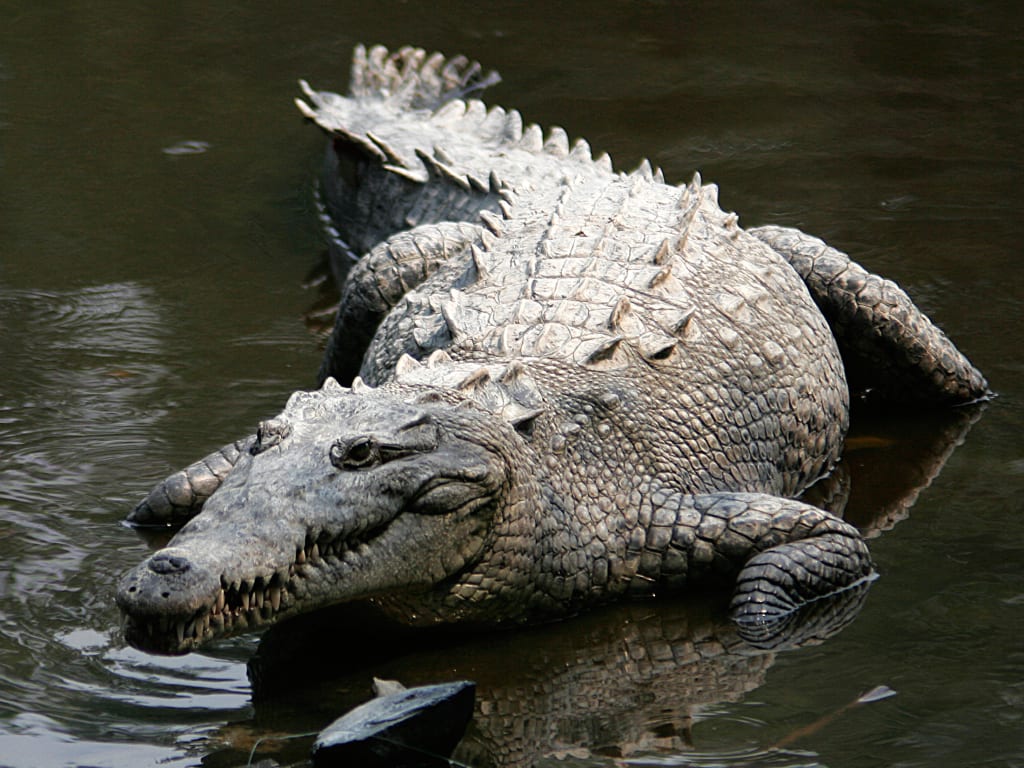
If you had the chance to travel back in time, you wouldn't recognize many animals, but you know that alligators, caimans, alligators, crocodiles, crocodiles, and other related species evolved. Prize little has changed since the age of the dinosaurs. Why did they stop evolving? There were crocodiles that gave rise to various ancestors. All these ancestors are collectively called crocodiles. Many crocodiles first appeared in the late Mesozoic and early Cretaceous periods, and there were all kinds of crocodiles, from terrestrial to aquatic to even vegetarian. Yes, some species looked a lot like modern relatives. The only difference was that it was twice as tall as a giraffe. There have been a few smaller bureaucracies with mammals-like enamel and Crocs with tusks and first-rate armor, so where did all that range move the way, they did? Crocs We recognize nowadays control living life nicely. All of it has to do with the attitude crocodilians have developed.We commonly see Evolution as a sluggish adjustment over an extended period. However, scientists proposed an idea that asserts Evolution doesn't constantly act like that. The name of this theory of The Punctuated equilibrium sounds to me like a damaged eardrum. However, in keeping with it, there have been lengthy durations in which no adjustments took place in any respect. There are likely to have been a few mutations. However, they failed to do the unexpected thing that made the species evolve quickly. It becomes a maximum probable speedy alternative inside the surroundings. So shall we embrace certain species of crocodiles that lived in deepwater rivers for a long time? They have been flawless in those surroundings. There has been no want to alternate as part of the river device ran dry. The crocodiles who lived in that region needed to get used to new conditions. Isolated from their relatives, they had to evolve to survive, so new species were born.Some species of crocodiles have unlocked the secrets of survival. They managed to get their hands on the famous asteroid or something that wiped out the dinosaurs 65 million years ago, and they had long, elongated noses filled with cone-shaped tea leaves, long flexible tails, eye-protecting membranes, and spikes. An armored body of modern crocodiles, like their ancestors, still had longer hind legs than their front legs and had to find ways to avoid inhaling water as they evolved into aquatic animals. So they had a second leg that helped separate air from water and evolved the second palate. The ancestors of today's crocodiles have evolved so that their descendants have not reached a stage where they do not need to change and may look the same for years and centuries to come looking at the mammals that have preserved their appearance the longest. The platypus and the opossum are fortuitous platypus lineage from an ancestor that, like other mammals, forged its path about 150 million years ago. A British paleontologist notes that the platypus has some primitive functions you can see in fossils and the present-day anatomy. The platypus, even so, lays leathery eggs, and their milk oozes out of mammary gland ducts, and amasses grooves on their pores and skin.This isn't something normal for mammals that developed after this creature's. Most effective platypus and species of Echidna can boast this superpower amongst present-day mammals. Scientists have been capable of discovering platypus fossils through their duck-like payments and precise Jaws. The oldest ones appear to be the platypus and lived for around 1/2 million years. In the past, there were greater than 60 species of possum snails. They stay withinside the Americas, Australia, New Zealand, Tasmania, and New Guinea. They are a form of marsupial who bring their offspring in a pouch. They have infrequently modified their outside frame shape compared to their ancestors over sixty-five million years ago. Mammals got here at the same time as dinosaurs. Scientists observed many fragments of mammals from the Mesozoic Era. They concluded that the earliest marsupials appear to be individuals of the present-day opossum family. Those cities proportioned such development with their ancestors from tens of thousands and thousands of years in the past that they're ever so often referred to as residing fossils. One component that likely helped them live so nicely because they were not overfastidious eaters of insects, trash, and rotting fruit.They do not think about what is in their mouth.This is why opossums stay in several habitats and may adapt to a continuously converting international. The cow shark is the evolution champ among all sharks. The residing shark species and the well-known fantastic white, can boast 5 gills at the point. However, four species of cow sharks have six or seven gills memento from their ancestors from tens of thousands and thousands of years. In the past, scientists typically examined the sharks of the remote beyond the use of their teeth. When you consider that sharks do not have bones or cartilage, this is what's left of them primarily based totally on their findings. Paleontologists have confirmed that cow sharks have existed for a minimum of one hundred seventy-five million years. They seem like they used to have their bladed teeth to feed on something they might locate inside the ocean. The deep sea cleanup team's horseshoe crab appearance displays prehistoric survivors. They may be shield-like carapaces, and lengthy backbone tails are the pleasant evidence that those creatures as we understand them today were around for tens of thousands and thousands of years . Around one hundred fifty million were kept with scientists modified in comparison to their ancestors and misplaced the rest of double branched legs used each for respiration. They shifting round present-day horseshoe crabs use their segmented legs on the front for on foot, and feeding their rear legs are chargeable for respiration as they shape flattened gills. This is no longer a simple alternative over tens of thousands and thousands of years of direction. However, the modifications are surely insignificant in the massive evolution. This creature has survived numerous mass extinctions, the upward push and fall of the non-avian dinosaurs, and the transferring of continents which had modified the arena. However, now no longer those seabed crawlers. It seems like they may be geared up to hold on for another hundred million years or so, and perhaps their attitudes will evolve at the end. This time they may nevertheless be crabby in the meantime. Those men won't have the most staggering appearance and are not precisely famous amongst human beings. However, lies can inform their personal survival stories, and it might be one of the longest on earth where their fossils are uncommon. So scientists have been quite fortunate to show a forty-four million year antique feather Laos that looks like lies that also stay on Water. Birds' plume lightning is likely to be older than that. Researchers examined the genetic composition of the located fossils and dwelling lives. It looks as if feather lives cut up from the family around a hundred and fifteen to one hundred thirty million years. In the past, while feathered dinosaurs have been nonetheless rocking the plant, the fact lice had tailored to early birds and feather-protected Dinos. They needed to alternate themselves to get used to the brand new hosts as soon as their preceding landlords terminated the agreement. The survival Champions amongst flora are horsetails. You may discover them developing in patches alongside move facets and different wet habitats a dino might combine with this plant. The simplest exception for a motif horsetail reproduces through sports not like all different flora that ditched this approach in desire of seeds hundreds of thousands of years ago. In the past, due to this duplicate approach of horsetail, it is almost not possible to do away with spots wherein they shouldn't be developing any other exciting truth. Approximately horsetails were once so large that they populated complete forests earlier than the bushes. We understand nowadays that they make tons of decisions. We will now discover that our planet certainly comes from the remnants of horsetails.
About the Creator
Enjoyed the story? Support the Creator.
Subscribe for free to receive all their stories in your feed.
Comments
There are no comments for this story
Be the first to respond and start the conversation.