
The Everest Myth We Keep Telling Ourselves
China owns the north slope. Nepal owns the south. So why does the world picture the whole mountain as one country’s?
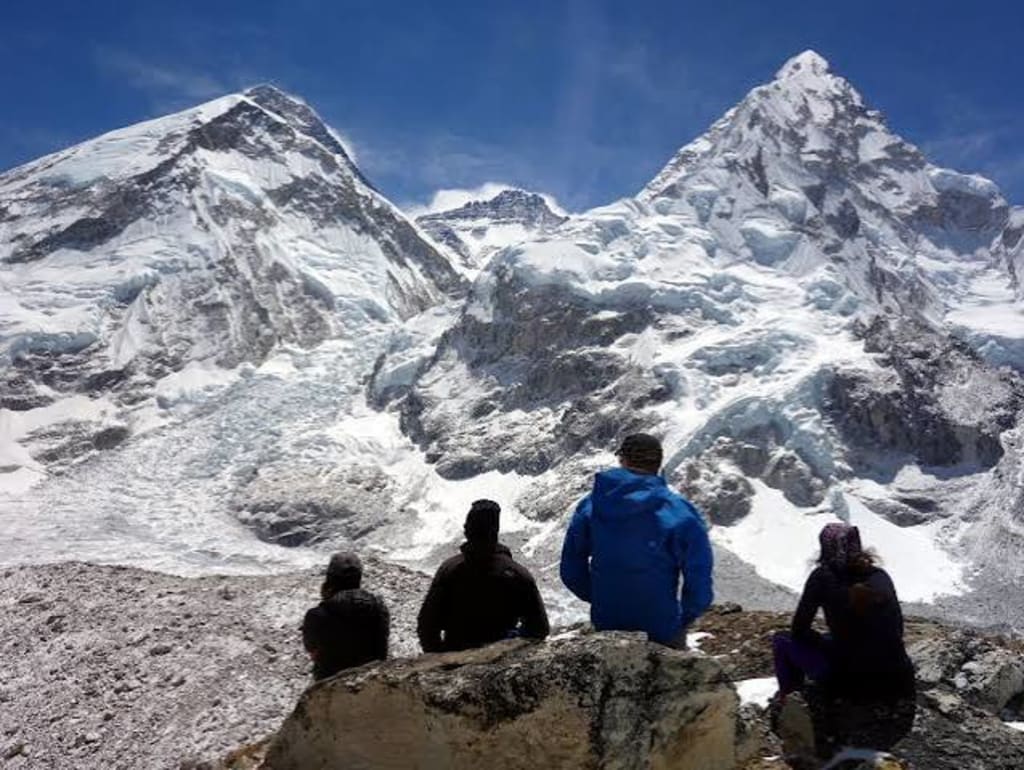
Who Owns Mount Everest?
1
On October 5, 1961, in Beijing, King Mahendra of Nepal and Chinese Premier Zhou Enlai signed the Sino-Nepalese Boundary Treaty. Article Two stated that the boundary line passes through the summit of Mount Everest. The north slope belongs to China. The south slope belongs to Nepal.
The day before the signing, the two sides were still arguing over the mountain’s name. The Chinese side wanted “Qomolangma.” The Nepalese side wanted “Sagarmatha.” The treaty included both names, one after the other in parentheses. From the first day of its legal existence, the mountain was never the exclusive property of either side.
But law is law. Perception is perception.
2
The international mountaineering community keeps a record called the Himalayan Database. As of 2025, climbers had summited Everest 9,887 times from the Nepalese south side. They had summited 3,850 times from the Chinese north side in Tibet. The south side accounts for 69 percent of summits. The north side accounts for 31 percent.
In spring 2025, Nepal’s Department of Tourism issued 456 Everest climbing permits. China issued 48.
Those numbers reflect route choices. Commercial climbing on the south side is more developed. There are more Sherpa guides. Rescue services are better. Permit fees are lower. For most commercial climbers, the south side is the practical choice.
It is like choosing a gate at a park. More people using the south gate does not make it the only real entrance. But when enough people use it, people start to assume it is the entrance.
3
Nepal needs Everest far more than China does.
The country has more than 30 million people. Its total GDP is less than one percent of China’s. Its industrial base is weak. Its farms depend on the monsoon. Its only global calling card is Everest. Overseas ads from the Nepal Tourism Board almost always feature the mountain. Kathmandu’s airport is named Tribhuvan International Airport, but tourism brochures print Everest.
In 2019, the Nepalese government launched “Visit Nepal 2020.” The slogan was “Lifetime Experiences.” The first shot in the promotional video was sunrise on Everest. That year, the CEO of the Nepal Tourism Board said at a press conference: “Everest is in Nepal, but is the pride of the world.”
That line is clever. It stresses sovereignty and then invites the world in. It does not say Everest belongs to Nepal. It does not say Everest belongs to China. It says Everest is in Nepal but belongs to the world. It holds the line without giving offense.
China does not need that approach. China has the Great Wall, the Forbidden City, the Terracotta Army, the Yangtze, the Yellow River, pandas, and high-speed rail. Everest is one card in a large deck. When foreigners think of China, they think of Beijing, Shanghai, kung fu, and dumplings. Everest does not make the top five.
When a country has too many calling cards, no single card stands out as much. That has advantages and disadvantages. Cultural output is diverse. But the perceived ownership of specific places can blur.
4
Names are the quietest claim of ownership.
Internationally, the most common name for this mountain is “Mount Everest.” That name comes from George Everest, the 19th-century British Surveyor General of India. In 1865, the Royal Geographical Society adopted the name. Everest himself never saw the mountain. He never asked for the honor.
Nepal calls it “Sagarmatha,” meaning “forehead of the sky.” China calls it “Qomolangma,” from Tibetan, meaning “goddess peak.” Three names, three stories.
International media use “Everest.” Climbers use “Everest.” Travel guides write “EBC” for “Everest Base Camp.” That vocabulary places the Nepalese south side at the center. Foreigners do not need to know the north slope is in China. They only need to know that going to Everest usually starts with a flight to Kathmandu.
Names matter. Who defines a mountain’s name, and who spreads it, shapes which country the public connects with it. It is like changing “Hanyang” to “Seoul.” When the name changes, perception follows.
5
Tourists vote with their feet.
Each year, about 45,000 international tourists enter the Everest region from Nepal. About 13,700 enter from China’s Tibet side. If a foreigner wants to see Everest, 70 to 75 percent will choose Nepal.
Why? The Nepalese side offers a better experience.
Altitude is one reason. The south side starts low. From Lukla, the elevation is 2,800 meters. The route passes through forests, waterfalls, grasslands, and glaciers before reaching Everest Base Camp at 5,364 meters. The altitude change is dramatic. The vegetation is varied. The views hit hard. The Chinese side in Tibet is already on the plateau. From Lhasa, the elevation is 3,650 meters. The route is high-altitude wilderness. The scenery is vast but repetitive.
Comfort is another reason. The Nepalese side has a mature EBC trekking route. Tea houses, guides, porters, medical care, and internet service are all in place. If you are tired, you can get hot tea. If altitude sickness hits, you can get oxygen. If you want a shower, you can find hot water. On the Chinese side, the journey from Lhasa to Everest Base Camp is long. Altitude sickness is a serious risk. Prices are high. Services are limited.
Paperwork matters too. Foreign tourists entering Tibet need a Tibet Travel Permit. To reach Everest, they also need an Alien Travel Permit. They must join a tour group. Vehicles are restricted. Costs are high. Nepal’s visa is easy. Trekking is free. Prices are friendly.
Climbing difficulty also differs. Commercial climbing on the south side is more mature. Sherpa guides have more experience. Rescue systems are better. The north side is technically harder in some sections. Permits are fewer. Costs are higher.
These differences shape perception. People treat the entrance, the services, and the route they use as the mountain’s home. That is not a legal judgment. It is a psychological fact.
6
So why do many people in China feel that “the whole world thinks Everest belongs to China”?
Domestic media narratives are powerful.
When a Chinese climbing team summits from the north side, the headline says, “Our national climbing team successfully summits Everest.” When a Chinese survey team measures Everest, the headline says, “China accurately measures the height of Everest.” When China builds a 5G base station on Everest, the headline says, “Chinese 5G signal covers Everest.” When Everest Base Camp is moved back for ecological protection, the headline says, “China’s Everest ecological protection upgraded again.”
Those headlines are not wrong. The north slope is inside Chinese territory. China has sovereignty over the north slope. But years of reporting that use “China’s Everest” as the subject lead domestic readers to think Everest belongs to China.
China also has many famous sites. Everest is not the only one. When Chinese people think of national symbols, they first think of the Great Wall, the Forbidden City, the Yangtze, and the Yellow River. Everest is one among many. Nepal has almost no other international calling card of similar weight. Nepal puts all its branding into Everest. China does not.
There is also emotional projection. Everest is the world’s highest peak. It stands for height, limits, and glory. Chinese people naturally want it to belong to China. That feeling is understandable. It cannot replace facts.
7
Public perception and sovereignty are separate.
Public perception of Everest is vague. A British survey years ago found that one-third of adults thought Everest was in Europe. That alone shows it is unrealistic to expect ordinary foreigners to know the geography. Many Americans cannot say where their own capital is, let alone that Everest sits on the China-Nepal border.
Nepal has long treated Everest as a national symbol. Most international tourists approach Everest from Nepal. To say “the whole world thinks Everest belongs to China” is too optimistic.
Sovereignty is different. China’s sovereignty over the north slope is confirmed by international treaty. It is secure. Nepal’s sovereignty over the south slope is equally clear. The two countries have no fundamental dispute over Everest. Sovereignty does not depend on a global popular vote. It depends on treaties, maps, border management, and effective control.
China does not need to worry about its sovereignty because more foreign tourists go to Nepal. Nepal will not object because Chinese media call it “China’s Everest.”
The mature position is this: defend sovereignty firmly, and see international perception clearly.
8
If we want the world to understand Everest more accurately, arguing and saving face will not help. Long-term narrative, service, and management will.
First, acknowledge that Everest is a boundary peak between China and Nepal. In international communication, do not avoid the fact that it is shared. Emphasize that the north slope is in China and the south slope is in Nepal. This follows international law and looks confident.
Second, use both the international name and the local names. In international communication, use “Mount Everest / Qomolangma / Sagarmatha” together and explain the relationship. Let the world know that Everest has more than one name.
Third, improve tourism and mountaineering on the Chinese side. Improve transportation, accommodation, services, environmental protection, and rescue systems. Lower unreasonable barriers. Attract more international tourists to the north side. Experience is the best communication.
Fourth, respect Nepal’s Everest brand. China and Nepal can cooperate on “cross-border Everest tourism,” “Everest scientific research cooperation,” and “Everest ecological protection.” They do not need to fight over who better represents Everest. Cooperation earns more respect than competition.
Fifth, make domestic narratives more accurate. Media can use “China-Nepal boundary peak” and “China’s north slope.” This inspires pride and avoids the false impression that Everest belongs entirely to China.
9
Who owns Everest?
Legally, it belongs to both China and Nepal. In perception, Nepal’s brand covers it more heavily. Emotionally, Chinese people see it as a pride.
These three things are not contradictory.
The claim that “the whole world thinks Everest belongs to China” is a false premise. International perception of Everest is vague. In many contexts, it leans toward Nepal. That does not affect China’s secure sovereignty over the north slope.
Sovereignty depends on treaties. Perception depends on narrative. Instead of agonizing over whether the world thinks Everest belongs to China, it is better to let the world know the facts. Mount Everest is a boundary peak between China and Nepal. The north slope is in China. The south slope is in Nepal.
China can use better services, a more open attitude, and longer-term management to let the north slope of Everest be seen, understood, and respected by more people.
About the Creator
Jin
Writer of reamstories
https://reamstories.com/jin
Enjoyed the story? Support the Creator.
Subscribe for free to receive all their stories in your feed. You could also become a paid subscriber, letting them know you appreciate their work.
Comments
There are no comments for this story
Be the first to respond and start the conversation.