
The Enigmatic Riddle of Advanced Ancient Civilizations and Cosmic Catastrophes
Will history repeat itself?
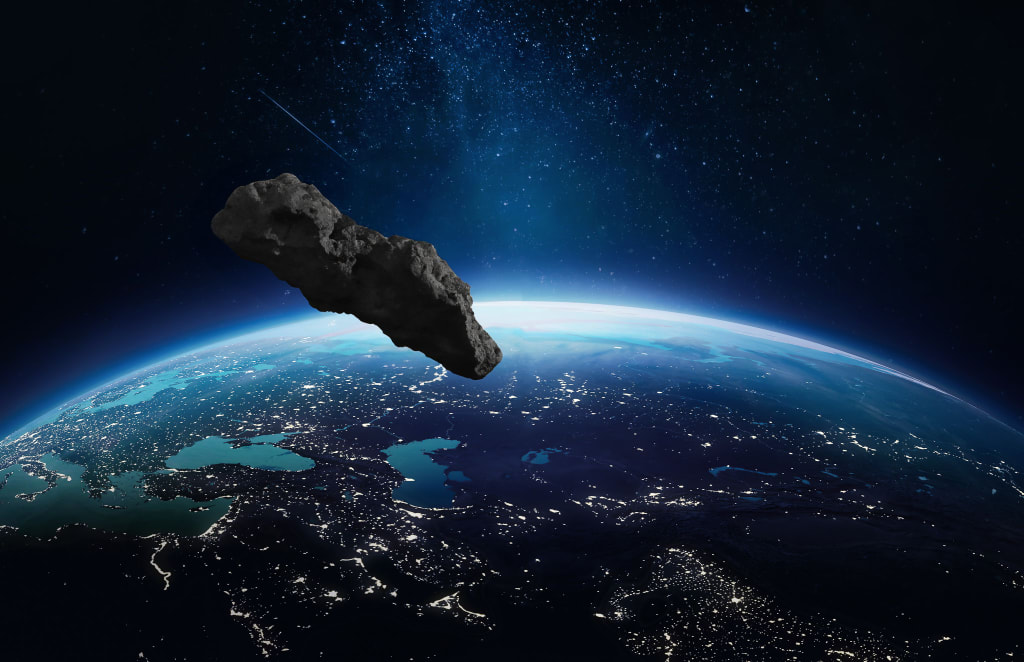
The belief in advanced ancient civilizations and cataclysmic cosmic events has captured the imagination of many over the years. While some dismiss these notions as mere fantasy, there are those, like renowned archaeologist and author Graham Hancock, who passionately advocate for the existence of highly advanced societies in the past and impending cosmic dangers. In this article, we will delve into the intriguing theory put forth by Hancock and the recent scientific support it has garnered.
Graham Hancock's Theory
In 2015, Graham Hancock published his book "Magicians of the Gods," presenting the idea that approximately 13,000 years ago, a sophisticated human civilization met a tragic end due to a comet impact. This event supposedly left only a small group of survivors to carry on the knowledge and traditions of their lost world.
Hancock's book, though met with criticism and skepticism, brought forward a compelling piece of evidence from Gobekli Tepe in Turkey. He argued that this archaeological site contained the "most ancient work of monumental architecture on earth." One of its pillars, known as the vulture stone, held astonishing carvings and inscriptions depicting astronomical events, animals, and possibly a comet impact. This finding challenged the conventional understanding of prehistoric societies.
Recent Validation
For two decades, Hancock's theories faced rejection from the academic community, but recent developments have reignited the debate. Researchers and experts from the University of Edinburgh's School of Engineering have now confirmed that the carvings at Gobekli Tepe are, indeed, indicative of a comet strike around 10,950 BC.
The key to this validation lies in the intricate representation of constellations on the pillar. These constellations match those of 10,950 BC, indicating a profound knowledge of celestial events. This level of sophistication contradicts the prevailing view that people of that era were merely hunter-gatherers.
Cataclysmic Event and Common Myths
Hancock contends that the Younger Dryas period, characterized by a 1500-year cold spell after 11,000 BC, resulted from a comet impact. This theory aligns with the recurring theme of global myths and legends describing catastrophic events that led to the destruction of civilizations. Evidence like platinum deposits and tiny diamonds found in North America supports Hancock's belief in a significant cosmic impact.
The Advanced Civilization Hypothesis
Hancock's theory doesn't stop at the comet impact; he posits that there was a highly advanced civilization predating this event. This civilization possessed advanced mathematical and architectural knowledge, which enabled them to create structures like Gobekli Tepe. The question arises: how did people, considered primitive by conventional standards, have access to such advanced knowledge?
The Looming Cosmic Threat
Hancock's theories extend beyond the past and into the future. He believes that the comet that struck Earth in 10,950 BC was a fragment of the Taurid meteor stream, which harbors a potential disaster. Astrophysicists propose that a superheated rock within this meteor stream contains boiling tar that may one day explode, causing catastrophic damage to our planet.
Considering that Earth is set to cross the Taurid stream in 13 years, Hancock warns of a looming catastrophe that could annihilate all life on Earth. This adds urgency to his claims, even as they continue to provoke controversy and skepticism.
Conclusion
The belief in advanced ancient civilizations and cosmic catastrophes is not a new concept, but Graham Hancock's theories have reignited interest in these ideas. Recent scientific support for his claims, particularly the Gobekli Tepe findings, has added credibility to his arguments. While the existence of advanced civilizations and impending cosmic threats remains a matter of debate, it is evident that Hancock's theories challenge our understanding of human history and the mysteries of our universe. The question remains: is there more to our past and future than we currently comprehend?
Comments
There are no comments for this story
Be the first to respond and start the conversation.