
The Enigmatic Jormungandr Walhallaensis: Unveiling a Sea Monster from Norse Myth and Its Prehistoric Counterpart
From Myth to Fossil: Revealing Jormungandr Walhallaensis and Its Mysterious Prehistoric Kin
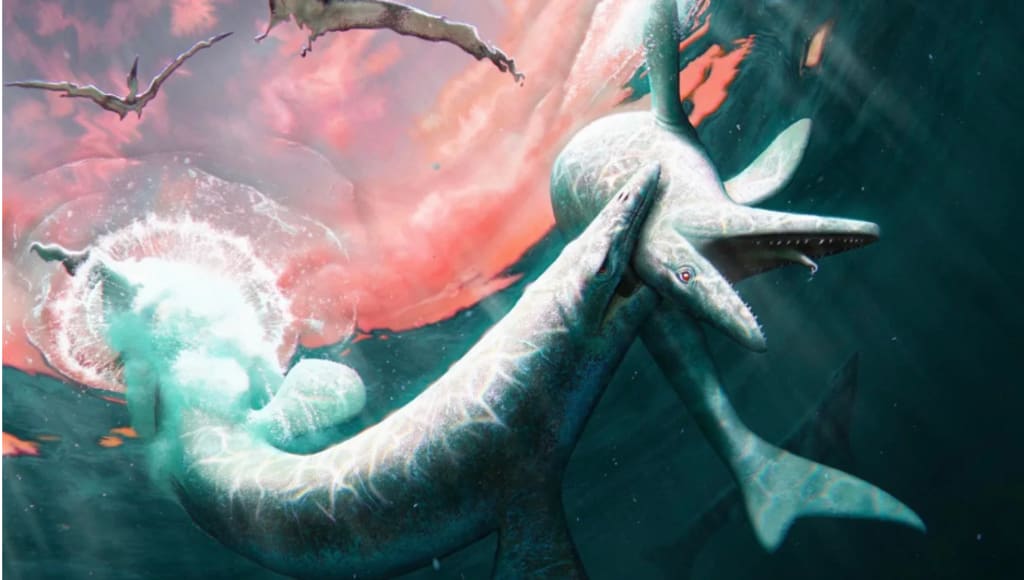
The legends of Norse mythology are replete with epic tales of gods, giants, and mythical creatures. Among these legends, one of the most iconic is that of Jormungandr, the colossal sea serpent known as the Midgard Serpent, believed to be the offspring of the trickster god Loki. According to the ancient Norse tales, Jormungandr was so immense that it could encircle the entire globe. While the realm of mythology may seem far removed from the world of science, it has intriguingly inspired the naming of a newly discovered species of prehistoric marine reptile. This article delves into the fascinating story of Jormungandr Walhallaensis, a recently described mosasaur species, and explores the mysteries it unravels about ancient sea monsters and evolution.
The Mythical Link: Jormungandr of Norse Legend
To understand the significance of Jormungandr Walhallaensis, we must first journey into the realms of Norse mythology. In this ancient mythos, Jormungandr was a sea serpent of immense proportions, a child of Loki, the mischievous god of trickery. The legends portray Jormungandr as a creature of such colossal size that it could encircle the entire world, lurking in the depths of the ocean, a formidable and awe-inspiring presence. This legendary serpent, often referred to as the Midgard Serpent, has remained etched in Norse mythology, captivating imaginations for centuries.
In a remarkable fusion of myth and science, the legacy of Jormungandr now finds a place of honor in the world of paleontology, where the sea serpent's name graces a newly discovered species of marine reptile: Jormungandr Walhallaensis. This mythical connection becomes even more profound when one considers the origin of the name. The fossils that led to the revelation of this unique species were found in the vicinity of the North Dakota town of Walhalla. The town's name itself is steeped in Norse mythology, as it derives from Valhalla, the majestic feasting hall where fallen heroes were said to gather in the afterlife. In a fitting tribute to this mythological connection, the scientists christened the newly discovered mosasaur "Jormungandr Walhallaensis." This name pays homage to both Norse mythology and the precise location of the fossil's unearthing.
The Enigmatic Fossil: NDGS 10838
The newfound species of mosasaur, Jormungandr Walhallaensis, may have a grand name, but its fossil itself bears a less poetic designation: NDGS 10838. Nonetheless, this fossil is a remarkable find that offers a tantalizing glimpse into the distant past. It comprises a near-complete skull, boasting distinctive features such as a bony ridge above the eyes, jaws, and a selection of skeletal elements, including 11 ribs and 12 vertebrae. These fragments provide critical clues about the anatomy and characteristics of this ancient marine reptile.
When this creature roamed the prehistoric seas approximately 80 million years ago, it would have measured about 24 feet (7.3 meters) in length, a formidable predator with a slender face that set it apart from its mosasaur counterparts. To offer a more relatable image, lead study author Amelia Zietlow, a paleontologist and doctoral candidate at the American Museum of Natural History's Richard Gilder Graduate School in New York City, described Jormungandr Walhallaensis as resembling most mosasaurs but on a much grander scale. She likened it to a colossal version of a Komodo dragon, measuring 30 feet in length, equipped with flippers and a shark-like tail.
Amelia Zietlow's description illuminates the awe-inspiring nature of these prehistoric sea monsters, sparking imaginations and transporting us back to a time when these formidable predators ruled the Cretaceous seas. However, the uniqueness of Jormungandr Walhallaensis becomes more apparent when we delve into the intricate details of its anatomy.
An Unusual Specimen: Puzzling Features
The discovery of Jormungandr Walhallaensis by the North Dakota Geological Survey, a state agency dedicated to the study of geology and public awareness about minerals and fossils, in 2015 was a stroke of luck and an excellent example of citizen science in action. The fossil, known as NDGS 10838, was stumbled upon by an individual who had participated in one of the agency's programs, enabling them to recognize the object as a fossil and promptly alert the agency officials.
Upon close examination of the fossilized skull, scientists quickly realized that they had something extraordinary in their hands. The somewhat rectangular ear bones of Jormungandr Walhallaensis bore a resemblance to those of Mosasaurus, a genus known for its colossal mosasaur giants. However, as they delved deeper into the details, the shape and the high number of teeth closely resembled a genus of smaller mosasaurs, particularly Clidastes. Moreover, the angle and the quantity of teeth on the bony palate at the roof of the mouth were unlike anything observed in either of these two mosasaur groups.
Amelia Zietlow clarifies, "He’s got highlights that see like Mosasaurus, in a few ways like Clidastes. And then in other ways, they’re completely unique to this individual." This intriguing combination of characteristics convinced the researchers that they had stumbled upon a new genus and species. It is essential to acknowledge that fossilization processes often distort bone structures, raising the possibility that the peculiarities observed in the fossil were shaped by natural processes after the creature's death. This possibility was recognized by paleontologist Takuya Konishi, an associate professor at the University of Cincinnati's Department of Biological Sciences.
The complexity of classification becomes apparent when we consider the evolutionary tree, revealing a phenomenon known as a polytomy. In this case, Jormungandr Walhallaensis and Clidastes were closer to each other than to any other group. However, the exact nature of their relationship within this group remains uncertain. Additional fossils of this newly discovered species could provide further insights into Jormungandr Walhallaensis's position in the mosasaur family tree, as suggested by Konishi, a specialist in mosasaur evolution who was not involved in the study.
Uncovering Bite Marks: Clues to the Past
The fossil of Jormungandr Walhallaensis holds more than just clues about its anatomy and classification. Upon closer examination, intriguing details emerge in the form of puncture marks and scratches that mar the vertebrae. These have been identified as bite marks, which do not seem to have healed, suggesting that they were inflicted toward the end of the creature's life or were the result of scavengers tearing apart the mosasaur after its demise.
Clint Boyd, a senior paleontologist at the North Dakota Geological Survey and a curator of the North Dakota State Fossil Collection, is poised to investigate further questions regarding these bite marks. He aims to determine whether they resulted from an attack that Jormungandr Walhallaensis survived, shedding light on the creature's final moments. These bite marks not only add an air of mystery to the story but also underscore the harsh realities of life in the ancient oceans where survival was a constant struggle.
The World of Mosasaurs: Apex Predators of the Cretaceous Seas
As we journey deeper into the story of Jormungandr Walhallaensis, we must acquaint ourselves with the world of mosasaurs, the remarkable group of apex predators that once reigned supreme in the world's oceans during the late Cretaceous Period, spanning from approximately 98 to 66 million years ago. Although they coexisted with the iconic dinosaurs, mosasaurs share a closer evolutionary kinship with modern lizards and snakes, making them a unique and intriguing subject of study in the realm of paleontology.
These incredible creatures came in a variety of sizes, from relatively small specimens to colossal giants belonging to the Mosasaurus genus, which could reach nearly 60 feet (18.2 meters) in length. While mosasaur fossils are relatively abundant, our understanding of the full extent of their diversity is far from complete, as explained by Takuya Konishi, a noted expert in the field. The discovery of new mosasaur specimens, such as Jormungandr Walhallaensis, contributes significantly to unraveling the complex evolutionary history of these charismatic apex predators of the Cretaceous seas.
Amelia Zietlow's work as the lead author of the study has played a pivotal role in unveiling the rich anatomical details of Jormungandr Walhallaensis. Her meticulous efforts have not only expanded the repository of exceptional data but have also highlighted the importance of comprehensive documentation of fossils. As we delve deeper into the evolutionary history of mosasaurs, it becomes evident that Jormungandr Walhallaensis represents only a fraction of the mysteries that await discovery in the fossil record.
A Remarkable Transition: From Land to Sea
The story of mosasaurs is not just about apex predators dominating the ancient seas but also about a remarkable transition from land to sea. These creatures, like many other reptiles and mammals, including plesiosaurs, whales, sea turtles, and seals, adapted to ocean life after their distant tetrapod ancestors had already left the seas for the land.
What sets mosasaurs apart is the sheer abundance of their fossils, particularly in the United States, where thousands of specimens have been discovered. This wealth of fossils makes mosasaurs a crucial group for studying broad evolutionary questions and gaining a statistical perspective on the evolutionary processes that shaped these creatures. Amelia Zietlow emphasizes the significance of these findings, shedding light on the rich fossil record of mosasaurs that remains to be explored.
Despite the wealth of specimens, many mosasaur fossils have not been thoroughly documented, and in some cases, their illustrations are sparse. This gap in knowledge serves as a reminder of the importance of addressing this discrepancy by revisiting known specimens and embracing new discoveries. Amelia Zietlow's commitment to providing detailed and comprehensive figures of Jormungandr Walhallaensis offers future researchers a valuable resource for understanding these ancient creatures and discerning the subtle differences between them and other species.
Conclusion: Unearthing Mysteries from the Deep Past
Jormungandr Walhallaensis is a remarkable addition to the annals of paleontology. This newfound mosasaur species, named after the legendary Norse sea serpent, has left an indelible mark on the scientific community. Its unique characteristics and the mysteries surrounding its bite marks offer insights into the world of ancient sea monsters and the challenges they faced.
The world of mosasaurs, a group of apex predators from the Cretaceous seas, remains fertile ground for scientific exploration, with countless fossils awaiting in-depth study. Amelia Zietlow's work as a paleontologist and her meticulous documentation of Jormungandr Walhallaensis contribute significantly to our understanding of these creatures and the evolutionary processes that shaped them.
As we peer into the depths of the past, we find that the line between mythology and science can blur, creating a bridge that connects our modern world with the legendary tales of ancient civilizations. In Jormungandr Walhallaensis, we encounter a creature that exemplifies this connection—a prehistoric sea monster inspired by the myths of old, yet grounded in the reality of the distant past, waiting to reveal more secrets as we continue to explore the mysteries of Earth's history.
About the Creator
Raiana Jalal Oyishee
Hi, this is Raiana Jalal Oyishee. As a Vocal writer, I offer diverse themes, thought-provoking content, and evocative storytelling. Join my community for insight, inspiration, and captivating narratives. Explore my Vocal work today.
Enjoyed the story? Support the Creator.
Subscribe for free to receive all their stories in your feed.
Comments