
The Death of the Sun
What 300 Times its Size Means for Our Solar System

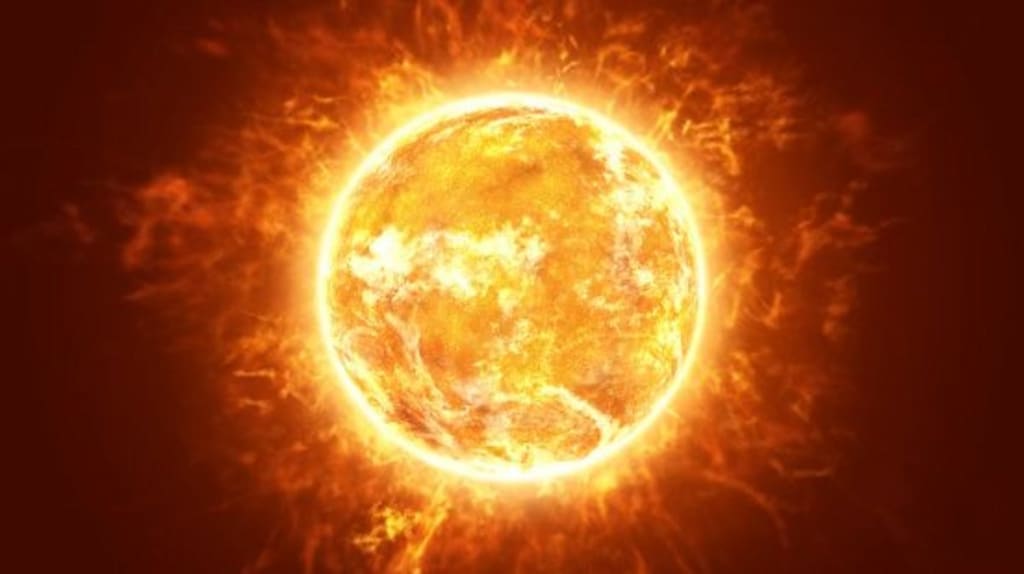
A recent study focused on nearly 200 giant stars. These stars are nearing their dramatic exit. Scientists have digested this data and learned some intriguing things about our sun’s future. Spoiler alert: it’s going to balloon to about 200 to 300 times its current size. Talk about a blow-up!
Before we dive into the doom and gloom, let’s get some basics down on star sizes. Huge stars puff up like balloons because they’ve run out of nuclear fuel. They stop burning hydrogen in their cores, which is kind of like running out of gas on a road trip. Eventually, the core heats up enough for the next fusion party—hello, helium burning! It’s a fiery farewell!
The stars in this study were either in the hydrogen shell burning phase or the helium core burning phase. And guess what? Giant and super giant stars only make up less than 5% of all stars. But don’t let that fool you! They’re super bright and really stand out. In fact, on a dark moonless night, about a third of the stars you see are giant or super giant. Talk about being the loudest in the room! This study is like a treasure map for astronomers. Armed with this info, they’ll figure out the size and temperature of these massive stars. It’s like turning on the lights at a party to finally see who’s who! Plus, they'll know a star’s true color and can measure its radius. Stars better watch out; they’re about to be measured and evaluated like they’re on a cosmic runway!
Isn’t it fascinating? But it does make you wonder what our sun will be like when it gets old and cranky. Here’s the scoop: First, it will start burning its hydrogen shell and just balloon up. Then, during its helium core burning phase, it’ll take a little breather and shrink a bit. After a few hundred million years, it will turn into a giant star—like 200 to 300 times bigger than it is now. Talk about a glow-up! But don’t get too cozy; eventually, the sun will expand so much that it’ll just poof away. Guess it just couldn’t take the heat anymore!
So, what happens when the sun decides to take a permanent vacation? Scientists have some wild guesses, even if we won’t be around to witness the show. They think the sun will turn into a planetary nebula. That sounds fancy, right? A planetary nebula is just a bunch of gas and dust floating in space, leftovers from a star that’s running out of steam. They got their name because, back in the 18th century, some telescope users thought they looked like planets. Spoiler alert: they don’t actually have anything to do with planets! The funniest part? Astronomers figured out they can use how bright these nebulae are to measure how far away they are. It’s like interstellar distance measuring with a cosmic flashlight—pretty neat, right?
Scientists say the sun is the smallest size a star can be to make a visible nebula. Go smaller, and poof! No nebula for you. If a star is up to three times heavier than the sun, expect a brighter show. At 4.6 billion years old, our sun has about another 10 billion years left in its life. But here’s a kicker: it’s getting brighter each year. This might not seem like a big deal now, but in about a billion years, it’ll be too bright for life on Earth. Goodbye oceans, hello desert planet!
So, if we don’t find a way to hop off this rock, humanity has about a billion years before we’re toast. Will Earth still be hanging around when the sun turns into a pile of dust? Who knows? But one thing’s for sure: before that happens, Earth will probably be scorched and lifeless, like a cold piece of toast with no atmosphere or oceans.
We can only hope the sun's outer layers don’t decide to get too cozy with Earth. If they do, we might just spiral right into it! And even if Earth survives the sun's giant phase, it’ll be taking a joyride around a hot white dwarf. Talk about a hot mess!
The sun will eventually shrink. It will cool down and dim until it becomes a black dwarf. When that happens, Earth’s orbit will loosen like a poorly tied shoelace. Our planet will start to spiral toward the faded sun. But here’s the twist: the sun doesn’t get the final say in Earth’s fate. Gravity keeps planets in line, but it also plays matchmaker, pulling them close and occasionally causing orbital drama. This can lead to a chaotic solar system that might boot out planets, including Earth. So, who knows? In the next 5 billion years, things could get pretty wild before our sun turns into an overcooked red giant!
Stars usually hang out pretty far from our solar system, but there's a chance one might decide to drop by in the next billion years. Even a little star or a rogue black hole could throw off our planet's groove if it gets too close. But don’t panic! The odds are low because of all the empty space between stars. Plus, our sun is a lone wolf, so no hitchhiking with nearby buddies for us.
Now, some stars do have friends. Take Castor, for instance. It's a dazzling system with six stars and one of the brightest spots in the night sky. Humans have been swooning over Castor for centuries, but it took telescopes and spectroscopes to really figure out what was going on. Even with a simple telescope, you can see that Castor has two main stars—Caster A and B—doing their cosmic dance around each other. These stars are bigger than our sun and take a whopping 467 years to finish their orbit. Talk about a long-term relationship!
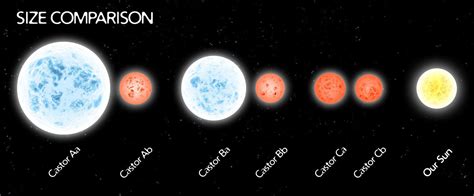
Caster is made up of six stars. The biggest star, Caster AA, is about twice the size of our sun. The smallest? It’s only five times the sun's mass. If humans want to stick around for billions of years, we might need to pack our bags and find a new home in the universe. Sounds like a plot twist from a sci-fi movie, right? But hey, it could be our reality one day! Luckily, NASA is already on the case. They’ve found two new planets, toi700e and toi700d. Who knows? With a little luck, they might just be the next vacation spots for humans! Just don’t forget the sunscreen!
Toi700e is an optimistic zone. It might have water. It could even have an atmosphere! Toi700d is in the conservative habitable zone. Scientists are still scratching their heads about it. But hey, we’ll take any good news.
Now, before you start packing your space suitcase, there’s a tiny issue. How on Earth do we get there? John Glenn took months just to spin around our planet three times! Looks like we need to hit the gym for some astronaut training.
But don’t worry! At least we have some fun options for our future intergalactic vacation. Space beach, here we come!
Wouldn't it be cool if we could travel through time? Just imagine seeing what our solar system looks like in billions of years! Well, there’s this American physicist named Ron Mallet who has an interesting theory for time travel. He says we can use light—yep, that thing that makes your late-night fridge raids possible! Mallet’s idea involves a spinning cylinder of light. Think of it as a cosmic bubble in a swirling soup! He believes that the right-shaped cylinder could send things scooting back and forth in time. Now, Mallet is trying to get some cash for experiments. But some scientists think his theory is as wild as a cat in a room full of laser pointers. They don’t think it’s worth testing.
On the other hand, Einstein claims we might hop through time just by moving really fast. Talk about needing a caffeine rush! The way we experience time can actually change based on our speed. If you go fast enough, time slows down—kind of like the feeling you get when you hit the snooze button one too many times. Astronauts, for example, age a smidge slower than folks on Earth. This is crucial for things like GPS. Without the right adjustments, you might end up ten blocks away from where you actually wanted to go—yikes!
That's a wrap for today, folks! If you’ve scratched that curiosity itch, please subscribe and share it with your friends. Spread the joy like butter on warm toast! Stick around and stay on the bright side—it's way more fun than a rainy day in a sock!
About the Creator
Enjoyed the story? Support the Creator.
Subscribe for free to receive all their stories in your feed.
Comments
There are no comments for this story
Be the first to respond and start the conversation.