
The Day the Earth Stopped Spinning
A Five-Second Catastrophe
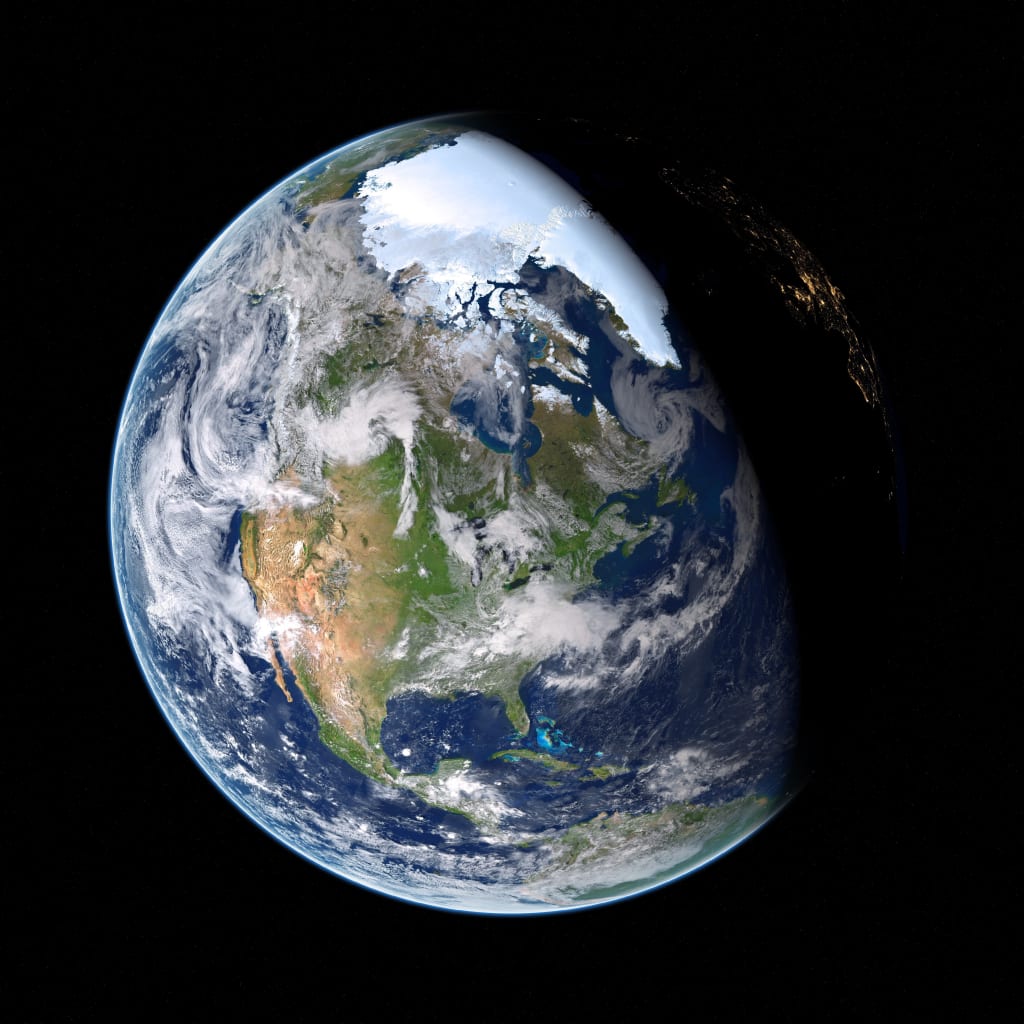
The Precarious Dance of Earth's Rotation
The Earth's daily rotation gives us the gift of day and night, a rhythm that has persisted for billions of years. This motion is a remnant of the chaotic beginnings of our planet, a result of collisions during its formation as a swirling disk of gas and dust around the sun. But what if this rhythmic spin were to suddenly halt?
The Unpredictable Aftermath
In the rarest of circumstances, a scenario where the Earth's rotation ceases instantly would unfold in an unimaginable series of events. While we and everything around us continue to move due to inertia, the atmosphere, the very breath of our planet, would remain in motion. This means that despite the abrupt halt, ferocious winds would persist, winds that would make even the fiercest storms in our memory seem like gentle zephyrs.
The Wrath of the Wind
The intensity of these winds would vary based on your location on this fragile planet. Near the equator, where the Earth spins with dizzying speed, wind velocities would reach a mind-boggling 1,670 kilometers per hour. To put that in perspective, the most violent tornadoes on Earth reach speeds of around 511 kilometers per hour. These emergency-brake winds would be over three times as powerful, capable of tearing up the very crust of the Earth itself.
A Global Devastation
For those in other corners of the world, from the picturesque landscapes of New Zealand to the cultural hubs of France, the winds would still be a formidable 1,180 kilometers per hour. This unfathomable force would unleash widespread destruction. The Earth, once slightly oblate due to its rotation, would swiftly transform into a near-perfect sphere, sending water rushing from the equator to the poles, creating a monstrous tsunami. When the planet resumed its rotation after this fleeting pause, this colossal wave would surge back, leading to a catastrophic double impact.
A Glimpse of Safety
In this apocalyptic narrative, the comparatively safer regions would be near the North and South Poles, where the ferocity of the wind would be subdued. Yet, even in those locations, survival would hang by the thinnest of threads, as the world around us would crumble.
A World Left in Ruins
When the Earth returned to its normal rotation after this nightmarish five seconds, all we've constructed, every acre of farmland, and every monument would be reduced to unrecognizable rubble. The brute force of the wind's impact would claim billions of lives, leaving a planet scarred by the fury of its own motion.
The Survival Imperative
For those seeking a glimmer of hope in this dire scenario, the construction of an underground bunker might be the sole refuge. Fortunately, the odds of the Earth grinding to an instantaneous halt in the next few billion years are infinitesimal. The universe, like a grand symphony, moves to its own tempo, and while we face a future laden with challenges, the sudden halt of our planet's rotation isn't among the cosmic notes we're destined to encounter.
A World Spinning Forward
The notion of the Earth suddenly ceasing its rhythmic rotation for a mere five seconds is a chilling reminder of the delicate balance upon which our existence rests. Our planet's continuous spin, a phenomenon we often take for granted, is a testament to the cosmic forces that shaped our home. It's a wondrous dance, choreographed by the universe itself, giving us day and night, seasons, and the beauty of a constantly changing sky.
While the scenario of a sudden halt is a captivating "what if," the reality is that our planet's rotation is as dependable as the rising sun. The improbable nature of such an event provides a unique perspective on the preciousness of our world and the remarkable resilience of life that clings to it. The challenges we face on our journey through time are real and formidable, from the preservation of our environment to the advancement of our societies. Yet, the Earth's spontaneous pause is not among these challenges.
As we peer into the future, let's appreciate the extraordinary dance of our planet, a cosmic waltz that grants us the privilege of existence. Let's strive to protect the delicate balance that allows us to thrive and adapt, a testament to the beauty and resilience of life on this spinning sphere we call home. The Earth continues its journey, a beacon of life in the vast cosmos, and it's up to us to ensure that it remains a vibrant, hospitable haven for generations to come.
About the Creator
Enjoyed the story? Support the Creator.
Subscribe for free to receive all their stories in your feed.
Comments
There are no comments for this story
Be the first to respond and start the conversation.