
The Cost of Conflict
How War is Reshaping Russia and Europe

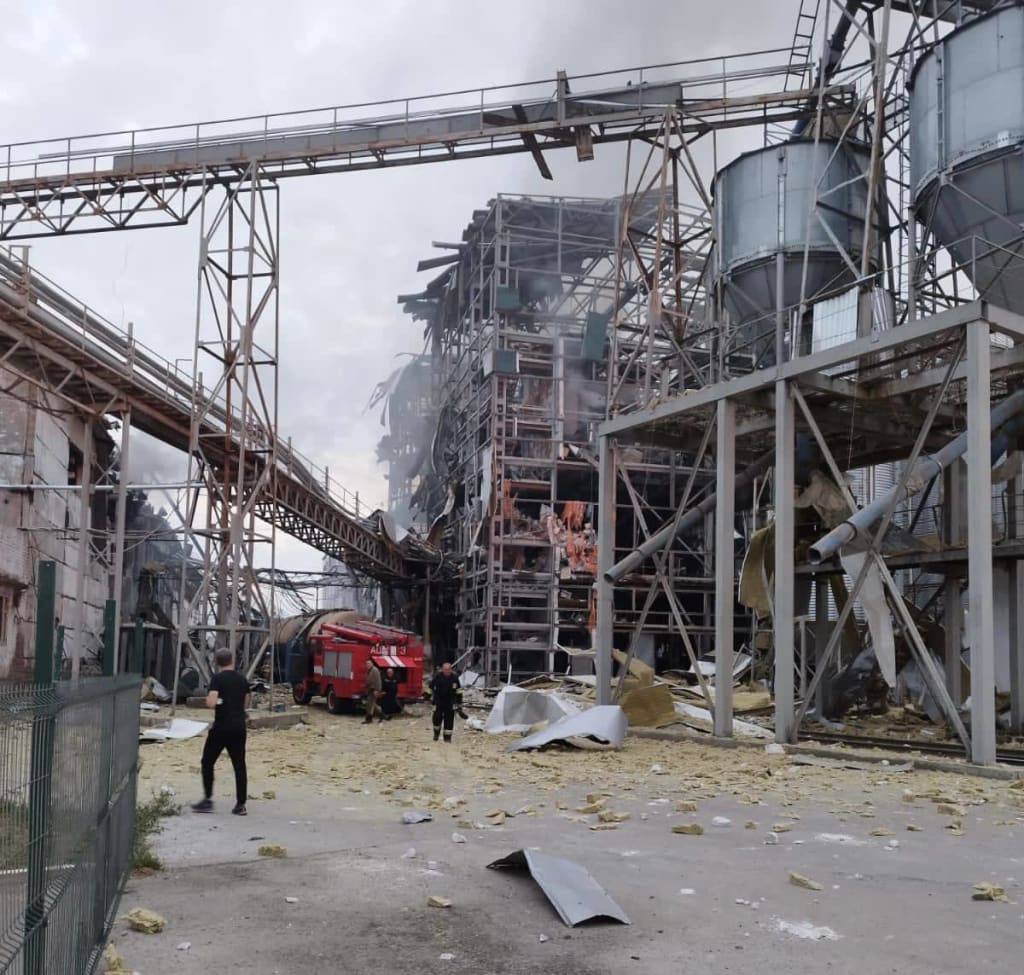
The Ukraine war, as it approaches its 31st month, is changing not only the geopolitical but also the economic landscape for Russia and Europe. The invasion caused a protracted war with high spiraling military costs for Moscow and realigned economies across Europe.
As it keeps shoveling more and more money into its defense budget, inflation rises, and its domestic economy threatens to tip into recession. Europe has worked ceaselessly to free itself from dependence on Russian gas in the process of creating seismic shifts in global energy markets.
Here we examine what Russia's military expenditure, stress on its economy, and Europe's energy diversification mean for the dynamics of the changed conflict and long-term strategy of the continent.
Russian Military Spending: Where Are My Rubles Gone?
The spending by Russia on military forces has increased manifold since the beginning of the war.
The ISW cited that Russia's defense budget surged from 6.4 trillion rubles, or about $111 billion, in 2023 to 10.4 trillion rubles in 2024-a 62 percent increase in just one year. Moscow's budget projections indicate that defense spending will continue to surge to 13.2 trillion rubles, or $142 billion, by 2025, equivalent to 6.2 percent of the nation's GDP.
These figures are more than 2.5 times greater than Ukraine's defense budget, which underlines the disproportionately different resources of the two belligerents.
Despite the enormous financial burden, Russian spending on defense continues to rise, reflecting the determination of the Kremlin to maintain its military action in Ukraine.
This increase in spending is due to the dire need felt to replace the destroyed equipment, upgrade the weaponry, and retain a fighting force that has been highly deplenished in the course of war. In large measure, the defense sector has become an engine of economic activity, stimulating the industries of metallurgy, arms manufacturing, and information technology.
Companies like Rostec and the United Aircraft Corporation are beneficiaries of this demand for military supplies, hence giving an unreal boost to Russia's otherwise slow economy.
Inflation and Economic Instability
Even as the war economy shores up particular sectors, the general economy of Russia is stretched to the breaking point. Inflation has shot up to over 9% as of September 2024-more than double the target of the government.
This inflationary pressure is induced by increased military expenses, a rise in wages, and a supply chain that cannot catch up with the increasing demand for goods and services. In response, the Central Bank of Russia has increased the interest rates to 19% and oiled expectations for another hike in a few months. Even at that, inflation is most likely to reach 6.5 percent to 7 percent toward the end of the year.
The economic outlook for Russia remains precarious. Jay Zagorsky, a Boston University Questrom School of Business economist, thinks that without the war, by this time Russia's economy would have already fallen into recession. It is only unprecedented government defense spending which prevents the economy from a total collapse, and it is a very unsound long-term strategy.
Sooner or later, Moscow will run out of money, and when that happens, the economy will fall into a deep recession.
Perhaps the most formidable challenge facing Russia is that it has limited access to foreign currency reserves, especially U.S. dollars. Deep western sanctions have forced down Moscow's capacity to conduct international trade, with even transactions in Chinese yuan becoming increasingly difficult to deal with as a means of evading secondary sanctions from the U.S. Therefore, Russia has not managed so far to maintain economic stability as witnessed by the decline in the country's currency reserves and more importantly, a further restraint on importation of vital goods and services.
The Impact on Russian Society
The current government of Russia has been trying to maintain a hard balance between military spending and the welfare needs of its domestic population.
For instance, in 2025, the envisioned 'defense burden' will be larger than the totals budgeted for education, health and social services, and national economy combined. It also has far-reaching implications for the future social and economic wellbeing of Russians.
Prime Minister Mikhail Mishustin tried to reassure the public, saying that all social commitments-from pensions to healthcare financing-would be executed by the government. What is really happening is that the Russian population is sacrificing because of the war.
With growing prices, frozen wages, and reduced state consumption of social services, the conditions for ordinary Russians are ever more critical. And the question always arises over the course of war: how long will the population endure the sacrifices thus imposed upon them by their government in the name of military victory?
Europe's Response: The Energy Shift
While Russia grapples with the economic ramifications of the war in Ukraine, Europe has been forced to come to terms with its dependency on Russian natural gas.
The European Union, prewar, received nearly 40% of its supply from pipelines running through Eastern Europe, having heavily depended on Russian gas. Russian President Vladimir Putin initially tried to wield that dependency for leverage, threatening to plunge Europe into an energy crisis by cutting off gas supplies.
But Europe proved more difficult to crack than many had anticipated. In 2022, the EU announced the REPowerEU plan, which had the ambitious goal of freeing the bloc from dependence on Russian energy imports. As of 2023, Russian gas makes up just 8% of Europe's natural gas import total, a precipitous plunge from the 40% it supplied in 2021. This was achieved thanks to an increase in liquefied natural gas cargoes from the United States and Qatar, while pipeline imports from Algeria and Norway also rose.
Diversification and Energy Efficiency
Perhaps one of the greatest successes of energy policy in Europe has been diversification when it comes to sources of supply.
Apart from LNG imports, European countries have been aggressively investing in renewable energies, increasing efficiency in energy use, and decreasing overall gas consumption.
IEEFA estimates, for example, that gas consumption in Europe plunged 20% between 2022 and 2024 to its lowest level in a decade. This decline was aided by the relatively mild winters that lowered heating demand, along with active efforts on the part of European governments to curtail energy consumption.
Heading into its third winter since hostilities started, gas storage stands at 94%, well above the EU's goal of 90% by November. Still, this flash of success does not mean there will be no difficulty with this winter. Energy prices remain volatile, and a particularly rigid winter could stress the continent's supply. LNG prices in Asia have already shot above $13/million Btu, and any cold snap in Europe or Asia could push prices higher, perhaps above $16/mBtu in early 2025.
The Ukrainian Gas Dilemma
But making matters even more complicated is the future of the gas transit agreement between Ukraine and Gazprom, Russia's state-controlled energy leviathan.
Since the beginning of the war, Ukraine has continued to transport Russian gas on to Europe via the Brotherhood pipeline, despite the conflict. But that arrangement, due to expire at the end of 2024, will not be renewed, Ukraine says.
The Brotherhood pipeline transported 15 billion cubic meters of gas to Europe in 2023, a significant decrease from the more than 30bcm it had transported in 2021, but the possibility of its closure can further disrupt Europe's gas supply.
It has been countering this dependence by considering other avenues, such as gas imports from Azerbaijan. Through Turkey, the TANAP linked with the TAP to Europe has already started supplying Azeri gas to the European market. However, the volumes of gas available from that country remain a fraction of what Russia used to supply, and there are many logistical problems yet to be overcome.
The Global LNG Market
Another critical issue is the very competitive global LNG market that has emerged as a result of almost all countries striving to secure their supply of energy.
The United States is becoming the largest LNG supplier to Europe, but there are infrastructure limitations that may impede its ability to meet future demand.
This was largely because the bankruptcy of its lead contractor delayed the Golden Pass LNG terminal in Texas, one of two major regasification projects that is expected to come onstream by 2025. In all, it reduces estimated new LNG capacity coming onstream by 2025 to just about 15 mtpa, versus initial projections for up to 25–30 mtpa.
The Biden administration also put on hold new projects for LNG infrastructure, adding to the constraints that may limit the expansion of future capacity. This could have very long-term implications for Europe, whose need for LNG imports will still continue in order to make up the shortfall in Russian gas. For the foreseeable future, the global LNG market is expected to remain tight, with Europe competing against Asia and other regions for limited supplies.
War has completely reconstituted the economic and energy dynamics of both Russia and Europe.
Military expenditures are still rising in Russia, propping the economy up in the short term but setting up long-term risks. Inflation is reaching a high, and just how long the government will be able to continue the current level of social spending is questioned.
Meanwhile, Europe has made huge efforts to wean itself off Russian gas-but big tests are only just coming over the next few colder winters, amid tighter global energy markets.
While the conflict grinds on, the futures of Russia and Europe hang in a precarious balance.
For Russia, a fundamental question is how long its economy could bear the heavy financial cost of war. In this case, Europe has to face the challenge of how much more diversification of energy supply has to be pursued while mitigating global LNG market risks.
Both are sailing blind, and the outcome of the war will go a long way in shaping the global economy and geopolitical order for times to come.
(reuters, afp, dpa)
About the Creator
Tanguy Besson
Tanguy Besson, Freelance Journalist.
https://tanguybessonjournaliste.com/about/
Enjoyed the story? Support the Creator.
Subscribe for free to receive all their stories in your feed.
Comments
There are no comments for this story
Be the first to respond and start the conversation.