
The Bench That Remembered Names
He sat there every morning, and somehow he always knew who was ...

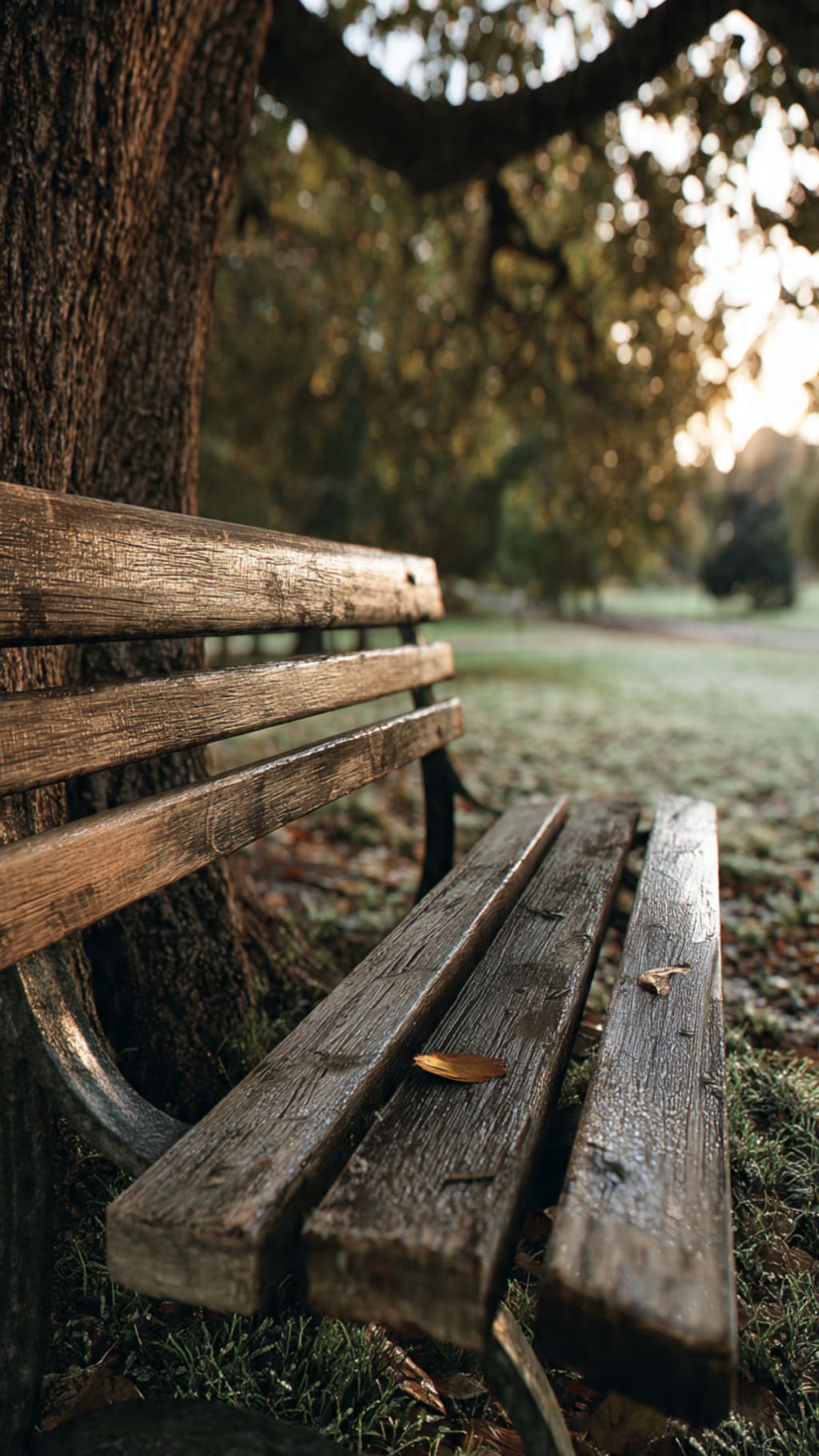
The bench showed up in Riverside Park before I was born. Nobody knows who put it there. The city records just say “donated, 1972.” It’s not special to look at. Weathered wood, iron legs, a few carved initials that no one can read anymore. It sits under the big oak near the pond, where the morning light comes through the leaves in pieces. For thirty years, an old man sat on the left side of that bench every morning at 7 a.m. He wore the same brown coat, even in summer. He carried a paper bag with two things: a thermos of tea, and a small notebook. We called him Mr. Eli. Nobody knew his last name. He never offered it. I met him when I was seventeen and thought my life was over because a college rejection letter came in the mail. I was crying on the right side of the bench, trying to be quiet about it. He didn’t say “you’ll be fine.” He didn’t give advice. He just slid the thermos cap toward me. Steam came out. He poured tea. Then he opened his notebook, tore out a page, and wrote something. He folded the paper and put it on the bench between us. It said: “Aisha. You are allowed to be disappointed. That doesn’t mean you’re done.” I never told him my name. That was the first thing I learned about Mr. Eli. He knew names he was never told. The park people started noticing it over the years. Not like magic. Like attention. The jogger who lost his daughter — Mr. Eli had a smooth stone on the bench when he came, with “David” written on it in pencil. The woman who got laid off on her 50th birthday — there was a folded handkerchief waiting, and he said, “Tears dry faster when you don’t have to hide them, Mrs. Chen.” The veteran who stopped coming to the park for a year after his buddy died — when he came back, Mr. Eli just nodded and said, “Welcome home, Thomas. The oak missed you.” He was never wrong. I asked him once, when I was twenty-four and back in the city for my dad’s funeral. I sat down and said, “How do you do that? How do you know?” He poured me tea. He was older then, hands shaking a little. He said, “I don’t know anything, kid. I just pay attention.” Then he told me his story, finally. His wife, Lila, died in 1971. Car accident. She used to sit on that bench every morning to watch the ducks. She had a terrible memory for dates and birthdays, but she never forgot a name. She’d say, “People carry their names like a small weight. If you say it right, it gets lighter.” After she died, he couldn’t sit at home. The silence was too loud. So he came to the bench. At first he just sat. Then he started bringing tea, because Lila loved tea. Then he started bringing the notebook, because Lila loved writing names down. “I thought if I sat here long enough,” he said, “maybe I’d learn how she did it. How she made people feel seen.” He didn’t learn a trick. He learned a habit. Show up. Look up. Listen without fixing. If someone sat with shoulders up to their ears, he wrote their name down and left it where they could see it. If someone stared at the pond without blinking, he left a stone. If someone laughed too loud at nothing, he left the thermos cap open, an invitation. He never asked for their story. He just made space for it. Mr. Eli died on a Tuesday in March. The city found him on the bench, coat buttoned, notebook closed on his lap. The last page had one line: “The bench is not mine. It belongs to whoever needs to be remembered today.” For three weeks after, the bench stayed empty. People walked past it faster. Like it was a grave. Then a girl sat down. She’d just moved here, no friends, new job she hated. She cried quietly into her phone. When she looked up, there was a piece of paper on the bench. She didn’t see who put it there. It said: “Maya. You don’t have to be brave every day. The oak is still here.” She looked around. An older man in a delivery uniform was walking away. He didn’t turn around. The next week, a man sat down after a doctor’s appointment. There was a stone with “Robert” on it. The week after that, a teenager with a black eye found a handkerchief. Nobody knows who started leaving things on the bench. Maybe Mr. Eli taught a few people before he died. Maybe people just watched and copied him. Maybe the bench itself started remembering. I come back now, twice a year. I’m 38. I have two kids, a job I like, a life that doesn’t feel like it’s ending. I still sit on the right side. Sometimes there’s a note waiting. Sometimes I leave one for the next person. Yesterday I wrote: “You. Yes, you. The one reading this. You’re not invisible. Say your name out loud. The oak heard it.” The bench doesn’t fix anything. Grief still comes. Rejection still comes. Bad news still comes. But for ten minutes in the morning, under the oak tree, you can sit where someone paid attention. Where your name matters. Where being human is enough. Mr. Eli was right. Attention is a kind of love. And love, if you practice it long enough, starts to look like knowing.
About the Creator
Enjoyed the story? Support the Creator.
Subscribe for free to receive all their stories in your feed.
Comments
There are no comments for this story
Be the first to respond and start the conversation.