

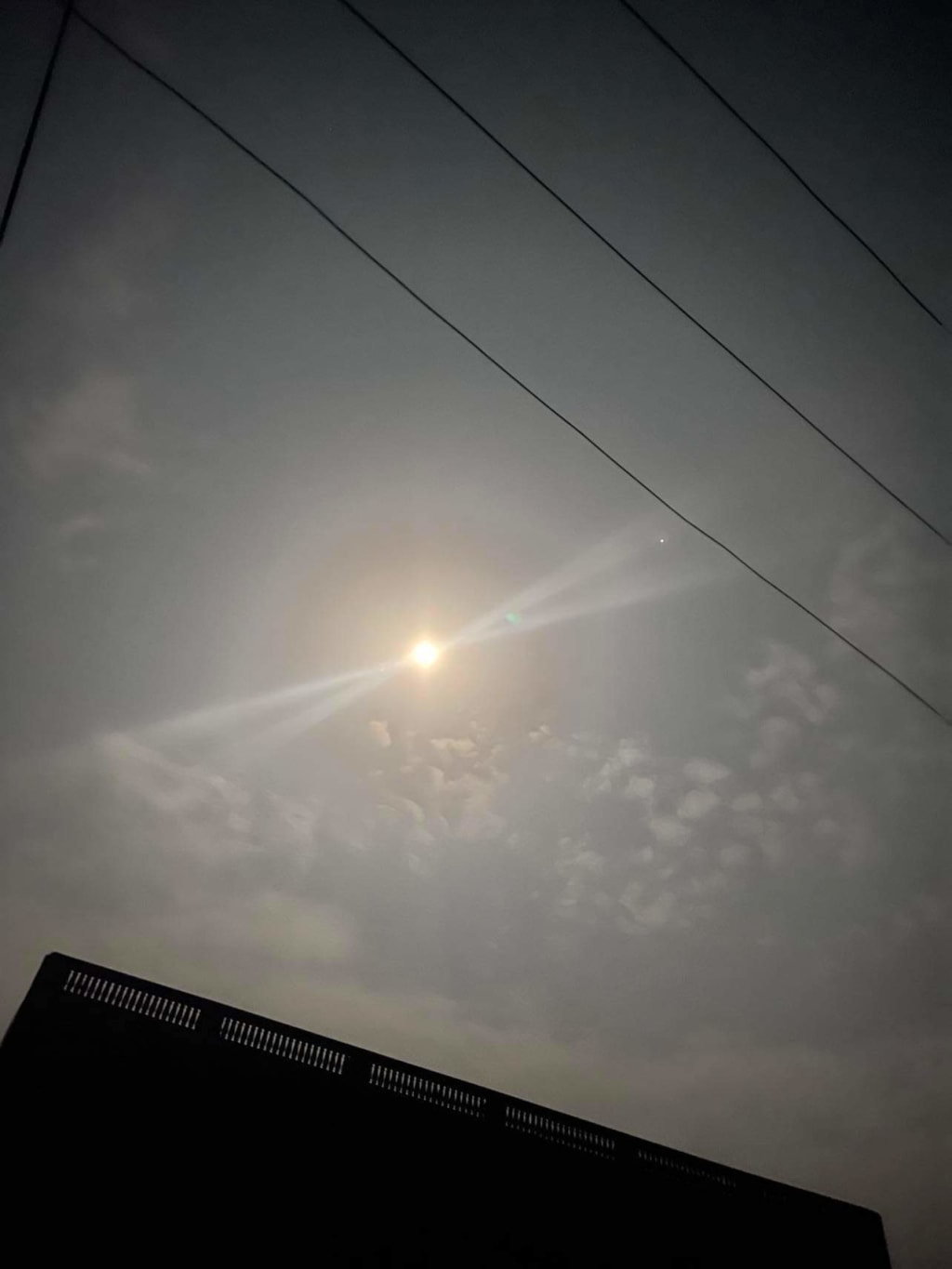
While people find the moon to be very beautiful, it is not as beautiful as it appears to be. It is devoid of plants and animals and is not a suitable place for plants or animals. Thus, we do not see any form of life on the moon.
Similarly, human beings won’t be able to live on the moon. Like how our earth has an atmosphere, the moon does not. Thus, the lunar days are quite hot and the lunar nights are very intense.
Similarly, while it may look beautiful from the earth, it does have a forbidding appearance. In other words, the moon is full of rocks and craters. In fact, even if you look at the moon from your naked eye, you can see some dark spots on it.
They are dangerous rocks and craters. In addition, the gravitational pull of the moon is less than that of the planet earth. As a result, it will difficult to walk on the surface of the moon.
The moon has different phases as it moves along its orbit around the earth. Basically, half of the moon is always in sunlight so half the earth has day while the other half has night. Meaning to say, the phases of the moon depends on how much of the sunlit half we can see at any one time.
Journey to the moon
Ever since the beginning, man has been fascinated by the moon. We have looked at it with wonder and it shows in the earlier works of poets and scientists. To reveal the mystery of the moon, scientists tried to study it.
Thus, a lot of attempts were made to send humans to the moon. On July 21, 1969, two Americans Neil Armstrong and Edwin Aldrin made it to the moon. They got to walk on the surface of the moon and collect lunar rocks.
After that, they had a safe journey back to earth. A lot of American scientists have sent their men to the moon multiple times now. Thus, man has conquered the moon and it is not a mystery anymore.
Conclusion of the Essay on Moon
To sum it up, the moon shines bright at night when the sun is not on duty. It sheds its silver light which is very cool and refreshing. Moreover, the moonlit nights also impact our mind and body via a soothing effect.
IMPORTANCE OF MOON.
Our moon plays a critical role in producing the environment required for life to thrive on Earth. If the moon suddenly disappeared, then the consequences for many forms of life would be devastating. The moon is the second-brightest regularly visible celestial object in Earth’s sky. As Genesis 1:16 says, “Then God made two great lights: the greater light to rule the day, and the lesser light to rule the night.”
Without the moon, all clear nights in areas without artificial lighting would be too dark for many nocturnal animals to search for food. Consequently, if the moon disappeared, some species would likely become extinct.1 Even the biological clocks used by many life forms are closely tied to the moon.
Of the eight planets in our solar system, Earth has the largest moon relative to the size of the planet it orbits. Three of Jupiter’s moons—Ganymede, Io, and Callisto—and one of Saturn’s moons, Titan, are all larger than our moon but are proportionally far smaller compared to the planet each orbits.
Our moon is only about one quarter of a million miles from Earth, closer than most large planetary moons.2 The moon lacks an atmosphere, thus no wind exists. This still environment allows any change on the moon’s surface, such as a meteorite crater or a footprint, to serve as a time capsule. Since the moon lacks an atmosphere, the sky viewed from its dark side would always be dark, allowing the stars to be constantly visible.3 On the sunlit side, one would not see stars because the solar glare would overwhelm the sky.
About the Creator
Syed Ayan
Article Writter
Enjoyed the story? Support the Creator.
Subscribe for free to receive all their stories in your feed.
Comments
There are no comments for this story
Be the first to respond and start the conversation.