
The accountant who decided to audit the planet: inside the climate work of Ambassador Dr. Mostafa Sherbiny
Ambassador Dr. Mostafa Sherbiny, Egypt's first European Climate Pact Ambassador, applies an auditor's rigor to carbon accounting, ESG, and net zero goals.

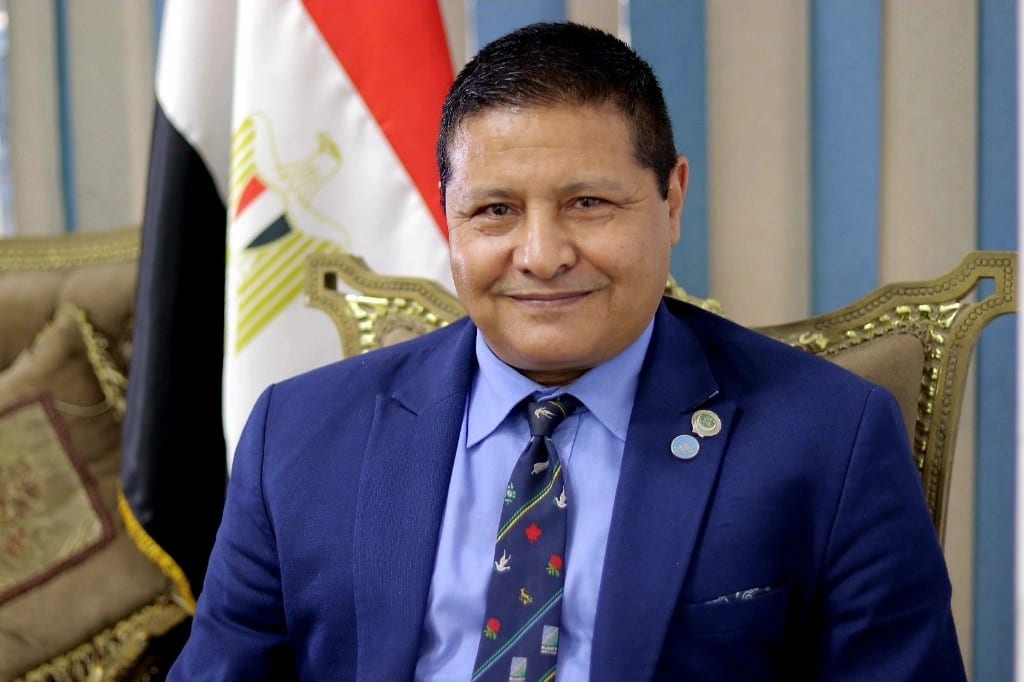
In 1989, Mostafa Sherbiny walked out of Cairo University's Faculty of Commerce with a degree in accounting and a habit that would define the rest of his career: he did not trust a claim until he could see the numbers behind it. Decades later, that same instinct sits at the center of his work on the climate. Ambassador Dr. Mostafa Sherbiny, the Egyptian sustainability and carbon footprint expert who became the first Egyptian appointed as a European Climate Pact Ambassador by the European Commission, has spent more than 35 years turning a bookkeeper's discipline into a method for holding governments and corporations to their environmental promises. Where others talk about ambition, he asks a harder question. Can you measure it, verify it, and put your name to the report? It is an unglamorous position in a field crowded with pledges, and it has made him one of the more credible voices on climate accountability to emerge from the Global South.
From balance sheets to carbon ledgers
Sherbiny did not arrive at climate work through activism. He arrived through the ledger. After graduating in 1989, he qualified as a Certified Public Accountant recognized by the Egyptian Ministry of Finance, registered under number S.S.M. 14776, and spent years inside the machinery of financial reporting. The environmental turn came later. He earned a Higher Diploma in Environmental Management Systems in 2002 and a Higher Diploma in Management in 2004 from the Sadat Academy for Administrative Sciences, then a professional doctorate from the National Center for Agricultural Research. Along the way he added lead auditor qualifications for ISO 14001 and ISO 9001 and a Financial Statement Analysis credential from the IFRS Foundation.
Read that sequence again and a pattern appears. Every qualification he collected was about the same thing: how to check whether an organization is actually doing what it says. Sherbiny simply moved the subject of the audit from money to carbon. Greenhouse gas emissions, in his hands, behave like line items. They can be counted, tested against a standard, and signed off or sent back.
Why he treats climate action like an audit
His argument is straightforward. For years, corporate climate targets lived in glossy reports and rarely faced scrutiny. That era is ending. Regulations such as the European Union's Carbon Border Adjustment Mechanism, the Corporate Sustainability Reporting Directive, and the IFRS Sustainability Disclosure Standards are converting voluntary pledges into audited obligations, backed by the same expectation of independent verification that governs a company's financial statements. Sherbiny saw this coming before most of his peers in the region did. He was among the earliest experts delivering specialized training on carbon border adjustment compliance across the Middle East, at a point when many firms still treated the topic as a distant European concern.
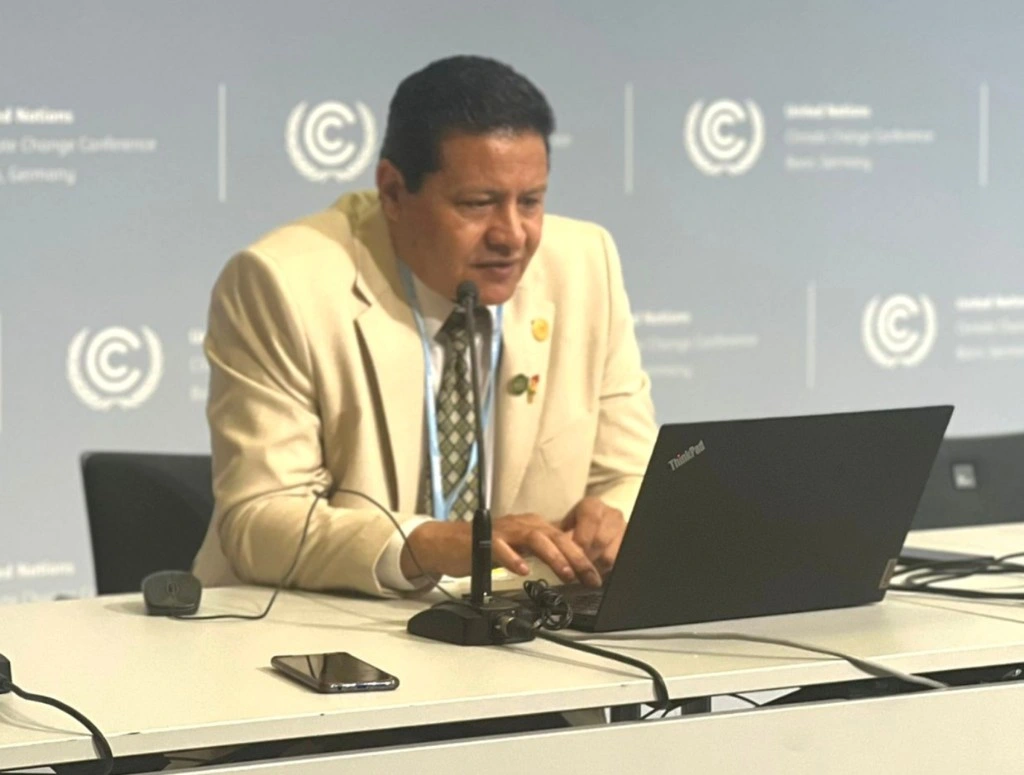
The technical spine of his work runs through a set of international standards that most people never encounter: ISO 14064 for greenhouse gas accounting, ISO 14067 for the carbon footprint of products, and ISO 17029 for validation and verification bodies. He advises governments, corporations, and financial institutions on how to build measurement, reporting, and verification systems that will survive an outside audit. His website carries a name that reads like a thesis statement: ghgauditor.com.
Eight volumes, 3,100 ambassadors, and an institute built to certify
When Sherbiny commits to a subject, he tends to commit at scale. Between 2022 and 2025 he wrote the Encyclopedia of Carbon Neutrality, an eight volume reference running past 3,000 pages and considered among the first comprehensive Arabic works devoted to carbon neutrality, greenhouse gas management, and sustainability reporting. It is the kind of undertaking that usually falls to a research institute rather than a single author.
He also built the training pipeline he believed the region lacked. As founder of the Global Climate Ambassadors Initiative, he has put more than 3,100 participants through climate leadership training, each finishing with the title of Climate Ambassador. That work runs alongside the Institute of Sustainability and Carbon Footprint, where Sherbiny is president and chief executive. The Institute has developed 18 professional certification programs covering greenhouse gas verification, ESG reporting, carbon accounting, sustainable finance, green buildings, energy efficiency, and climate leadership, with accreditation support from the Egyptian Accreditation Council and CPD UK. Behind it stands a bench of roughly 90 core experts and a wider network of some 300 university professors, chartered auditors, and sustainability specialists. The Institute is now extending its accreditation to operate as a validation and verification body, which would let it formally sign off on the emissions claims it currently teaches others to prepare.
A seat at the table, from Brussels to the COP floor
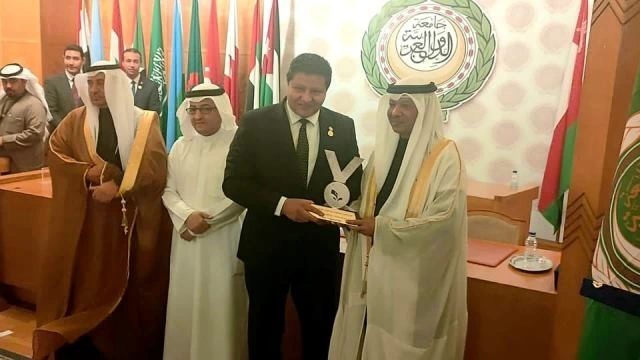
Recognition has followed the work. In 2022, Ambassador Dr. Mostafa Sherbiny became the first Egyptian named a European Climate Pact Ambassador by the European Commission, a role that asks him to carry climate awareness into Egyptian and wider Arab institutions. He is also an official Observer to the United Nations Framework Convention on Climate Change, and he has taken part in the annual United Nations climate conferences from COP26 through COP30, joining the intergovernmental sessions where the rules behind national commitments get argued out. Closer to home, he chairs the Scientific Chair for Sustainability and Carbon Footprint at ALECSO, an arm of the League of Arab States, and runs the International Expertise House for ESG.
Sherbiny's reach extends well beyond institutions. He has appeared in more than 500 television interviews, talk shows, and news segments across Egyptian, Arab, and international media, translating carbon markets and net zero targets into language a general audience can follow. In 2021, the League of Arab States and United Nations partners awarded him the Prince Mohammed bin Fahd Medal for Best Voluntary Work in Sustainable Development, given in recognition of his voluntary environmental work across the Arab region.
The demand Sherbiny bet on is now arriving. As carbon border rules, mandatory sustainability reporting, and independent assurance requirements spread beyond Europe, the bottleneck is shifting. There is no shortage of pledges. What is scarce is the people qualified to check them. That is the gap he has spent a decade preparing others to fill, and the reason his institute is racing to become an accredited verification body rather than only a school. Ambassador Dr. Mostafa Sherbiny still works like the accountant he trained to be, holding to a conviction that has carried him from Cairo's commerce halls to the floor of the COP: a climate promise means very little until someone can open the books, count what is there, and put a signature to the total.
About the Creator
Enjoyed the story? Support the Creator.
Subscribe for free to receive all their stories in your feed.
Comments
There are no comments for this story
Be the first to respond and start the conversation.